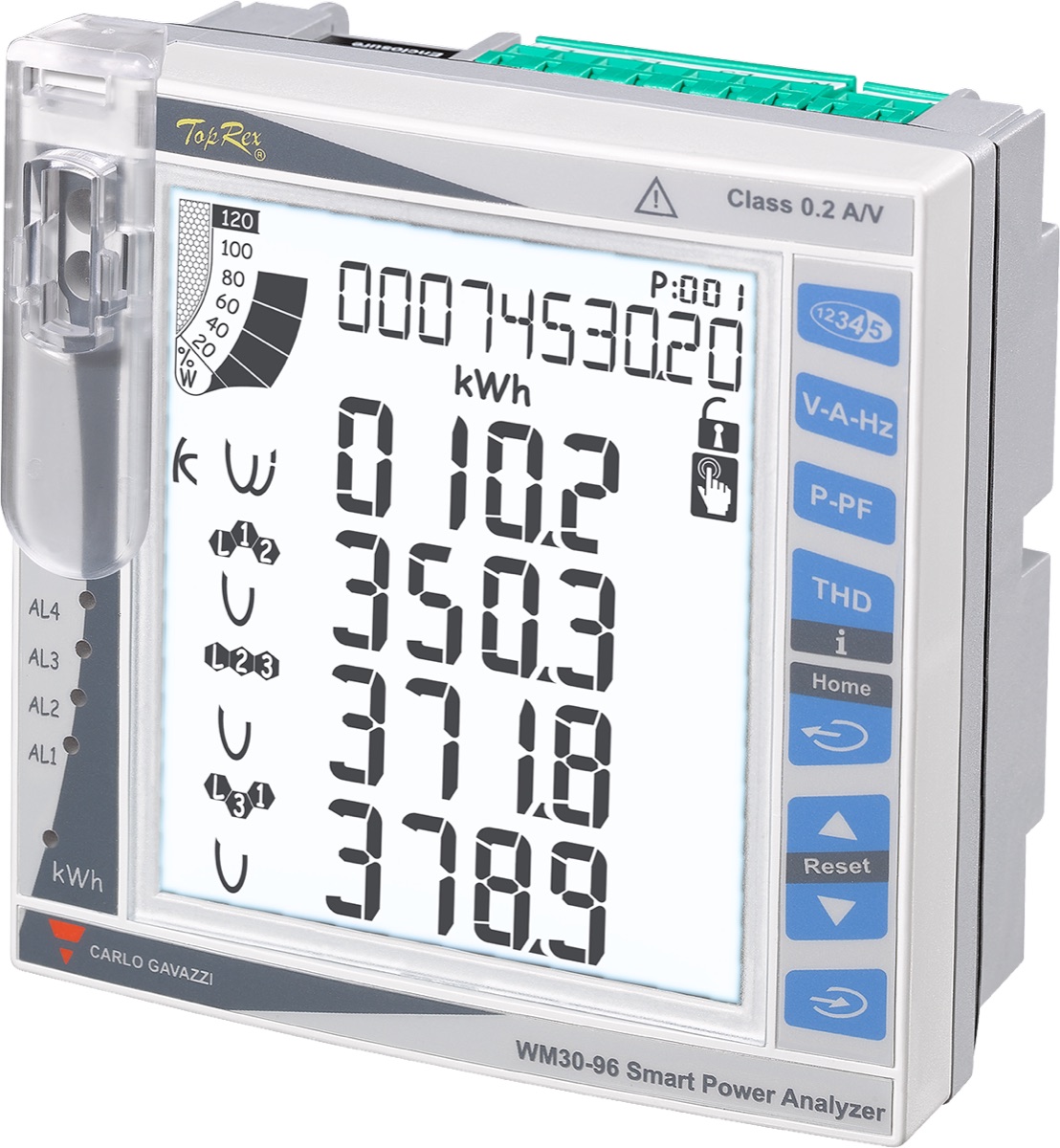
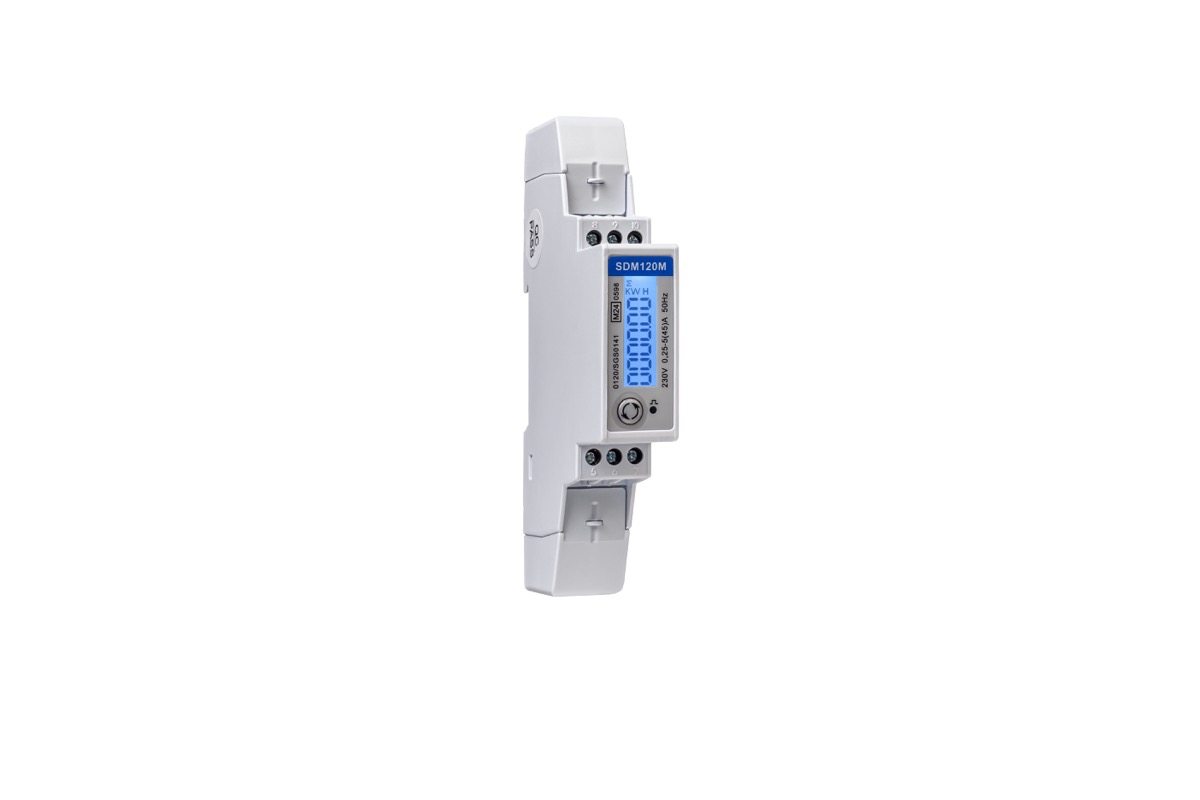
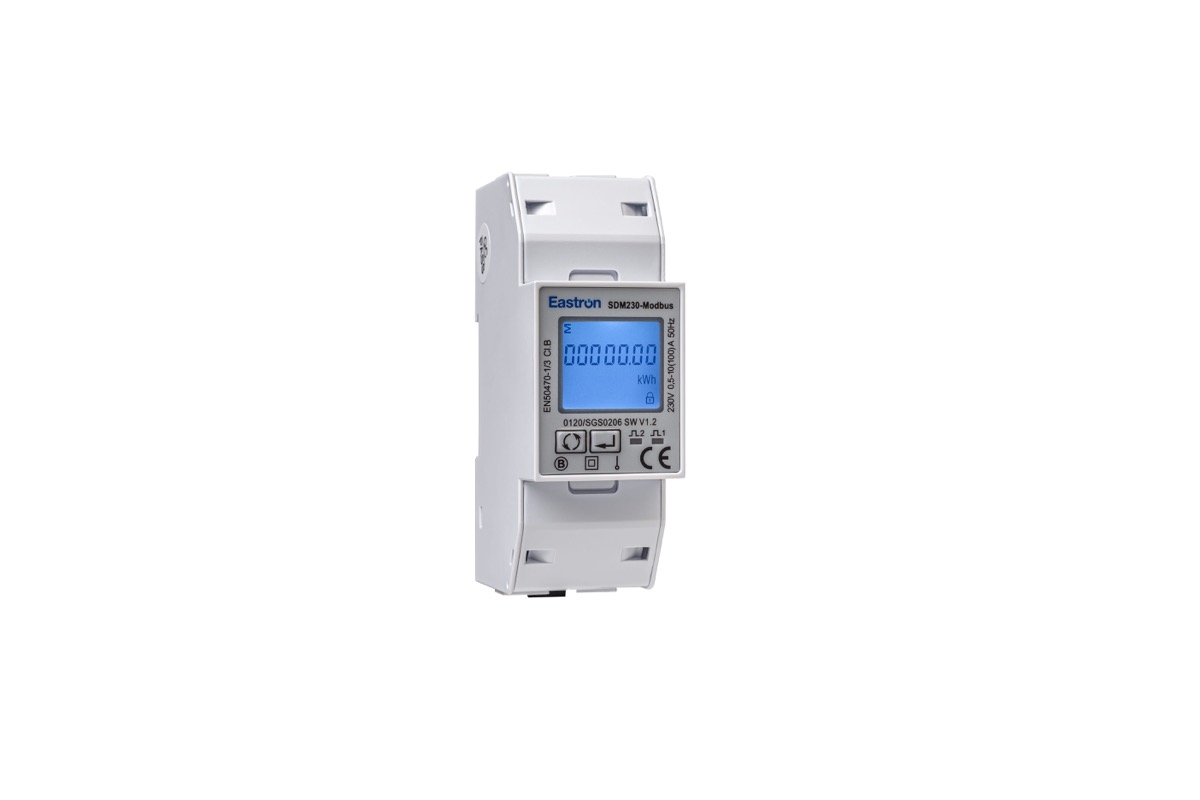
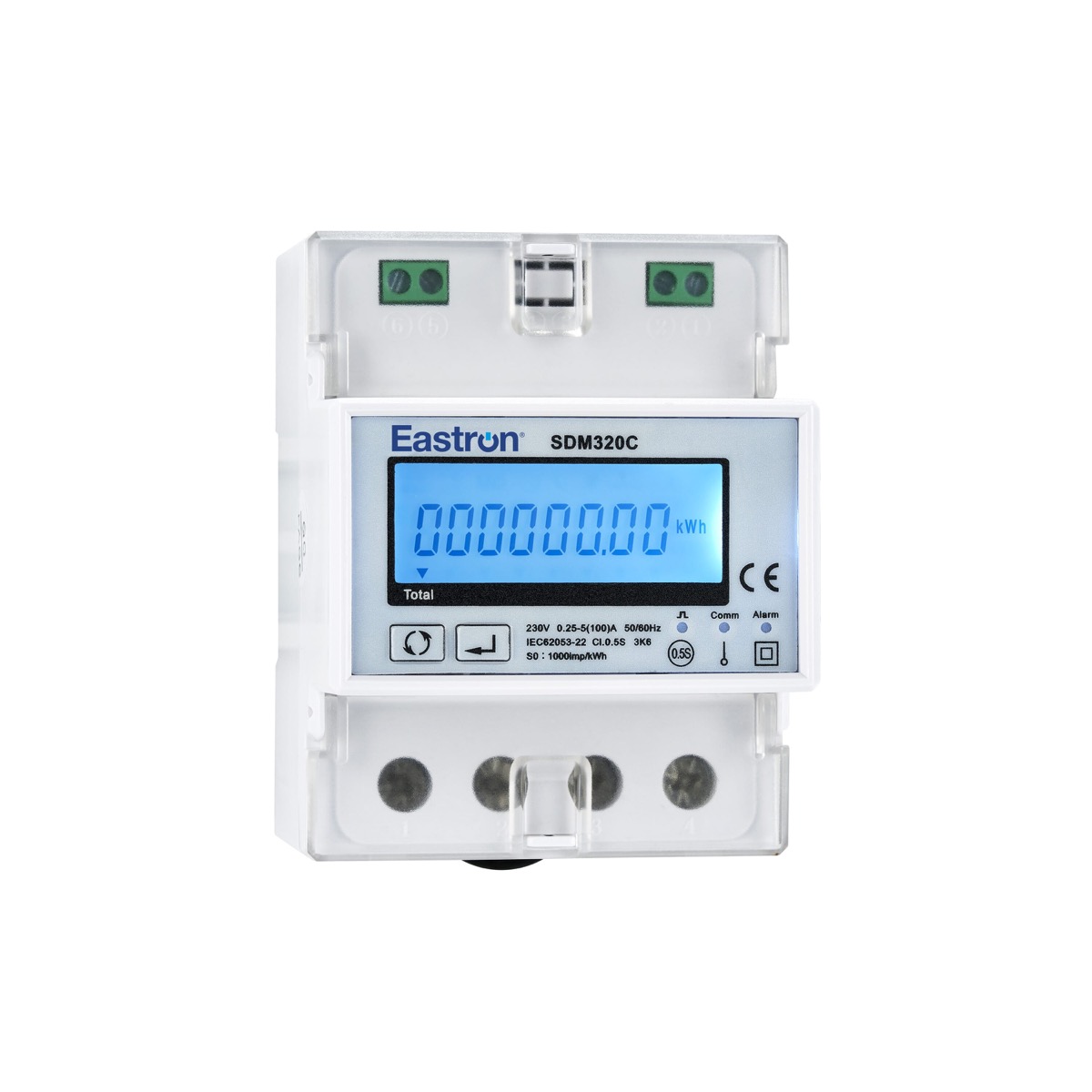
Clients get told to sub-meter a feeder or a machine, and then the argument starts about CT ratios and whether the CT will even close around that conductor, about 347/600 V against 120/208 V, about Modbus against a pulse, and about the one question that decides everything else: is this reading ever going to bill somebody. This page holds what we know about picking the right meter, so that argument can finish on the first phone call.
Updated 4 September 2026. Every spec on this page carries the link it was read from.
Start here
What an electricity meter is actually counting
Four numbers all get called "the power reading", and most ordering mistakes begin by confusing them.
kWh, kW demand, kVA and power factor
Real power, in kW, is the part that does work. Apparent power, in kVA, is the vector sum of real and reactive power, and it is what the conductors and the transformer physically have to carry. Reactive power, in kVAr, oscillates between the source and inductive loads such as motors and transformers without doing net work, and the three sit on one right triangle: kVA² = kW² + kVAr², with power factor defined as kW divided by kVA. Energy in kWh is the accumulation of real power over time, or as Accuenergy puts it, "the accumulated number is the total power in kilowatts that has been used over a period of time, thus giving you the energy as expressed in kilowatt hour".
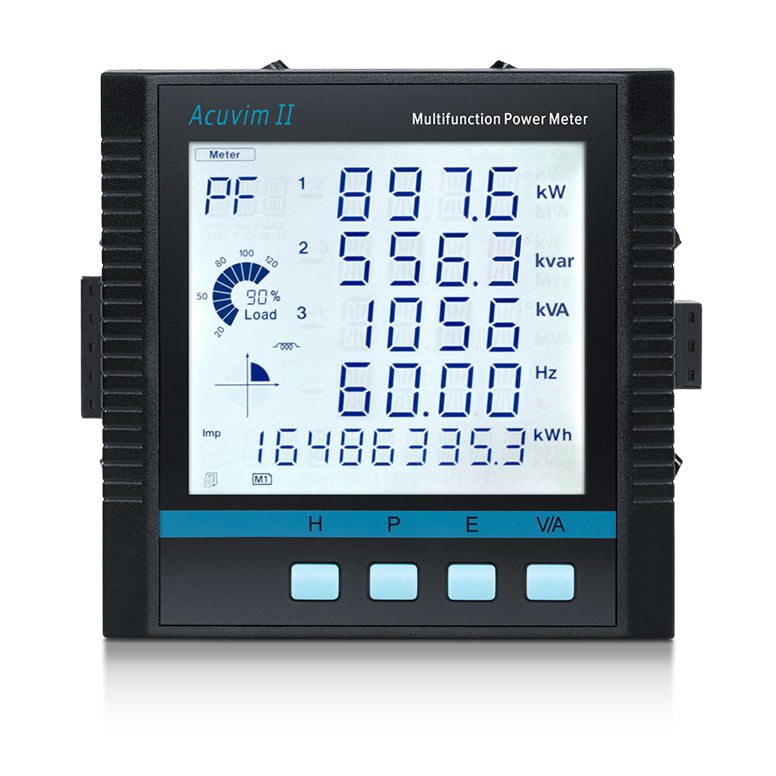
A real three-phase meter reports each phase separately, and the difference shows up the moment one leg is loaded harder than the others. The Acuvim II publishes over 400 parameters, and its own Modbus map lists phase A, B and C line-to-neutral voltages at 4002H through 4007H, phase and neutral currents at 4012H through 401BH, per-phase and total active power at 401CH through 4023H, and per-phase and total power factor at 4034H through 403BH. No source we found treats "meter one phase and assume the other two match" as accepted practice for facility sub-metering, so treat it as an approximation with an error nobody has quantified rather than a sizing method.
A revenue meter is one that has been approved as a type, verified and sealed, which is what section 9(1) of the Electricity and Gas Inspection Act requires before a meter can be used to obtain the basis of a charge. A sub-meter can be identical hardware with the same accuracy class and none of that legal standing, which is fine right up until somebody gets invoiced from it. A current-only sensor is a third thing again: it measures amps, and any kWh it displays is arithmetic done on a voltage and a power factor that were typed in at commissioning.
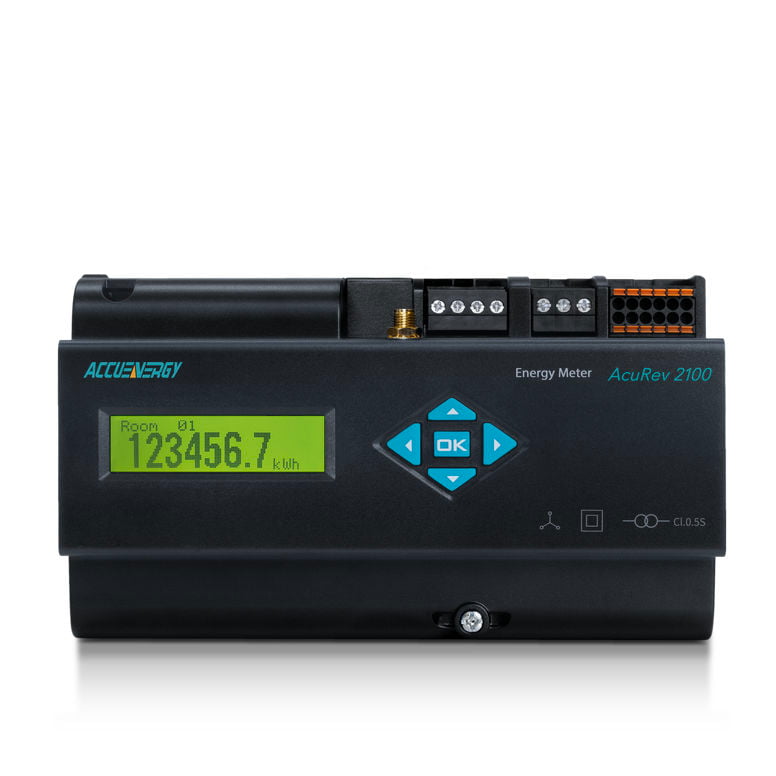
The incomer gives you the whole site and matches the utility bill, which makes it the right first meter and a poor second one. Feeders and motor control centres are where the number starts telling you something you can act on, machines are where it tells you what a part costs to make, and tenant metering is a separate exercise with its own rules. Where a panel has many circuits worth watching, one multi-circuit chassis usually beats a rack of single meters: the AcuRev 2100 takes 18 single-phase or 6 to 9 polyphase circuits, Dent's PowerScout 48 HD takes up to 16 three-phase or 48 single-phase, and a Veris E31 board reads up to 92 points across two panels.
Continental Control Systems' selection guidance is to take the lowest CT rating that is equal to or greater than the service, breaker or fuse rating being monitored, then leave headroom for inrush, which is why it steps a 125 A load up to a 200 A CT rather than a 150 A one. The other half of the same decision is mechanical. An Accuenergy AcuCT S125 opens to 32.0 mm, which clears one 4/0 AWG THHN conductor at about 16.31 mm, and will not close around two of them bundled.
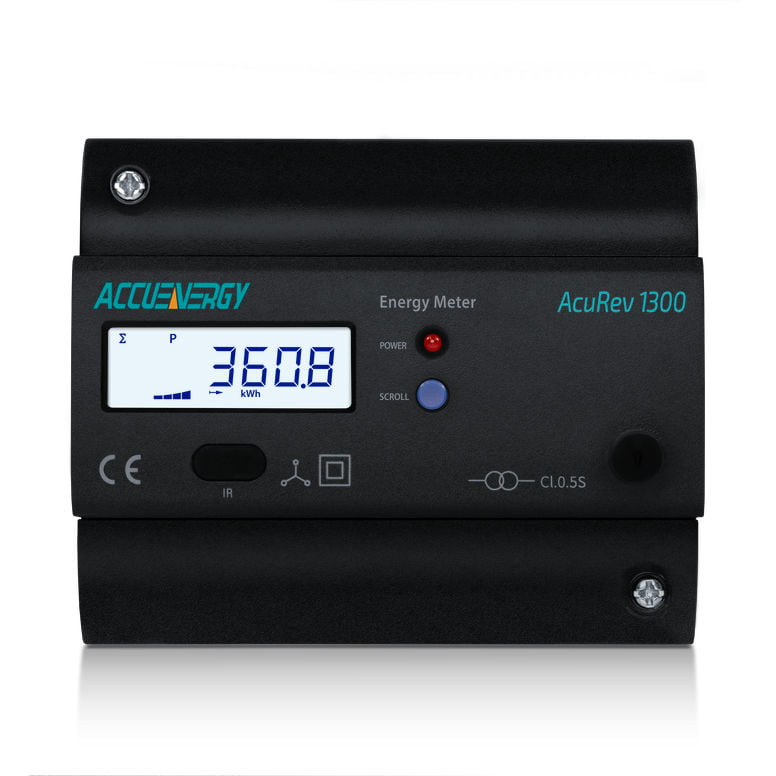
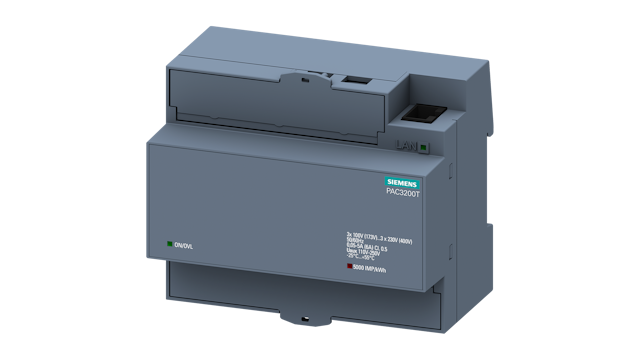
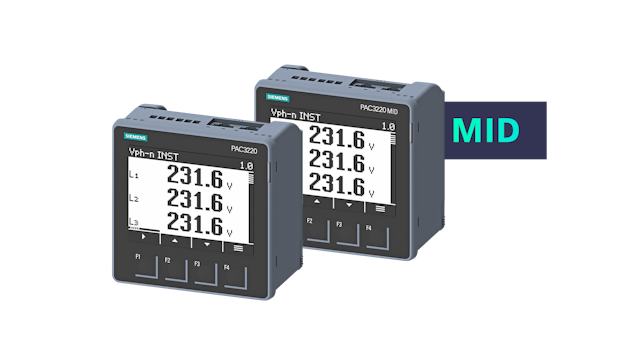
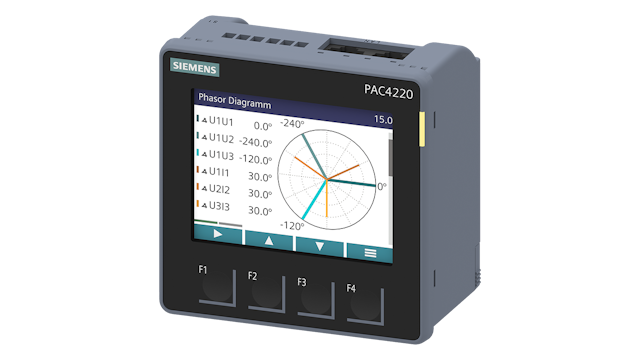
Voltage input range is a hard limit, and it moves between models in the same family. Siemens' own selection guide puts the 7KM PAC3200T at 400 V maximum while the 7KM PAC3220 reaches 690 V, so the first one cannot sit on a 347/600 V service at all. Accuenergy's AcuRev 1310 measures 10 to 400 V line-to-neutral directly or up to 690 V line-to-line, and the Acuvim II reaches 828 V line-to-line, which covers Canadian 600 V work without a potential transformer.
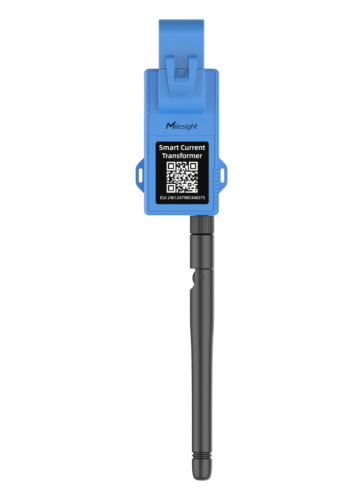
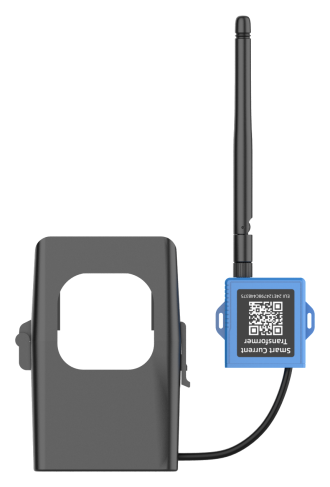
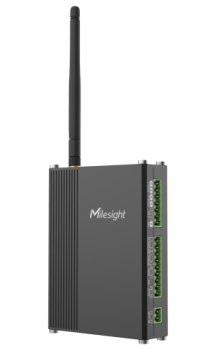
Milesight's CT10x and CT3xx datasheets list one detection parameter, RMS current, and no voltage channel anywhere in the electrical specification. The user guide gives the energy formula outright: energy consumption equals kiloampere hours times voltage times power factor, where the voltage and the power factor are static values an installer types in, with ranges of 0 to 600 V and 0 to 1. The current reading is real and good; the kWh is an estimate that will not follow a plant whose voltage or power factor moves.
Section 9(1) of the Electricity and Gas Inspection Act says a meter used to obtain the basis of a charge for electricity may not be put into service until it has been verified and sealed, and section 9(4) makes approval of type a precondition of that verification. "Revenue grade" is a datasheet claim about accuracy class, usually ANSI C12.20 Class 0.2 or 0.5, and it carries no legal weight on its own. Only approval under specification S-E-06, followed by verification and sealing, makes a meter lawful to bill from.
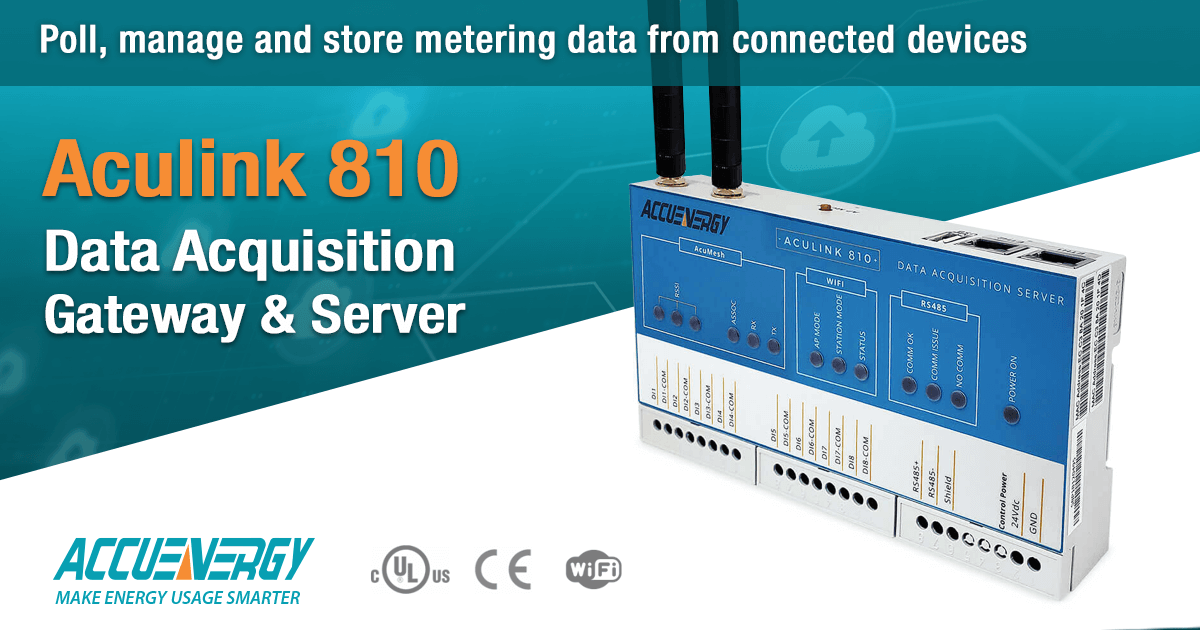
Modbus RTU is a two-wire EIA/TIA-485 bus, and the Modbus Organization's own serial-line specification sets the constraints: slave addresses 1 to 247, 9600 and 19200 baud required, 1000 m of trunk at 9600 baud on AWG 26 or heavier cable, and a line termination at each of the two cable ends. None of that reaches a dashboard by itself. Something has to poll the bus and publish, which is what a gateway such as the AcuLink 810 is for, and it needs a run of cable and 24 VDC that nobody budgeted.
Meters split by how much they see and where they mount. Current transformers split by whether the conductor can be taken out of service to install one.
Every meter here works the same way at heart. It samples voltage on each phase, samples current through a current transformer on each phase, multiplies the two and integrates the result. What separates the families is how many samples per cycle, how many circuits per chassis, what the voltage inputs will tolerate, and which of those numbers ever leaves the box. An Acuvim II takes 512 samples per electrical cycle and refreshes its Modbus registers every 100 ms; a basic DIN-rail meter gives you kWh and a handful of live values and nothing else.
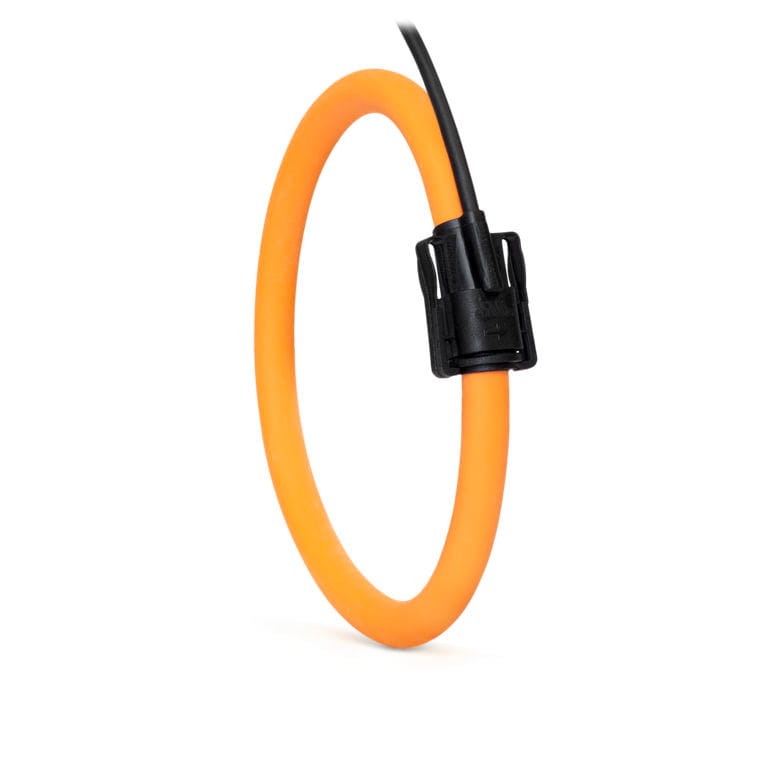
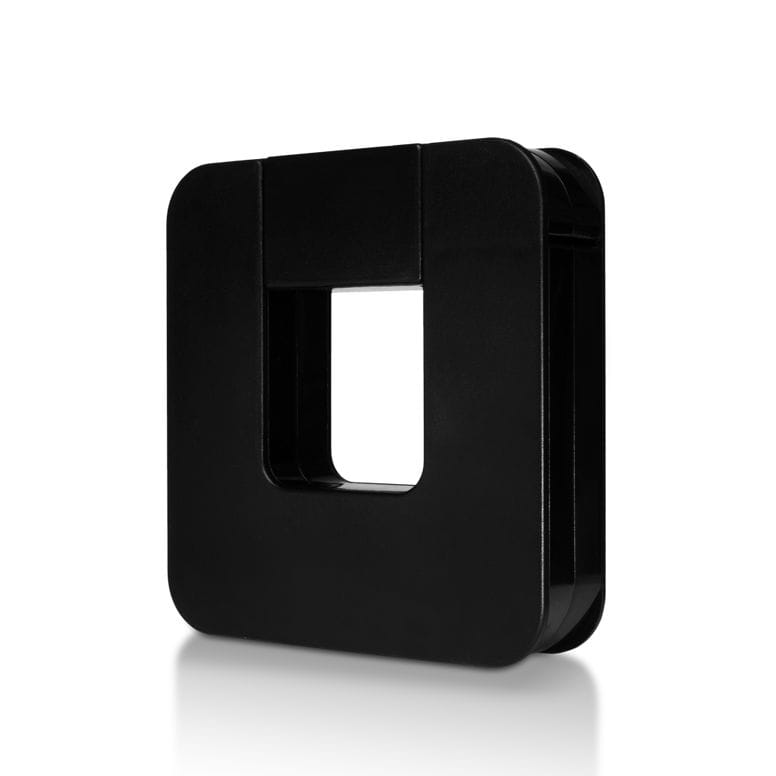
Current transformers are the other half of the choice, and there the trade is accuracy against installability. A solid-core CT is a closed ring that the conductor has to be threaded through, which means a shutdown, and it holds the tightest classes: Accuenergy's AcuCT S125 and S220 are IEC 61869-2 Class 0.2. A split-core CT hinges open and clamps around a conductor that is already terminated, which is the retrofit answer, at a typical 1% on the same manufacturer's 333 mV line. A Rogowski coil is a flexible air-core loop with no iron to saturate, so it stays linear from 5 A to 50,000 A and wraps around busbar geometry no rigid window will fit, at IEC 61869-10 Class 0.5, and it needs an integrator to turn its raw output into a current.
A billing-grade meter certified to a national accuracy standard and, in Canada, approved by Measurement Canada before it can be used to bill a customer. Two families exist: self-contained socket-type meters (the round meter on a house or small commercial service, current flows directly through the meter to the rated ampacity, typically 200-400 A) and transformer-rated meters (fed from instrument current transformers and, above 600 V, potential transformers, used on larger commercial/industrial services). ANSI C12.1 sets general accuracy-testing requirements for both families; ANSI C12.20 sets the tighter accuracy classes (0.2 and 0.5) used for revenue-grade self-contained and transformer-rated meters. Ontario's local distribution companies replaced mechanical/electromechanical meters with electronic 'smart' meters (interval meters with two-way communication) under a province-wide program in the 2000s-2010s; these report time-differentiated (time-of-use) consumption back to the utility, but they are the utility's meter, not a customer sub-meter, and Quantify does not read them directly.
Good at
Legally billable: Measurement Canada approval is what makes a reading enforceable for a tenant or utility bill
Long field history and third-party accuracy verification (periodic re-testing/sealing)
Self-contained (socket) types need no external CTs up to their rated ampacity
Weak at
Self-contained types are ampacity-limited (commonly to a few hundred amps) before a transformer-rated meter and external CTs are required
Not typically Modbus/BACnet-native in the way a modern panel meter is; utility smart meters do not expose a customer-readable local interface
Utility-owned meters are outside a facility's control; a project needing its own sub-metering still needs a separate panel or DIN-rail meter
RatingsANSI C12.20 Class 0.2 or Class 0.5 (revenue-grade); IEC equivalents on meters sold into non-ANSI markets are IEC 62053-22 (0.2S/0.5S). Self-contained meters commonly rated to 200-400 A direct; transformer-rated meters pair with instrument CTs (5 A or 1 A secondary) and, above 600 V, PTs.
Best for
Master utility billing metering (installed by the LDC, not by Quantify)
USMP (unit sub-metering) installations in Ontario, which must use OEB-licensed, Measurement-Canada-approved meters
Avoid when
A facility sub-meter feeding an IoT/telemetry platform is needed: a panel or DIN-rail power meter with a communications port is the practical fit, not a utility-style revenue meter
Panel-mount / switchgear power and power-quality meter
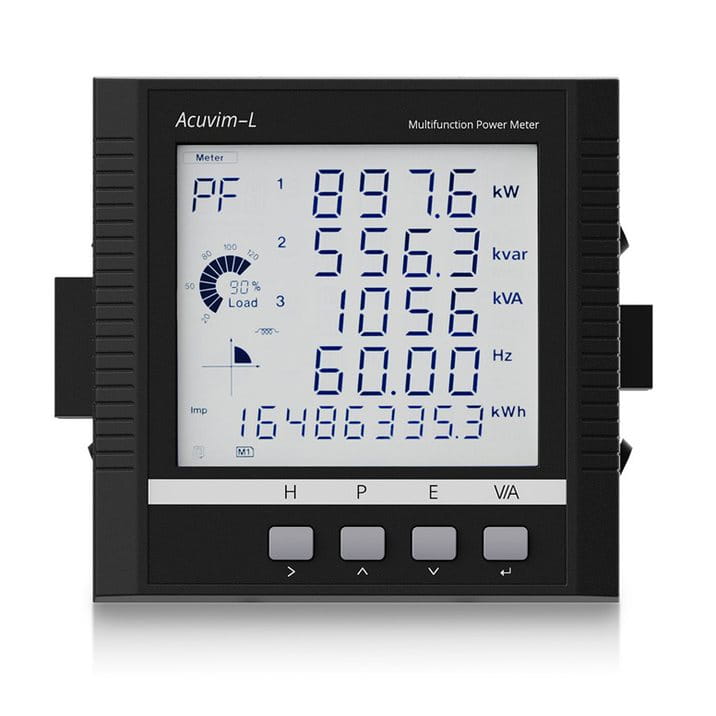
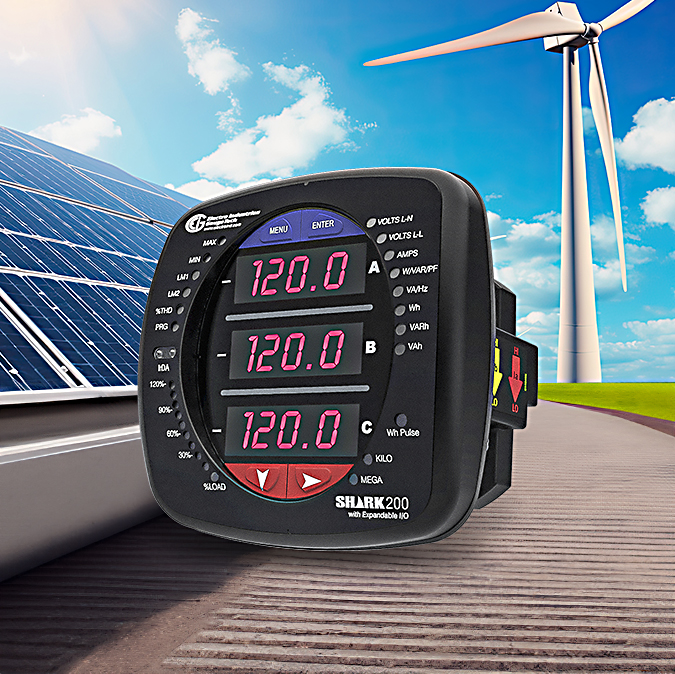
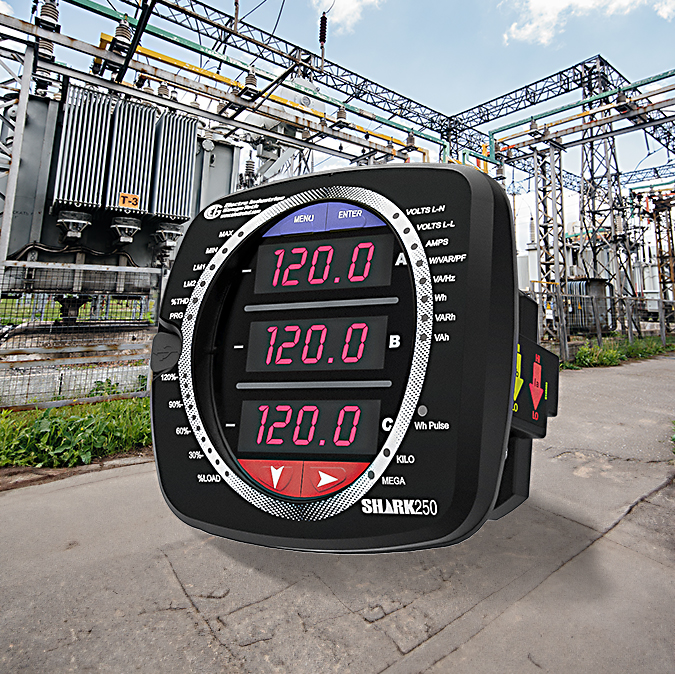
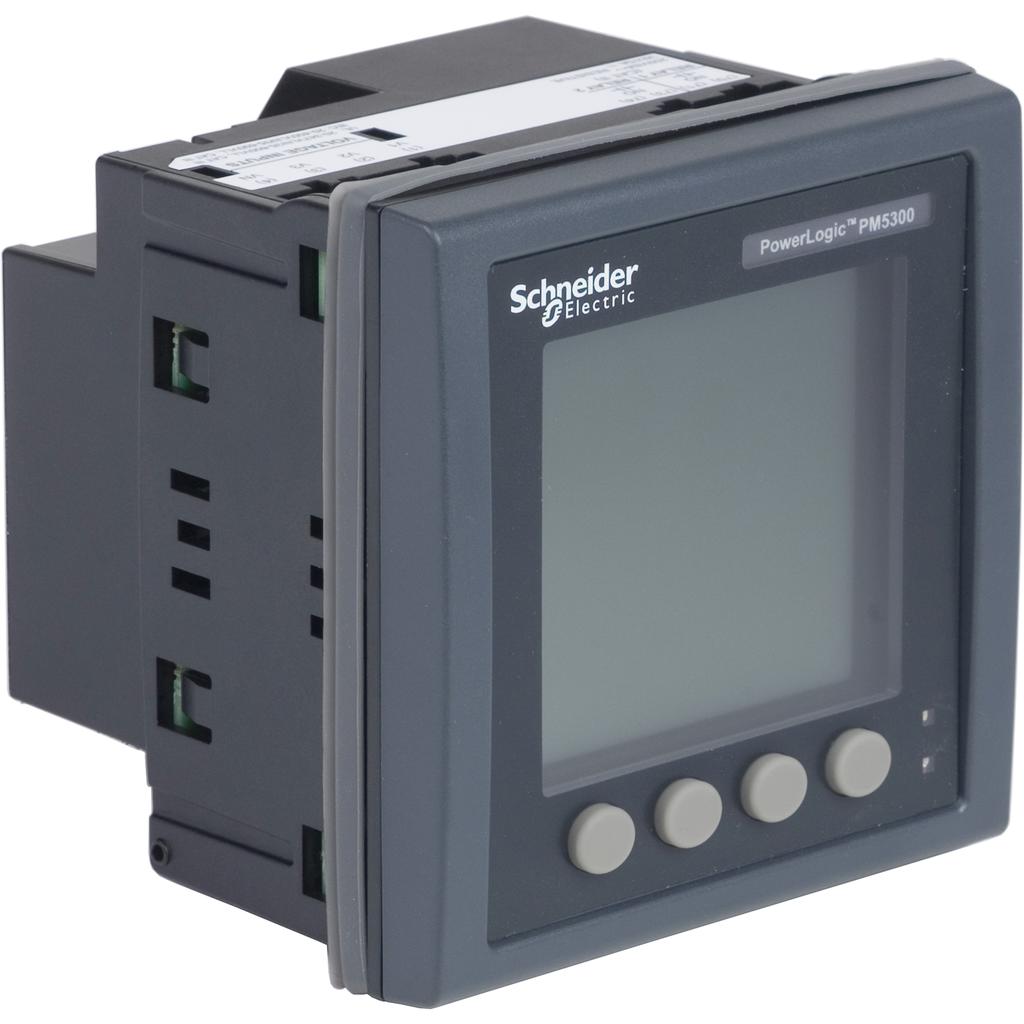
A multifunction meter (Accuenergy Acuvim II/L/3 class, Schneider PowerLogic PM/ION class) mounted in a panel door or switchgear cutout, wired to CTs (and, above low voltage, PTs) and to the bus voltage directly. It digitizes voltage and current waveforms at high sample rates (Accuenergy's Acuvim II samples 512 points per electrical cycle) and computes true RMS voltage, current, kW, kVA, kVAr, power factor, per-phase values, frequency, demand, energy totals, and power-quality data (THD, individual harmonics, sag/swell events) in real time.
Good at
Highest measurement fidelity of the meter classes in this guide: full per-phase voltage and current, true power quality analysis, sub-second update rates
Wide current-input flexibility (5 A/1 A CTs, 333 mV CTs, Rogowski coils, low-mA CTs all on the same meter, model-dependent)
Revenue-grade accuracy classes are available (ANSI C12.20 Class 0.1/0.2, IEC 62053-22 Class 0.1S/0.2S on the Acuvim II)
Rich communications: Modbus RTU/TCP standard, BACnet/EtherNet-IP/PROFINET/MQTT as add-on modules on the Acuvim II
Weak at
Needs a panel cutout or DIN-rail transducer housing, plus separate control power in most cases
Higher cost than a basic DIN-rail meter
Full power-quality capability is more than most sub-metering projects need
RatingsAcuvim II: ANSI C12.20 Class 0.1 and IEC 62053-22 Class 0.1S, 0.2% power/energy accuracy, IEC 61000-4-30 Class S compliant, voltage input to 828 V L-L, current inputs 5A/1A, 333 mV, Rogowski, or 80/100/200 mA, control power 100-415 Vac/100-300 Vdc or 20-60 Vdc, 3P4W/3P3W/1P2W/1P3W.
Best for
Switchgear and main-service metering where power quality (THD, harmonics, sag/swell) and per-phase detail matter
Utility-grade accuracy on a facility-owned meter feeding a Modbus gateway
Avoid when
The requirement is a single low-cost circuit reading: a DIN-rail meter is cheaper and simpler to install
A compact meter that clips onto standard 35 mm (TS35) DIN rail inside a panel. Two sub-types exist: direct-connect meters, where the load current itself passes through the meter's terminals up to a stated ampacity (commonly tens of amps, e.g. the Eastron SDM630-TCP's 65 A direct-connect rating), and CT-operated DIN-rail meters (e.g. Accuenergy AcuRev 1310), which take 5A/1A, mA, 333 mV or Rogowski CT inputs like a panel meter but in a smaller, cheaper DIN-rail body.
Good at
Small footprint, inexpensive relative to panel meters
Direct-connect models need no external CT for loads within their rated ampacity, simplifying installation
CT-operated DIN-rail models (AcuRev 1310) still reach ANSI C12.20 Class 0.5 / IEC 62053-22 Class 0.5S revenue-grade accuracy
Weak at
Direct-connect ampacity is limited (tens of amps, not hundreds): a larger circuit still needs a CT-operated meter
Fewer power-quality features than a full panel meter
Direct-connect terminals must carry full load current, so wiring is heavier-gauge than a CT-fed meter's signal leads
RatingsAcuRev 1310: ANSI C12.20 Class 0.5 / IEC 62053-22 Class 0.5S, voltage 10-400 V L-N or direct to 690 V L-L, CT inputs 5A/1A, 80/100/200 mA, 333 mV, or Rogowski, RS-485 Modbus RTU or BACnet MS/TP. Eastron SDM630-TCP: 65 A direct-connect, MID EN 50470-1/EN 50470-3, 1P2W/3P3W/3P4W, Modbus-TCP over Ethernet.
Best for
Panel-space-constrained sub-metering of individual branch circuits or small services
Retrofits where a direct-connect meter avoids adding CTs
Avoid when
Load current exceeds the direct-connect meter's rated ampacity (use a CT-operated DIN-rail or panel meter instead)
Power-quality analysis (harmonics, sag/swell) is required
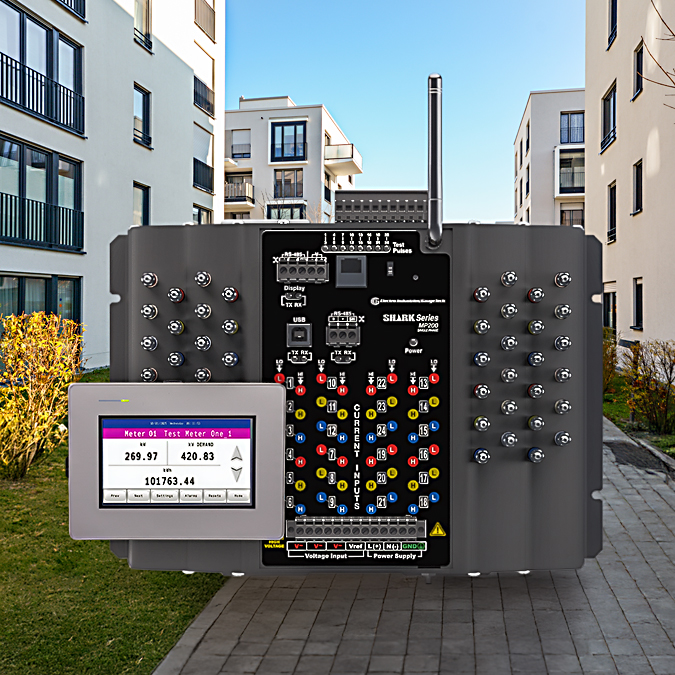
One meter chassis with many current-input channels, so a single device can monitor dozens of individual branch circuits or a mix of single- and three-phase loads from one DIN-rail or wall-mount enclosure, instead of installing one meter per circuit. Each channel is a current input (mV, mA, or CT-input, model-dependent) referenced to shared voltage inputs; the meter internally allocates each channel's current against the appropriate phase voltage to compute per-circuit kW/kWh.
Good at
Very high circuit density per dollar and per panel-space compared with one stand-alone meter per circuit
Central point for tenant billing, load-level submetering, or point-of-use energy audits
Revenue-grade accuracy is available (AcuRev 2100 reaches ANSI C12.20 0.5/IEC 62053-22 0.5S and carries Measurement Canada approval)
Weak at
All channels share a wiring/labour burden proportional to circuit count (one CT and one pair of leads per circuit, regardless of how compact the meter itself is)
Some models cannot mix CT types on the same unit (e.g. the AcuRev 2100 cannot run split-core and Rogowski CTs simultaneously on one chassis)
Channel-dense units concentrate risk: one meter/gateway failure affects many circuits at once
RatingsAcuRev 2100: up to 18 single-phase or 6 (or 9) polyphase circuits per unit, mV (333 mV)/mA (80/100 mA)/Rogowski current inputs via SnapOn connectors, ANSI C12.20 Class 0.5/IEC 62053-22 Class 0.5S, UL Listed, Measurement Canada Approved, RS-485 Modbus-RTU/BACnet MS/TP standard, optional WEB2 module adds Ethernet/Modbus-TCP/BACnet-IP/WiFi. Dent PowerScout FLEX 48: up to 48 single-phase or 16 three-phase circuits, accepts 333.3 mV split-core, solid-core, and RoCoil (Rogowski) CTs.
Best for
Tenant sub-metering in multi-unit commercial/industrial buildings
Facility-wide branch-circuit energy audits where dozens of circuits need monitoring from one point
Avoid when
Only one or two circuits need monitoring: a single-circuit DIN-rail or panel meter is simpler and cheaper
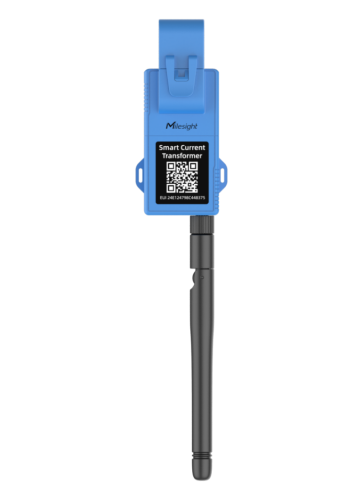
A battery- or self-powered clamp that measures current at the sensor and radios the reading over LoRaWAN, without a local gateway wire back to a controller. The Milesight CT10x is representative: it clamps around a single conductor, is self-powered by inductive energy harvesting from the monitored current itself (with an internal store that keeps it running up to 12 hours through an outage, plus optional USB-C supplemental power at low currents), and reports RMS current directly. It can additionally report kWh, but only if the installer manually enters the circuit's nominal voltage and power factor into the device once during setup, the sensor does not measure voltage itself, so its energy figure is a calculation from an assumed, fixed voltage and PF, not a true per-interval power measurement the way a CT-plus-voltage-reference panel meter provides.
Good at
No control wiring or local gateway wiring: current reading and radio are both in the clamp
Self-powered from the monitored conductor above a minimum current threshold, so no battery-replacement schedule in normal operation
Fast to retrofit onto an existing circuit without touching the panel's voltage bus
Weak at
Reports current natively; kWh is a derived estimate from a manually entered nominal voltage and power factor, not a measured value: accuracy degrades if actual voltage or PF drifts from what was entered
Single-phase, single-conductor design (the CT10x models); three-phase monitoring needs one clamp per phase and, for a true kWh figure, still needs a correct voltage/PF assumption per phase
Accuracy is CT-grade, not revenue-grade: Milesight states +/-1% above 5 A RMS but +/-3% at or below 5 A RMS
RatingsMilesight CT10x: split-core, models for 100 A (CT101), 250 A (CT103), 500 A (CT105) rated current; accuracy +/-1% (>5 A RMS), +/-3% (<=5 A RMS), 1 mA resolution; LoRaWAN Class A, CN470/IN865/RU864/EU868/US915/AU915/KR920/AS923 region variants; configurable reporting interval.
Best for
Retrofitting current/consumption visibility onto a circuit where running Modbus wiring is impractical
Applications where an approximate kWh (built from a known, stable nominal voltage) is acceptable
Avoid when
A billing-grade or power-quality-grade kWh figure is required: a real voltage-referenced panel or DIN-rail meter is the correct fit
The circuit's voltage or power factor varies enough that a fixed assumption would introduce meaningful error
A closed, one-piece toroidal core that the conductor must be threaded through before termination (i.e., installed only when the conductor can be disconnected or during initial construction, since the loop cannot be opened). Because the core is a continuous, permanently sealed ring, it holds tighter mechanical tolerances than a split-core unit, which is why solid-core CTs reach the highest published accuracy classes.
Good at
Best available accuracy class of the CT types (e.g. AcuCT S125/S220 reach IEC 61869-2 Class 0.2)
Permanently sealed core is mechanically stable over time (no mating-gap wear from repeated opening)
Lower cost than an equivalent split-core unit at the same accuracy
Weak at
Cannot be installed on a live or already-terminated conductor: requires disconnecting the conductor or installing during new construction
Fixed window size sets a hard ceiling on the conductor/busbar size it can accept
RatingsAcuCT S125: 50/100/200/300/400 A primary ratings, outputs 5A/1A/80mA/100mA/333mV, IEC 61869-2 Class 0.2, window Ø32.0 mm, accuracy held at the standard's 5/20/100/120% test points. AcuCT S220 (switchgear): 200-1500 A primary ratings, outputs 1A/5A/80mA/100mA/333mV, IEC 61869-2 Class 0.2, window Ø57.0 mm.
Best for
New construction or any point where the conductor can be de-energized and disconnected for installation
Revenue-grade or near-revenue-grade accuracy requirements
Avoid when
A retrofit onto an energized, already-terminated conductor is required: use split-core or Rogowski instead
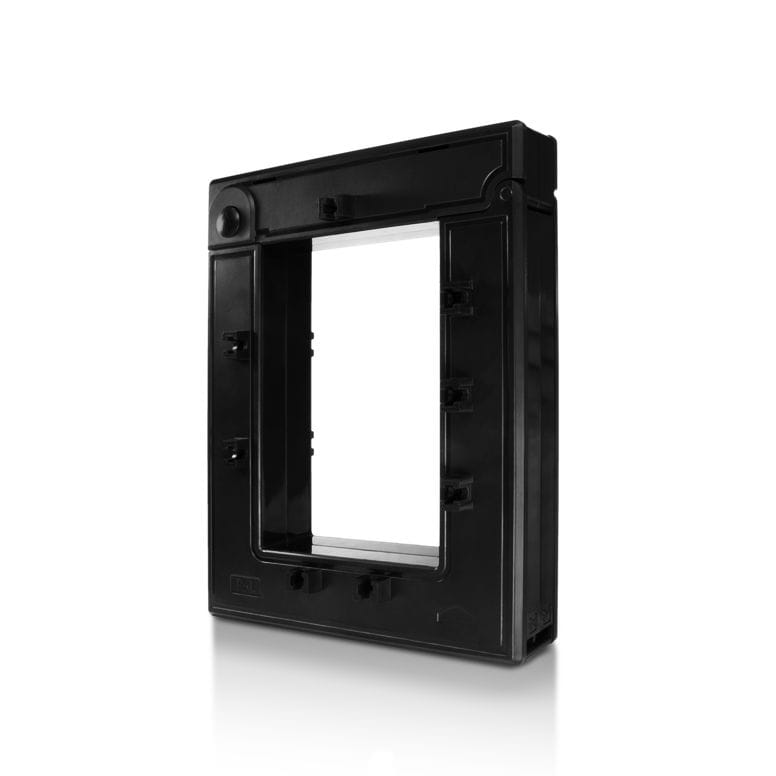
A toroidal core built in two hinged or separable halves that clamp around an already-installed, energized conductor without disconnecting it, then latch closed. This is what makes split-core CTs the standard retrofit choice. The 333 mV split-core products (Accuenergy AcuCT mV series, CCS/WattNode voltage-output CTs) build a burden resistor into the CT itself so the secondary always has a defined, low-voltage output rather than an open or shorted current loop.
Good at
Installs on live, already-terminated conductors: no disconnect needed, which is why it dominates retrofit sub-metering
333 mV output versions are inherently safer to handle: the low-voltage, low-current output is well below the shock-hazard voltage and current thresholds that make an open 5A CT secondary dangerous
Available across a very wide current range (Accuenergy's 333 mV split-core line spans 20 A to 5,000 A across four window sizes)
Weak at
Typically lower accuracy than an equivalent solid-core CT at the same price point (Accuenergy's 333 mV split-core line is rated 1% vs the 0.2% solid-core S-series)
The mating seam between core halves is a mechanical wear point and a source of additional error if not fully closed or if debris is trapped in the gap
Still needs care around live conductors during installation even though the circuit is not de-energized
RatingsAcuCT 333 mV split-core: AcuCT-075 (50-200 A, 0.75 in / 19 mm window), AcuCT-125 (100-600 A, 1.25 in / 32 mm), AcuCT-200 (200-1500 A, 2 in / 51 mm), AcuCT-3050 (400-5000 A, 3 in x 5 in / 76 x 127 mm); revenue-grade-labelled accuracy 1%; 8 ft (2.4 m) lead length standard across all models; UL Recognized, CE, RoHS.
Best for
Retrofit CT installation on live conductors without a shutdown
General sub-metering where 1% CT accuracy is acceptable
Avoid when
Revenue-grade (Class 0.2/0.5) accuracy is required for billing-style metering: step up to a solid-core or a higher-accuracy split-core line
An air-core coil (no iron core to saturate) wound on a flexible, rope-like former that wraps around a conductor or bus bar and latches closed, rather than clamping like a rigid split-core CT. Because it has no iron core, output is inherently linear across a very wide current range with no saturation at high current, but the raw coil output is a very small, rate-of-change (dI/dt) signal that must be integrated: either inside the meter or by an external integrator module, to recover a current waveform. Accuenergy's AcuCT Flex offers direct low-millivolt outputs (500/200/100/40/20/10/2 mV per 1000 A, selectable) or, via an integrator kit, standard 5A/333 mV/4-20 mA/0-5 V/0-10 V outputs compatible with conventional meters.
Good at
Flexible form factor installs around large, irregular, or multiple bundled conductors and bus bars that a rigid CT window cannot fit
No iron core means no saturation and a linear response across an extremely wide current span (AcuCT Flex: 5 A to 50,000 A)
No shorting block required and, on CCS's CTRC design, the coil output is pre-conditioned to a safe low-voltage signal, so there is no open-secondary shock hazard the way there is with a raw 5A CT
Wide frequency response (AcuCT Flex: 10 Hz-20 kHz) suits harmonics and power-quality work
Weak at
Needs an integrator (built into the meter or a separate module) to turn the coil's dI/dt output into a usable current signal: it is not a drop-in replacement for a 5A or 333 mV CT input without checking meter compatibility
Accuracy is more sensitive to installation than a rigid CT: conductor position within the loop, and whether an adjacent conductor's field is picked up, both add error (CCS: position sensitivity up to +/-5.0% depending on model; external-conductor immunity +/-2.0% of full scale)
Typical accuracy class (0.5-0.6 metering class) is a step below the best solid-core CTs (0.2 class)
RatingsAcuCT Flex: IEC 61869-10 Class 0.5 (measuring), IEEE C57.13 Class 0.6, coil models RCT16/24/36/47 with window sizes 106/178/271/369 mm and total coil lengths 400/600/900/1200 mm, current range 5 A-50,000 A, frequency response 10 Hz-20 kHz. CCS CTRC: accuracy +/-1.0% of reading from 5% to 120% of rated current, phase shift +/-0.50 degrees over the same range, temperature drift +/-1.5% across -4 degF to 140 degF, pre-conditioned output up to 1.3 Vac max (0.333 Vac at rated current).
Best for
Large bus bars, bundled conductors, or irregular geometries a rigid CT window cannot accommodate
Power-quality and harmonics work needing a wide, linear frequency response
Retrofits where flexibility of installation matters more than the last 0.1-0.2% of accuracy
Avoid when
The meter on hand has no Rogowski-compatible input or integrator and adding one is not practical
Top-tier revenue-grade (0.2 class) accuracy is required
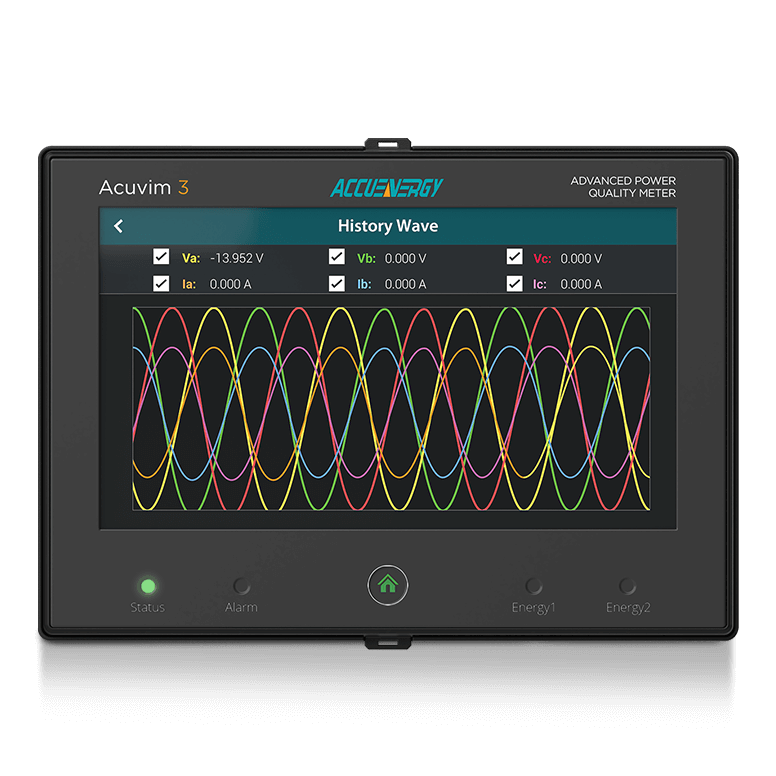
Not a separate hardware category so much as a capability tier layered onto a panel or switchgear meter: high-speed waveform sampling (the Acuvim II samples 512 points per cycle) lets the meter compute total harmonic distortion (THD) and individual harmonic magnitudes (Acuvim II reports up to the 63rd harmonic), and, when compliant with a disturbance-monitoring standard such as IEC 61000-4-30, detect and log voltage sag and swell events (brief drops or rises in RMS voltage) in addition to normal kWh/kW/demand metering.
Good at
Turns routine sub-metering hardware into a diagnostic tool for nuisance trips, equipment stress, and utility power-quality disputes
High-speed sampling also improves the accuracy of demand and event capture generally, not just harmonics
Weak at
Adds cost and, on some meters, requires enabling/licensing a feature set beyond basic kWh metering
Useful interpretation of THD/sag/swell data generally needs a trained eye or software to turn raw events into an actionable finding
RatingsAcuvim II: 512 samples/cycle, harmonics to the 63rd order, IEC 61000-4-30 Class S compliant, 100 ms Modbus refresh, <20 ms high-speed update capability.
Best for
Facilities chasing intermittent equipment faults, nuisance breaker trips, or disputes over utility voltage quality
Any install where the same meter is expected to double as a power-quality diagnostic tool
Avoid when
Only total kWh/kW consumption tracking is needed: the extra capability (and cost) is not used
A DIN-rail or wall-mount device that polls multiple downstream meters over Modbus RTU/TCP, BACnet, M-Bus, SunSpec, or pulse inputs, aggregates and time-stamps the readings, and pushes them onward (HTTP/HTTPS, MQTT, FTP/SFTP, SNMP, or a proprietary cloud API) to a building system or a platform such as Ubidots. It is the piece that turns a room full of read-only Modbus power meters into one network-reachable data source.
Good at
Consolidates many meters behind one IP address / network connection
Handles protocol translation (Modbus in, MQTT/HTTP out, for example) without custom integration work per meter
Local logging buffers data through a network outage
Weak at
Adds one more device (and one more point of failure) between the meters and the platform
Needs its own power and network/cellular connectivity plan
RatingsAcuLink 810: inbound Modbus-RTU/TCP, BACnet MS/TP/IP, SunSpec, M-Bus, pulse counters, virtual meters; outbound Modbus-TCP, BACnet-IP, SNMP, HTTP/HTTPS, FTP/SFTP, MQTT; dual 10/100 Ethernet (RSTP, up to 32 devices), RS-485 (up to 32 devices, expandable), USB 2.0, WiFi 802.11 b/g/n; 8 GB internal logging at 1-1440 minute intervals, three independent loggers; 24 Vdc power; DIN-rail or wall mount; TLS 1.2.
Best for
Any site with more than a handful of Modbus meters that need to reach a single cloud or BMS endpoint
Avoid when
A single meter already has a native LoRaWAN or cellular uplink: a gateway adds no value for a one-meter site
Electricity meter and current transformer families compared on what they measure, current input, accuracy class as stated, install, signal and the main thing to watch for
Family
What it measures
Current input
Accuracy class, as stated
Install
Signal
Watch for
Utility revenue meter
kWh and demand for billing, time of use
Self-contained to its rated ampacity, or external CTs and PTs above it
ANSI C12.20 Class 0.2 or 0.5
Socket or switchboard, utility owned
The utility's own network
Not a customer-readable Modbus or BACnet source, and outside the facility's control
Panel and switchgear meter
Over 400 parameters on the Acuvim II: kWh, kW, kVA, kVAr, PF, per phase, THD, harmonics to the 63rd, demand
5 A, 1 A, 333 mV, Rogowski, or 80/100/200 mA
ANSI C12.20 Class 0.1 and IEC 62053-22 Class 0.1S (Acuvim II)
Panel cutout or DIN transducer, plus control power
Modbus RTU built in, with modules for Modbus TCP, BACnet, EtherNet/IP, PROFINET, IEC 61850, MQTT
More capability than most sub-metering uses, and it needs its own supply
DIN-rail meter, CT operated
kWh, kW, kVA, kVAr, PF, per phase, demand
5 A, 1 A, 333 mV, Rogowski, or 80/100/200 mA (AcuRev 1310)
ANSI C12.20 Class 0.5 and IEC 62053-22 Class 0.5S
35 mm DIN rail, small footprint
RS-485 with Modbus RTU or BACnet MS/TP, optional pulse and relay
Fewer power-quality features than a panel meter
DIN-rail meter, direct connect
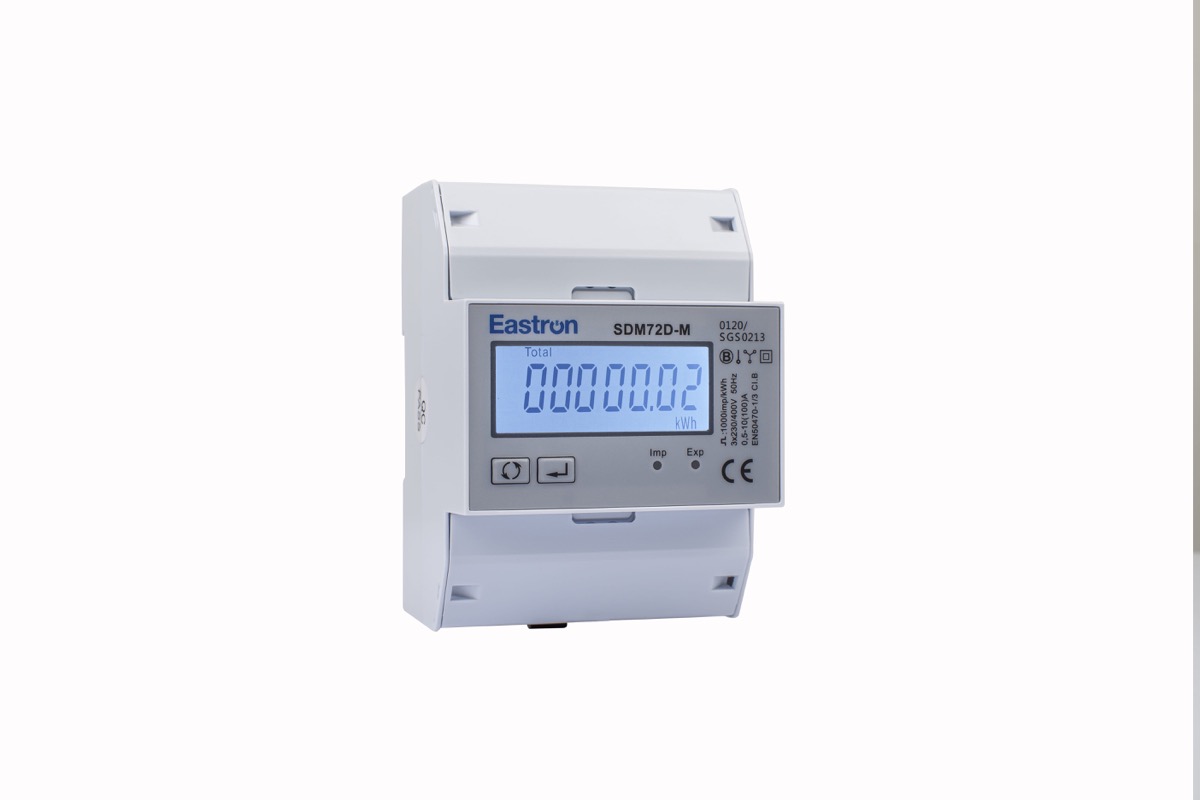
kWh and a basic live set; the SDM230 adds a maximum-demand register, the SDM72D-M does not
None; load current passes through the meter, 45 A on the SDM120, 100 A on the SDM630-Modbus, 65 A on the SDM630-TCP
MID EN 50470 on the Eastron line; no Measurement Canada approval confirmed
DIN rail, heavier gauge wiring because full load current lands on the terminals
Modbus RTU or TCP, pulse, or M-Bus depending on the variant
The direct-connect ceiling is well below a typical service, and MID is a European approval, not a Canadian one
Multi-circuit sub-meter
Per-circuit kWh, kW and PF across one chassis
333 mV, 80/100 mA or Rogowski on the AcuRev 2100; split-core, solid-core and Rogowski on the PowerScout FLEX
ANSI C12.20 Class 0.5 and IEC 62053-22 Class 0.5S (AcuRev 2100); ANSI C12.20 Class 0.2 (PowerScout HD)
DIN rail or wall enclosure, one CT and lead pair per channel
Modbus RTU and BACnet MS/TP standard, Ethernet and Modbus TCP on the option module
The AcuRev 2100 cannot mix split-core and Rogowski on one chassis, and one failure takes every circuit on it
LoRaWAN CT sensor
RMS current and cumulative amp-hours only; kWh is computed from a typed-in voltage and power factor
Its own integral clamp: 100 A and 250 A through a 16 mm hole, 500 A through 36.5 mm, 1000 A through 51 mm on the three-channel CT310
±1% above 5 A RMS, ±3% at or below 5 A
Clamps on live, self-powered by induction from the conductor, IP30 so indoors only
LoRaWAN Class A
No voltage measurement at all, so the kWh figure is an estimate and should never be presented as metered energy
Solid-core CT
Current only; it produces no kWh on its own
Output 5 A, 1 A, 80/100 mA or 333 mV
IEC 61869-2 Class 0.2 (AcuCT S125 and S220); Measurement Canada S-E-09 Class 0.15 at 80/100 mA on the AcuCT S77
Conductor must be disconnected and threaded through; windows of 32.0 mm and 57.0 mm
None; it feeds a meter
Needs a shutdown, and a 5 A output needs a shorting block before anything downstream is opened
Split-core CT
Current only
Output 5 A, 1 A or 333 mV
1.0% on the Accuenergy 333 mV line; IEC 61869-2 Class 0.5 on select AcuCT R models
Clamps around a terminated conductor; windows of 19.05, 31.75, 50.8 mm and a 76 by 127 mm busbar slot
None; it feeds a meter
A mating seam that wears, and lower accuracy than solid-core
Rogowski coil
Current only, as a dI/dt signal that has to be integrated
Direct low-mV output, or an integrator kit to 5 A, 333 mV, 4-20 mA, 0-5 V or 0-10 V
IEC 61869-10 Class 0.5 and IEEE C57.13 Class 0.6 (AcuCT Flex)
Wraps around anything; coil inner sizes 106, 178, 271 and 369 mm, 5 A to 50,000 A, 10 Hz to 20 kHz
None; it feeds a meter or an integrator
Position sensitive, and CCS publishes ±1.5% to ±5.0% conductor-position error on its own CTRC line
Power quality, as a meter capability
THD, individual harmonics, sag and swell capture on top of energy and demand
Same inputs as the panel meter it sits on
IEC 61000-4-30 Class S on the Acuvim II; Class A, third-party certified, on the Acuvim 3
Panel, with control power and enough memory for event logs
Modbus, BACnet, Ethernet, and COMTRADE waveform export on the Acuvim 3
Well beyond what a sub-metering job needs, and priced that way
Gateway
Nothing; it reads other devices
None
Not applicable
DIN rail or wall, 24 VDC
Reads Modbus RTU and TCP, BACnet MS/TP and IP, SunSpec, M-Bus and pulse counters; publishes Modbus TCP, BACnet IP, SNMP, HTTP or HTTPS, FTP or sFTP, and MQTT
Device counts are per port: 32 over Ethernet, 32 over RS-485, 32 more over USB on the AcuLink 810
Getting a number off the meter and onto a dashboard
On electricity the meter is usually yours, so the question is which of the four routes the building can actually support.
Modbus RTU and Modbus TCP
Modbus RTU rides on a two-wire EIA/TIA-485 balanced pair, and the Modbus Organization's own serial-line specification sets the numbers people usually guess at. The addressing space is 256, with 0 reserved for broadcast and slaves assigned 1 to 247. Baud rates of 9600 and 19200 are required and 19200 is the default, with 1200 through 115k optional. Trunk length is 1000 m at 9600 baud on AWG 26 or heavier cable, and each of the two ends of the trunk takes a line termination, either 150 Ω at 0.5 W or 120 Ω in series with a 1 nF capacitor where the pair also needs polarization.
Register maps, and the Acuvim II as a worked example
A Modbus meter is only as usable as its register map, and Accuenergy publishes a full address-level map for the Acuvim II as a spreadsheet, version 1.07, with separate tabs for IEEE-754 float and 32-bit integer representations. Frequency sits at 4000H, the three line-to-neutral voltages at 4002H through 4007H, the line-to-line voltages at 400AH through 400FH, phase and neutral currents at 4012H through 401BH, per-phase and total active power at 401CH through 4023H, reactive at 4024H, apparent at 402CH and power factor at 4034H. On the energy tab, imported active energy is at 4048H, exported at 404AH, total at 4050H and apparent energy at 4058H.
The same map carries the detail that catches people out on a CT-fed meter. Every current and power register publishes two formulas, a primary mode that returns the raw secondary reading and a secondary mode that applies the programmed ratios, written as I = Rx × (CT1/CT2) and P = [Rx × (PT1/PT2) × (CT1/CT2)] / 1000. Set the ratio once at commissioning and every later read is already in true primary-side engineering units, so nobody downstream should be multiplying by 40 again.
Modbus itself is not a read-only protocol. The application protocol defines function codes 03 for read holding registers and 04 for read input registers, and 05, 06, 15 and 16 for the various writes, and a vendor decides which of its registers accept one. The Acuvim II's own energy accumulators are listed as read and write in its map, because a write is how a technician presets or clears them. Quantify's gateways are configured to issue only function codes 03 and 04 and never a write, which is an operating discipline we apply, not a property the protocol enforces on our behalf.
BACnet is the building-automation standard, and where a site already runs a BAS it is usually easier to add a point than to add a second network. Accuenergy sells a BACnet-native meter, the Acuvim IIBN, supporting BACnet/IP over Ethernet and BACnet MS/TP over RS-485 and BTL-listed as a Smart Sensor device, with no Modbus mentioned on its own product page. Where the meter you want speaks only Modbus, a gateway bridges it: the AcuLink 810 reads BACnet MS/TP and BACnet IP as inputs alongside Modbus and republishes as BACnet IP. No source we read gave a BACnet-specific cable length or device count for MS/TP, so treat the segment limits as the underlying RS-485 electrical ones and confirm them with the BAS integrator.
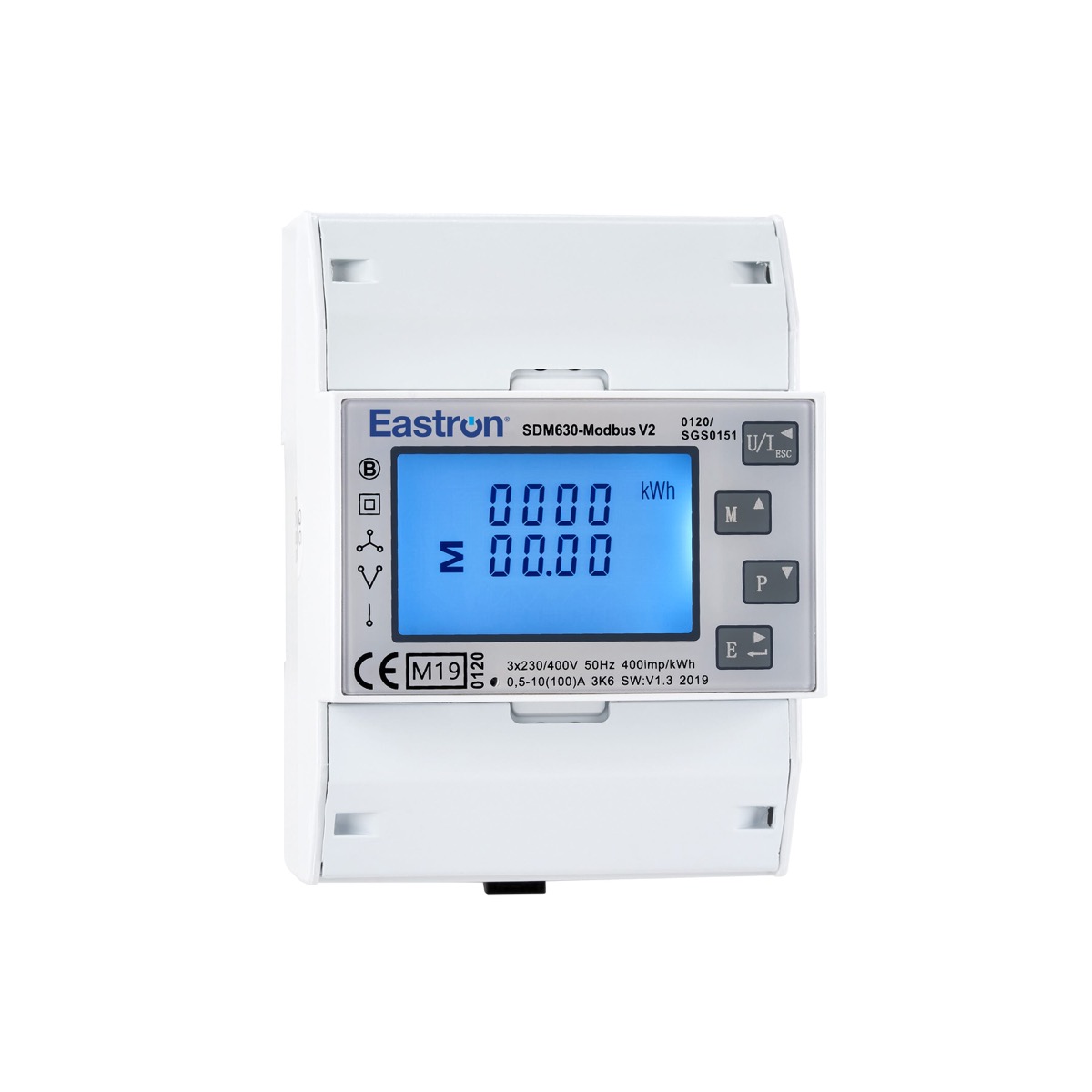
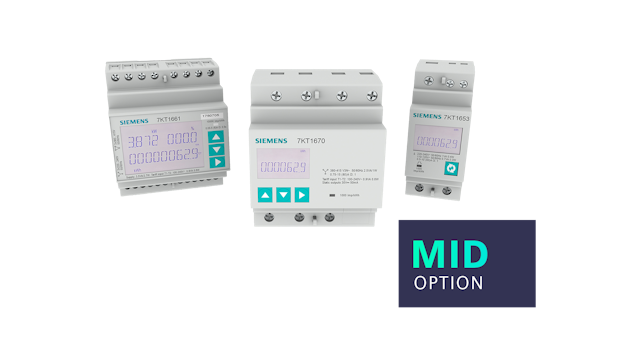
A pulse output closes a contact once per fixed increment of energy, which makes it the simplest thing on the meter and the least informative. Eastron's SDM630-Modbus V2 has two: pulse 1 is configurable at 2.5, 10 or 100 Wh, or 1, 10 or 100 kWh per pulse, with a pulse width of 200, 100 or 60 ms, and pulse 2 is fixed at 400 impulses per kWh, which is 2.5 Wh each. Siemens' 7KT PAC1600 carries an S0 pulse interface alongside Modbus RTU and M-Bus. What a pulse train cannot give you is demand or power factor: average demand can be approximated by timing pulses and dividing, but power factor is a phase relationship between voltage and current that "one more watt-hour happened" never carried.
The pulse rate never gets near the counter's ceiling
Take one of the largest services a client of ours would sub-meter, 400 A at 600 V three-phase, and run it at unity power factor: 1.7321 × 600 V × 400 A is 415,692 W, call it 415.7 kW. At 1 Wh per pulse that is 415,692 pulses an hour, or 115.5 Hz. At Eastron's finest documented weight of 2.5 Wh it is 46.2 Hz, and at a more typical 100 Wh it is 1.15 Hz.
A Milesight EM300-DI LoRaWAN pulse counter accepts up to 2000 Hz with a 250 µs minimum pulse width, so even the fastest of those three sits at 5.8% of the ceiling. Choose the pulse weight for how quickly you want a load event to become visible, not to protect the counter.
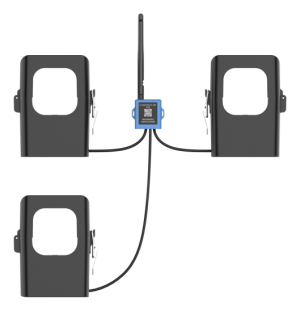
Milesight's CT101, CT103, CT105 and the three-channel CT310 clamp onto a live conductor, harvest their own power from it, and send over LoRaWAN with no wiring at the sensor. Their uplink carries instantaneous current, cumulative amp-hours and an onboard temperature, and Milesight's own decoder documentation shows no voltage field and no energy field. The devices are accurate to ±1% above 5 A RMS and ±3% at or below, hold up through about 12 hours of an overnight shutdown on stored energy, and are IP30, which is indoors only.
So the honest description is current trending with an estimated kWh. If a client needs metered energy over LoRaWAN there are two routes that give it. Put a Milesight EM300-DI on a real meter's kWh pulse output and the count is metered, no assumed voltage anywhere in it. Or put a Milesight UC300 on the meter's RS-485 port as a Modbus master, map the registers you want into its MODBUS channel, and you have true kWh, kW, voltage and power factor arriving over the same radio.
The AcuLink 810 is the piece that turns a panel of meters into one feed. It reads Modbus RTU, Modbus TCP/IP, BACnet MS/TP, BACnet IP, SunSpec, M-Bus and pulse counters, across dual Ethernet ports carrying up to 32 devices with RSTP, an RS-485 port for another 32, a USB port for 32 more through a converter, and 2.4 GHz Wi-Fi. It republishes over Modbus TCP/IP, BACnet IP, SNMP, HTTP or HTTPS, FTP or sFTP, or MQTT, keeps 8 GB of onboard logs across three independent loggers at intervals from 1 to 1440 minutes, and runs on 24 VDC from DIN rail or a wall.
Green Button has two features, and Toronto Hydro brands them precisely: "Download My Data" pulls consumption, billing and customer information, and "Connect My Data" authorizes a pre-approved third party to receive it, with the customer able to remove any connection themselves. The mandate date is where the sources disagree. The OEB states that rate-regulated electricity and natural gas utilities were required to provide access by 1 November 2023, while Alectra Utilities states the initiative was mandated across the province on 1 November 2021. Both are recorded here as published; the gap may be a phased rollout, and neither page explains it.
What we could not confirm is the granularity. Neither the OEB page nor the Alectra page states whether the underlying interval data is hourly, so treat it as not stated and ask the distributor rather than assuming. IESO's own settlement metering is a different system entirely: over 1800 metering installations recording every five-minute interval, validated and edited before settlement, and it applies to generators and loads that transact directly in the wholesale market, not to an ordinary commercial account.
A current transformer's secondary is a current source, and Accuenergy's installation guide for its 5 A and 1 A split-core CTs says the consequence plainly: "An open secondary can develop hazardous voltage and may damage equipment or create a shock hazard." That guide lists an approved CT shorting block or shorting terminal among the required installation hardware and marks 5 A and 1 A CTs as high open-circuit risk, shorting required. The equivalent guide for the 333 mV line marks the same two fields low risk, shorting not required, because the burden resistor is built into the CT and there is no open-circuit condition to guard against. A pre-conditioned Rogowski coil behaves the same way.
Voltage taps are the thinner part of the record. No manufacturer document we read states a fusing requirement or a disconnect ahead of a meter's voltage-sense leads, so this page publishes no fuse rating; put that question to the electrical contractor with the panel's own fault-current data in hand. What both Accuenergy guides do say is that installation "shall only be performed by qualified, competent professionals who have received training and have experience with high voltage and current devices". In Ontario the Electrical Safety Authority's position is that the only way to be sure the work is safe and legal is to hire a Licensed Electrical Contractor, who files the electrical notification with ESA, which is the permit, and whose work an inspector then reviews.
Our order of preference, and the hardware behind it.
Electricity meter signal, the Quantify device that reads it, what it gives you, and our preference
Meter signal
Our device
What you get
Preference
Modbus RTU or TCP, from a panel meter, a DIN-rail meter or a multi-circuit chassis
A Modbus gateway such as the AcuLink 810, or a UC300 where the link has to be LoRaWAN. Read-only: function codes 03 and 04, never a write
kWh, kW, kVA, kVAr, per-phase voltage and current, power factor and demand, as far as the register map goes
Preferred, and the richest data set
A kWh pulse output on a real meter, S0 or dry contact
LoRaWAN pulse counter, the Milesight EM300-DI
Metered consumption, pulses times the pulse weight, with no assumed voltage anywhere in it
Second choice, and still a measured number
A LoRaWAN CT sensor clamped on the conductor, Milesight CT10x or CT3xx
LoRaWAN network server, no wiring at the sensor
Measured current and amp-hours. Any kWh is estimated from a voltage and power factor entered at setup
Third, for current trending, and the kWh is flagged as an estimate
No hardware at all: Green Button, Download My Data or Connect My Data
None; the data is authorized to us and pulled
Consumption, billing and customer information from the distributor. Interval granularity is not stated by the sources we read
Shown, not ranked
The CTs and the voltage taps are in cyan because that is the step a licensed electrician has to own, and the Modbus path is in cyan because it is the one we reach for first.
CTs and sizing
A CT ratio is a promise about a range, not a number
Two questions decide the CT: what current will run through it, and what will physically fit through the hole. They pull in opposite directions more often than people expect.
Size to the breaker, then check the load against it
Continental Control Systems' guidance is to "select the CT model with the lowest rated amps that are equal to or greater than the rating of the service, breaker, or fuse circuit being monitored", then add headroom for turn-on surge. Their own example steps a 125 A load to a 200 A CT rather than a 150 A one, and for loads with a crest factor above roughly 1.4 they suggest sizing to about 150% of expected RMS current so the meter's input does not saturate. Sizing to the breaker also keeps you inside the conductor's ampacity for free, because the breaker was already sized under it.
The low-load accuracy floor, and why headroom is not free
CTs hold their accuracy class only across a band. IEC 61869-2 tests Class 0.5, 0.5S, 0.2 and 0.2S at 20%, 100% and 120% of rated primary current, and the S classes exist precisely because standard-range metering CTs lose their stated accuracy below roughly 10% of rating. IEEE and ANSI C57.13-2008 characterizes its standard classes at 10% and at 100 to 120%, with an enhanced option that holds accuracy from about 1% to 120%. So the practical instruction for the picker is to ask for the expected minimum load, not only the breaker size, and to flag the choice when that minimum lands below about 10% of the CT rating.
CT windows are fixed openings, and no CT datasheet we read states a maximum wire gauge, so comparing the window against the conductor's outside diameter is a calculation you have to do rather than a spec you can look up. On the CT side, Accuenergy's solid-core AcuCT S125 opens to 32.0 mm and its switchgear S220 to 57.0 mm, while the 333 mV split-core line runs 19.05, 31.75 and 50.8 mm plus a 76 by 127 mm busbar slot. On the conductor side, Cerrowire's THHN/THWN-2 spec sheet puts 4/0 AWG at about 16.31 mm, 500 kcmil at 24.10 mm and 1000 kcmil at 33.27 mm.
Put those together and the S125's 32 mm window clears one 4/0 conductor comfortably, and will not take two of them bundled, which come to roughly 33 mm across before you allow for the packing gap. At that point you are choosing between a 57 mm window, a Rogowski coil, or a pair of identical CTs with their secondaries paralleled. Those Cerrowire figures are a real product's dimensions built to NFPA 70, not a transcription of NEC Chapter 9 Table 5 and not a CSA C22.1 table, neither of which we were able to retrieve, so cite them as what they are.
A 5 A or 1 A CT drives a current loop and is the traditional switchgear choice, and it is the one that carries the open-secondary hazard and needs a shorting block. A 333 mV CT has the burden resistor built in, so its output is a defined low voltage, it is safe to leave open, and the meter has to have a 333 mV input to accept it. A Rogowski coil fits what nothing else will and needs an integrator, either inside the meter or as a kit. Match this to the meter first, because a meter with only 333 mV inputs will not take a 5 A CT and no adapter in the catalog changes that cheaply.
Burden and lead length
On a 5 A or 1 A CT, the meter's input impedance plus the resistance of the leads between CT and meter both count against the CT's rated burden, and exceeding it degrades accuracy. None of the Accuenergy 5 A and 1 A solid-core datasheets we read published a burden VA figure, so ask the vendor for it directly before specifying a long run, and keep the leads as short as the panel allows in the meantime. The 333 mV line sidesteps the question by design and publishes one flat lead length, 8 ft or 2.4 m, across every model regardless of ratio.
Circuits at 400 A and larger usually run several parallel conductors per phase, and the documented answer is one identical CT on each conductor with the secondaries wired in parallel, never in series. The effective rating is the sum of the individual ratings, so two 100 A CTs behave as 200 A, and the accuracy penalty is negligible because "parallel operation tends to average out the nominal errors of the individual CTs". The same trick sums several branch circuits or sub-panels onto one meter input for a whole-building total. Every CT in the set has to be the same part number and rating, and no individual CT's own limit may be exceeded.
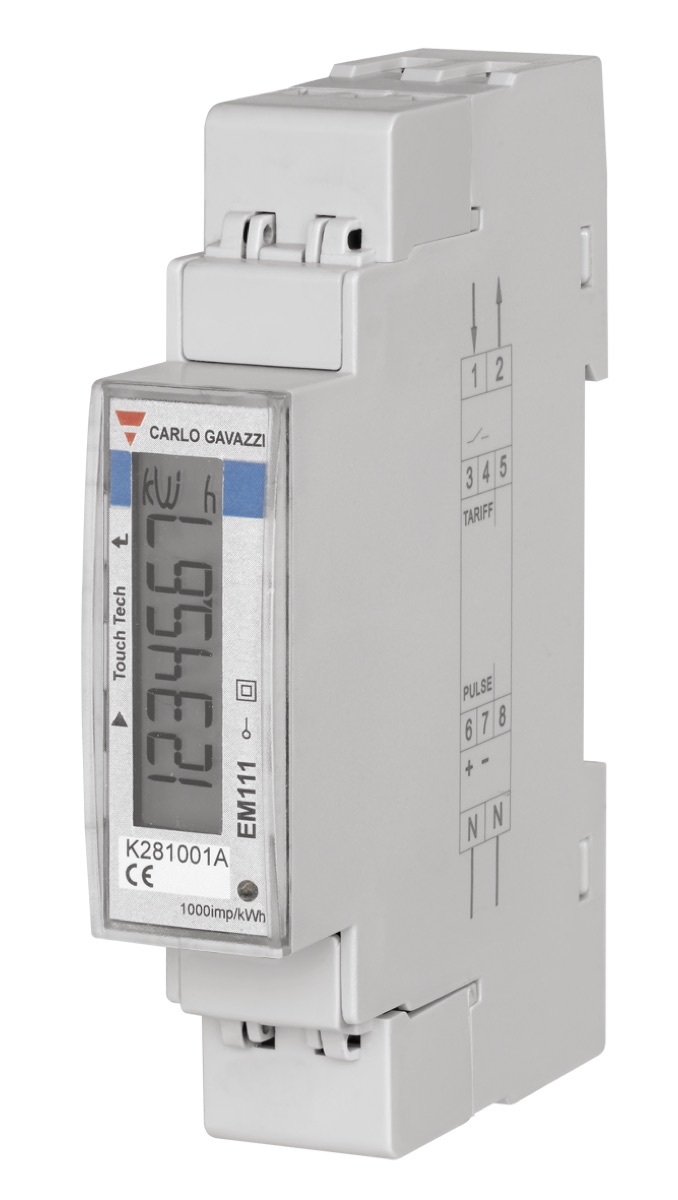
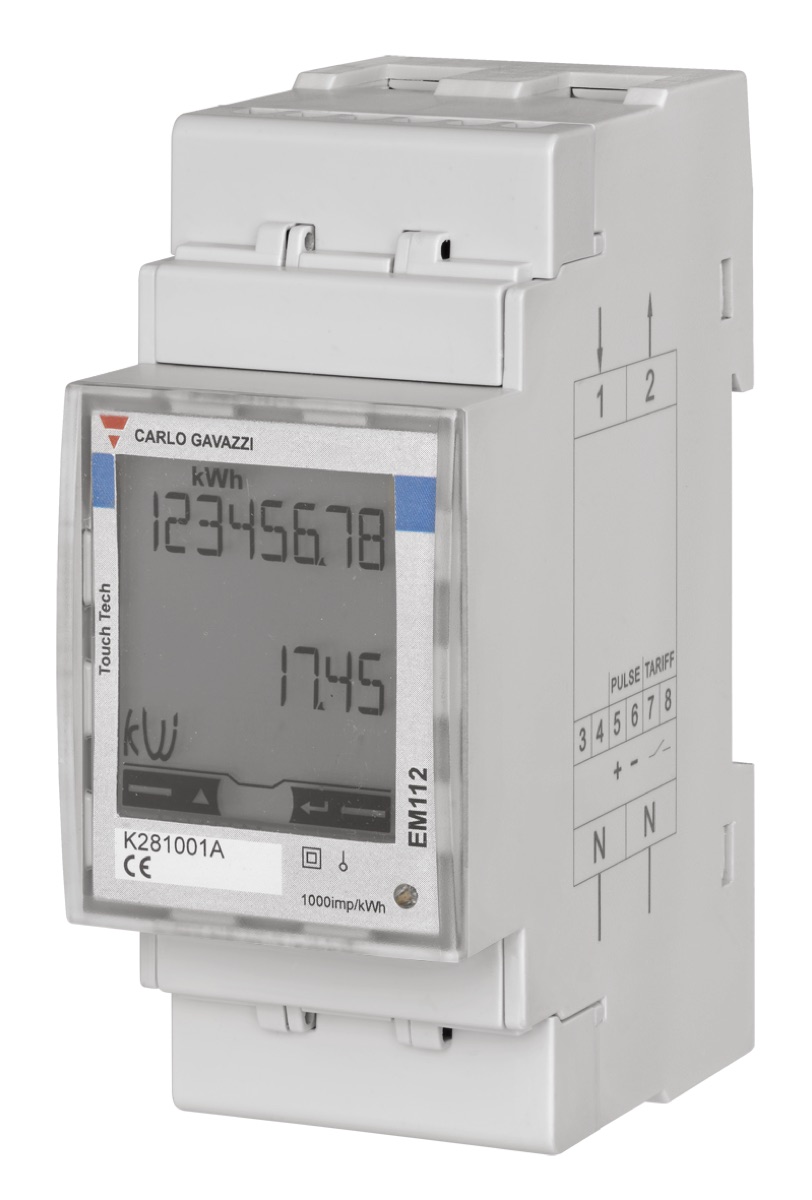
Direct-connect DIN-rail meters carry the load current through the meter body and need no CT at all inside their rating. Eastron's SDM120 is 45 A, the SDM230 and SDM630-Modbus are 100 A, and the SDM630-TCP is 65 A; Carlo Gavazzi's EM24 and EM340 are 65 A direct, the EM112 is 100 A and the EM111 is 32 A. Above those ceilings you are back to CTs, and the terminals on a direct-connect meter take full-size conductors, so the wiring is heavier than the meter's footprint suggests.
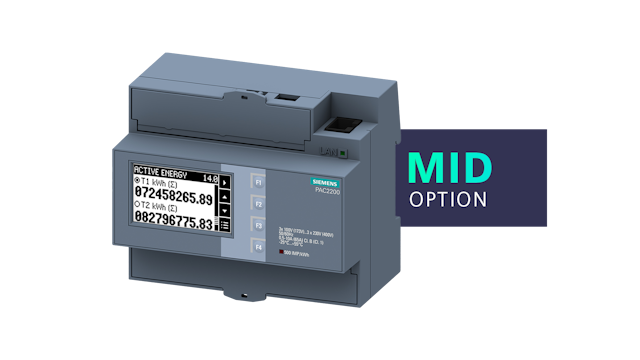
Billing demand is the highest average power over a defined interval inside the billing period, not an instantaneous peak, so a one-second spike does not set it and a sustained load does. Every Accuenergy meter we reviewed exposes a field-programmable demand interval rather than a fixed one, and Siemens' MID-certified PAC2200 CLP variant records active energy quarter-hourly. What we could not confirm is a specific Ontario-mandated interval length: no OEB or IESO page we reached states one, so this page does not print "15 minutes" as a requirement. Set the interval to match whatever the utility bills on and get that figure from the bill or the account manager.
The two accuracy-class families, and what each one is tested at
Current transformer accuracy classes under IEEE and ANSI C57.13-2008 and IEC 61869-2, with the percentage of rated current each class is tested at
Standard and class
Accuracy
Phase angle
Tested at, as a share of rated current
IEEE and ANSI C57.13-2008, Class 1.2
±1.2% at 100% and 120%; ±2.4% at 10%
Not stated in the source read
10%, 100%, 120%. Enhanced option holds ±0.75% and ±0.50° from 1% to 120%
IEEE and ANSI C57.13-2008, Class 0.6
±0.6% at 100% and 120%; ±1.2% at 10%
Not stated in the source read
10%, 100%, 120%. Enhanced option holds ±0.50% and ±0.25° from 1% to 120%
IEEE and ANSI C57.13-2008, Class 0.3
±0.3% at 100% and 120%
Not stated in the source read
100%, 120%. Enhanced option holds ±0.50% and ±0.25° from 1% to 120%, and is stated to exceed IEC 61869-2 Class 0.5S
IEC 61869-2:2012, Class 1.0
±1.0%
±1.0°, 60 minutes
100%, 120%
IEC 61869-2:2012, Class 0.5 and 0.5S
±0.50%
±0.50°, 30 minutes
20%, 100%, 120%
IEC 61869-2:2012, Class 0.2 and 0.2S
±0.20%
±0.167°, 10 minutes
20%, 100%, 120%
Both tables from Continental Control Systems on CT accuracy standards. These are CT classes. Meter accuracy classes, ANSI C12.20 Class 0.2 and 0.5 and IEC 62053-22 Class 0.1S, 0.2S and 0.5S, are a separate rating on the meter itself, and the same source is blunt about combining them: "system accuracy (meter with CTs) can be much worse than just the meter accuracy or even the naive addition of the meter and CT accuracies". A 0.5-class meter behind a 1% CT is a 1% measurement.
Pick a CT for your service
This tool needs JavaScript. The CT ratios, windows and accuracy bands it checks against are printed below it, so you can do the same comparison by hand.
Window fit is compared against the Cerrowire THHN/THWN-2 conductor dimensions, which are a real product's outside diameters built to NFPA 70 rather than a code table. Treat the fit verdict as a first pass and measure the conductor before you order.
CT ratios, windows, conductor diameters and accuracy bands
What Measurement Canada, the OEB and ESA actually require
Three regulators, three different triggers. Billing pulls in the first, billing a tenant in Ontario pulls in the second, and touching the panel at all pulls in the third.
Measurement Canada, and the one condition that matters
Electricity sits under the same federal statute as gas. The Electricity and Gas Inspection Act defines a meter as any apparatus used for making measurements of, or obtaining the basis of a charge for, electricity or gas supplied to a purchaser, and section 9(1) says that where a contractor or purchaser intends to use a meter "for the purpose of obtaining the basis of a charge", it may not be put into service until it has been verified and sealed. Section 9(4) makes approval of type a precondition of that verification. The trigger is billing, not ownership, not accuracy and not size.
A sub-meter whose reading nobody is charged from is not obtaining the basis of a charge, so a feeder meter feeding a dashboard for the facility's own optimization sits outside section 9(1) as the statute reads. A sub-meter that invoices a tenant, a sub-tenant or a separate legal entity is squarely inside it and needs an approved type, verification, sealing and reverification on schedule. That is our reading of the text and not a Measurement Canada ruling on any particular installation, so put an edge case, such as billing a related but legally separate company, to Measurement Canada directly.
The specifications are the S-E series, and the CT has its own
Approval and installation run through Measurement Canada's S-E specifications. S-E-02 covers verification and reverification, S-E-03 installation and input connections, S-E-04 the installation requirements for multiple customer metering systems, which is the sub-metering and multi-tenant spec, S-E-06 approval of type for meters and auxiliary devices, S-E-08 standard installation drawings, S-E-09 approval of 80 mA and 100 mA class measuring current transformers, and S-E-10 the size of wires connecting meters to conventional instrument transformers. A provisional PS-E series covers newer technology, including electronic CTs and VTs at PS-E-13 through PS-E-16.
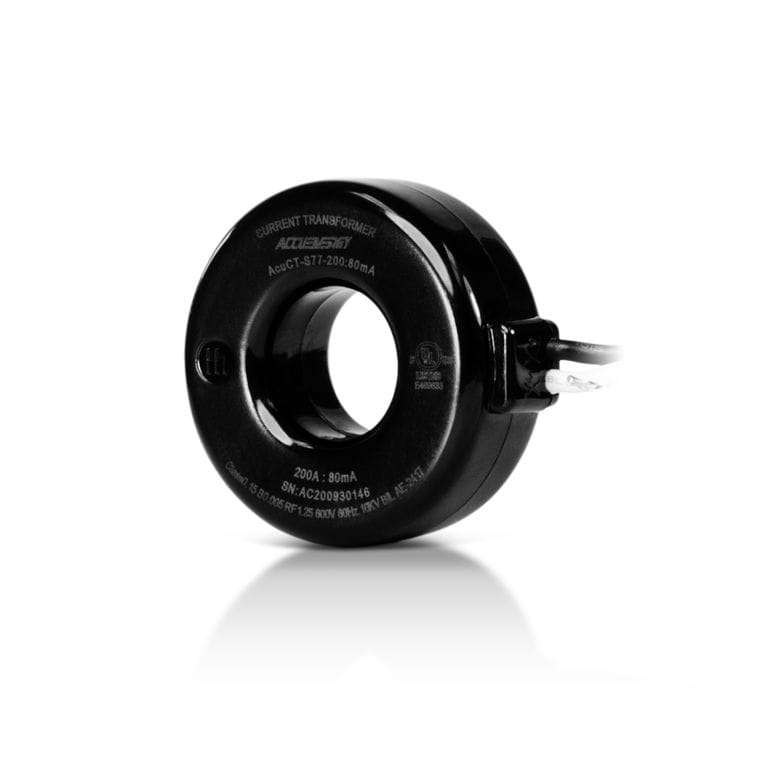
The one most people miss is S-E-07, approval of measuring instrument transformers. A CT or VT needs its own Measurement Canada approval, separate from the meter's approval of type, so an approved meter paired with an unapproved or wrong-class CT is not a compliant billing installation. Accuenergy's AcuCT S77 is the only CT in this catalog with a stated Measurement Canada accuracy class, S-E-09 Class 0.15 at 80 and 100 mA.
Bulletin E-26 sets the reverification period by meter type, and the spread is wide enough to change which technology you specify for a billing point.
Electromechanical, 1 or 1½ element, standard base, magnetic bearing 12 years initial, 10 subsequent.
Electromechanical, 1 or 1½ element, standard base, other bearing 6 years initial, 4 subsequent.
Electromechanical, 2, 2½ or 3 element, magnetic bearing 8 years initial, 6 subsequent.
Electromechanical, 2, 2½ or 3 element, other bearing 6 years initial, 4 subsequent.
Electromechanical, totalizing types 6 years initial, 6 subsequent.
Loss meters, A²-hour and V²-hour 6 years initial, 4 subsequent.
Electrical demand meters, electromechanical 6 years initial, 4 subsequent.
Electronic meters, energy function 6 years initial, 4 subsequent.
Electronic meters, energy function, qualified for a lengthened initial period 10 years initial, 8 subsequent.
Electronic meters, demand function the same period as the corresponding energy function.
Instrument transformers and complete metering installations are reverified per the periods in their own governing specifications rather than a line in E-26's table, and we did not pull the CT interval, so check S-E-07 for it rather than assuming. Bulletin E-28 is the one that qualifies specific models for the lengthened 10-year initial period; the qualifying model list is worth reading before you assume the standard number applies.
Only a Measurement Canada inspector or an accredited meter verifier may verify, seal, reverify or reseal a meter, and a meter with a broken seal may not be put into or continued in service until one of those two has reverified and resealed it. Putting a meter into service contrary to section 9(1) is a specific offence under section 33(1)(c). Measurement Canada's own approvals search is the place to confirm a model's status, and we did not find a published approval number for any meter in this catalog, so this page links the search tool rather than printing a number format we have not verified.
Revenue grade is not the same as Measurement Canada approved
"Revenue grade" is industry shorthand for an accuracy class considered good enough for billing, usually ANSI C12.20 Class 0.2 or 0.5 or IEC 62053-22 Class 0.5S. It is not a Measurement Canada term and it carries no legal weight by itself. A meter is lawful to bill from in Canada only once it has an approval of type under S-E-06 and has been verified and sealed, however good its datasheet is. Several meters in this catalog carry European MID approval under EN 50470 instead, which is legal metrology for the EU and the UK and means nothing in Canada.
The OEB Unit Sub-Metering Code, and who needs a licence
Section 57(c.1) of the Ontario Energy Board Act, 1998 says nobody may "engage in unit sub-metering" unless licensed under Part V of the Act. The OEB's Unit Sub-Metering Code, last revised 18 August 2025, sets out the minimum conditions a licensed unit sub-meter provider must meet when providing services on behalf of exempt distributors, and applies to all persons licensed under that section. The landlord or property owner, whom the Code calls the principal consumer, does not hold the licence: they contract with a licensed USMP who does.
The Code also leans directly on Measurement Canada rather than restating its own accuracy numbers. Section 2.4.1 requires a USMP to "comply with Measurement Canada standards as a minimum metering installation and measurement standard", and the Code's own technical requirements for the sub-meter, section 2.1.1, were revoked in 2010. Section 2.2.1 requires the building's principal meter to be an interval meter before sub-metering service can begin, and section 2.3 puts billing data through a documented validating, estimating and editing process that must be open to consumers, retailers, the Board and Measurement Canada. The two regulators are not an either-or.
Suite meters: O. Reg. 394/10, and what 389/10 actually is
Part VIII of the Residential Tenancies Act, 2006 is titled "Suite Meters and Apportionment of Utility Costs", and its regulation is O. Reg. 394/10. Section 137 governs a landlord converting a rental unit to individual electricity billing through a suite meter installed by a suite meter provider, with rules on interrupting supply, tenant written consent in a Board-approved form, a rent reduction and a complaint route to the Landlord and Tenant Board. Section 138 is a separate mechanism with no meter in it at all: a landlord of a building of six rental units or fewer may charge a tenant a share of a utility cost by written consent and formula, with a matching rent reduction.
O. Reg. 389/10 is a real and relevant regulation, and it is a different one. It is the general regulation under the Energy Consumer Protection Act, 2010, which the Unit Sub-Metering Code calls the ECPA Regulation and uses to define "prescribed activity" and "prescribed property", the terms that decide which buildings a licensed USMP may serve. Both numbers belong on the table when somebody is planning tenant billing, and they are not interchangeable.
What does not apply to internal industrial sub-metering
The OEB's licensing net is built around billing an occupant of a prescribed property, and the concrete sourced examples are residential rental buildings and condominiums. A facility that sub-meters its own areas, cost centres or production lines without invoicing a legally separate tenant is not engaging in unit sub-metering in the sense the Act and Code target, and needs no USMP licence. That is the ordinary industrial case and the one most of this page is written for. We could not confirm the full list of property and activity types prescribed under O. Reg. 389/10, so a multi-tenant commercial plaza or industrial park planning real tenant billing should confirm both the OEB licensing question and the Measurement Canada trigger directly before committing.
ESA, the Ontario Electrical Safety Code, and who wires it
The Electrical Safety Authority administers the Ontario Electrical Safety Code, and its own guidance is that the only way to be sure electrical work is safe and legal is to hire a Licensed Electrical Contractor. That contractor holds an ECRA/ESA licence number, files the electrical notification of work with ESA, which is the permit, and the finished work is reviewed by an ESA inspector who issues a Certificate of Acceptance. ESA also warns that hiring an unlicensed electrician shifts liability onto you and can void an insurance claim linked to the work. Clamping a CT into a live panel or landing voltage-sense leads is that kind of work.
Ontario's Product Safety Regulation, O. Reg. 438/07, requires that before an electrical product is used, sold, displayed or advertised for sale in Ontario it must be approved by an accredited certification or evaluation agency, reinforced by Rule 2-024 of the Code. ESA's list of recognized marks includes CSA, cULus and UL, cETLus from Intertek, FM Approvals, NSF, TÜV Rheinland, TÜV SÜD, DEKRA, Element, SGS and Nemko. The CE mark is not on that list, so a meter bearing CE alone is not approved for installation here.
There is one exception worth knowing, and it is narrow. ESA's own list of exceptions to the product-approval requirement covers utility meters, described as revenue billing devices operated by Local Distribution Companies, because their accuracy is Measurement Canada's business rather than ESA's. That exemption does not reach a third-party sub-meter, CT, gateway or LoRaWAN node, which all need a recognized Canadian mark or an ESA field evaluation. We did not confirm the field-evaluation process, its timeline or its cost, so ask ESA directly for that.
Measurement category ratings, CAT II, III and IV, are defined in CSA C22.2 No. 61010-1 and IEC 61010-1, the harmonized safety standard for electrical measurement equipment. Both are paywalled, and neither the standard text nor an accessible secondary source with quotable thresholds could be retrieved, so this page publishes no CAT voltage or transient figures.
The general principle holds without them. The closer the equipment sits to the service entrance, the higher the category and voltage rating it needs, and CTs and voltage leads inside a main switchboard have to be rated for that location's real prospective fault current, which is a number from the datasheet and the installing electrician rather than a rule of thumb. The same goes for arc flash and PPE, governed here by CSA Z462 and also paywalled: have a licensed contractor assess the risk before anyone clamps a split-core CT onto a live conductor.
Class A, the ICI, and why peak demand is worth money
A Class A customer's Global Adjustment charge is set by a Peak Demand Factor, which IESO calculates from that customer's share of provincial demand during the top five peak hours of a 12-month base period running 1 May to 30 April, applied over the following adjustment period from 1 July to 30 June. Customers averaging more than 5 MW of monthly peak demand are enrolled automatically and must opt out by 15 June; 1 to 5 MW customers may opt in; and since April 2017 customers in NAICS 31, 32, 33 and 1114 averaging between 500 kW and 1 MW may opt in as well. A whole year of charges turns on five hours, which is a commercial reason to measure demand well that has nothing to do with any metering regulation.
Green Button is a consent mechanism, not an open feed. Download My Data is the customer exporting their own consumption, billing and account information; Connect My Data authorizes a named, pre-approved third party to receive it on an ongoing basis, and Toronto Hydro lets a customer manage and remove any such connection themselves. Nothing moves without the account holder acting, which means the paperwork sits with the client rather than with us, and it is worth starting that before the hardware conversation rather than after.
Four units, one bill, and the arithmetic between them
Energy is what you consumed, demand is how hard you pulled at the worst moment, and Ontario charges for both in different ways depending on how big you are.
The relations between real power, apparent power, reactive power, power factor and energy, and the conversion between kilowatt hours and gigajoules
Quantity
What it is
The relation
kW, real power
The power actually doing work, and what energy charges accumulate from
kW = kVA × PF
kVA, apparent power
The vector sum of real and reactive power, and what the conductors and transformer physically carry
kVA² = kW² + kVAr²
kVAr, reactive power
Power oscillating between source and inductive load without doing net work
kVAr = √(kVA² − kW²)
PF, power factor
A number from 0 to 1, or a percentage. PF = 1 means every volt-amp is doing work
PF = kW ÷ kVA
kWh, energy
Real power accumulated over time; the register only advances while real power flows
kWh = ∫ kW dt
kVAh, apparent energy
Apparent power accumulated over time. It appears in a handful of tariffs, rarely on an Ontario retail bill
kVAh = ∫ kVA dt
kWh to GJ
Useful only when comparing an electrical load against a gas-metered one, since Ontario electricity bills are in kWh and gas bills in GJ
1 kWh = 3.6 MJ = 0.0036 GJ, so 1 GJ ≈ 277.78 kWh
The power-triangle identities are standard electrical engineering rather than a manufacturer claim. The kWh definition is Accuenergy's own, and the gigajoule conversion follows from the SI definition of the watt as one joule per second.
Demand, and the interval it is averaged over
Billing demand is the highest average power over a fixed interval inside the billing period, so it takes a sustained load to set it and a momentary spike will not. The interval length is the part we cannot source for Ontario: no OEB or IESO page we reached states one, and Toronto Hydro's rate pages do not give it either, so this page records it as not stated rather than repeating the 15 minutes everyone assumes. Every Accuenergy meter in this catalog lets you program the interval, and Siemens' MID-certified PAC2200 CLP variant records active energy quarter-hourly, so match the meter to whatever the bill actually uses.
Load factor
Load factor is average demand divided by peak demand across a period, expressed as a ratio or a percentage. A number near 1.0 means the site draws steadily and gets full value from the capacity it is paying for; a low number means it is paying for a peak it touches briefly. It is a standard utility-metering measure and no Ontario-specific source for it was found, so treat it as a general definition. It is also the fastest way to explain to a plant manager why one 20-minute event is on the invoice all month.
Meter multipliers, CT ratio times PT ratio
On a meter fed through instrument transformers, the raw register has to be multiplied by the CT ratio and, above roughly 600 V, the PT ratio to give true consumption. A meter reading 100 kWh behind a 200:5 CT, a multiplier of 40, represents 4,000 kWh. On the modern meters in this catalog that multiplication is already done: the Acuvim II's register map publishes a primary mode returning the raw secondary value and a secondary mode applying the programmed ratios, so once the ratio is entered at commissioning every read is in true primary units. Confirm which mode a meter is in before anyone applies a multiplier by hand and doubles the reading.
Small customers under 50 kW sit on one of three OEB-set plans. Time-of-use runs at 9.8¢ off-peak, 15.7¢ mid-peak and 20.3¢ on-peak per kWh, with the prices flat across the year and only the clock hours moving between summer and winter. Ultra-low overnight prices the 11 p.m. to 7 a.m. window at 3.9¢ and weekday 4 p.m. to 9 p.m. at 39.1¢, which is a ten-to-one spread and the reason a shift schedule is worth modelling. Tiered bills the first 1,000 kWh a month in winter, from 1 November to 30 April, or the first 600 kWh in summer, at 12.0¢ and everything above at 14.2¢, with small business on a flat 750 kWh threshold year round.
Toronto Hydro's business rate classes are General Service under 50 kW, General Service 50 to 999 kW, General Service 1,000 to 4,999 kW, and Large Use above 5,000 kW. Under 50 kW there is no separate demand charge and the bill is energy only. From 50 kW up the demand charge appears, and it is billed in kVA, not kW, with the distribution volumetric rate confirmed at $10.5170 per kVA per 30 days. That distinction matters when you specify a meter: a sub-meter that reports only kW will under-report billed demand on any load with a poor power factor, and the gap is exactly the reactive component.
IESO puts the split at 50 kW of monthly peak demand: above it, a business is billed the wholesale Ontario price plus Global Adjustment as separate line items rather than one blended rate. Global Adjustment covers new infrastructure, contracted supply and conservation programs, and for a Class A customer it is allocated by that customer's share of demand during the province's top five peak hours. Class B customers get it folded into their rate or billed as a separate line once Class A has settled.
GA is usually the largest single component of a commercial bill by dollar value, and no sub-meter can measure it, because it is a policy cost rather than a physical quantity. What a sub-meter can do is show you the demand during the hours that set it.
How electricity meters, sensors and gateways get their own supply, and which products use each option
Option
What it means
Where you meet it
Self-powered from the voltage inputs
The meter runs off the same phases it measures, so there is no separate supply to find. It also means the meter dies with the circuit, which is usually what you want on a sub-meter
Eastron SDM630-Modbus; Siemens 7KM PAC2200, which needs no auxiliary supply at all; most direct-connect DIN-rail meters
Wide-range control power
A separate supply across an AC and DC range, wired to its own protected source so the meter keeps logging through a downstream trip
Accuenergy Acuvim II at 100 to 415 Vac or 100 to 300 Vdc on the P1 option; AcuRev 1310 on the same range
Low-voltage auxiliary
24 VDC or similar at the instrument, which means a supply and a run of cable in the panel budget
Acuvim II P2 option at 20 to 60 Vdc; AcuLink 810 gateway at 24 VDC; Elkor WattsOn-Mark II at 12 to 30 VDC or 24 VAC; Carlo Gavazzi EM330 with the optional 100 to 240 V auxiliary
Harvested from the conductor
The sensor powers itself by induction from the current it is measuring, with a store to ride through a shutdown. Below a threshold current it has nothing to run on
Milesight CT10x and CT3xx, self-powered with about 12 hours of ride-through and an optional USB-C supplement for low-current circuits
Battery
A sealed lithium cell with a multi-year design life, which is what makes a wireless retrofit possible where no supply exists
Milesight EM300-DI pulse counter, 5 years on the standard 4000 mAh cell at a 10-minute reporting interval and 10 years on the 8000 mAh option
Seven questions, in the order that saves the most time
Answer these in order and the shortlist writes itself. Print this page and the tree fits on one sheet.
The same seven questions the picker asks, in the same order.
The decision tree in words
Purpose. Do you need energy totals, live demand and per-phase detail, or power quality? Energy alone can come off a pulse. Demand, power factor and per-phase values need read-only Modbus or BACnet, and power quality needs a meter that captures THD and harmonics.
Billing. Will the reading be used to charge somebody? If yes, the Electricity and Gas Inspection Act applies and the meter needs an approved type, verification and sealing, the current transformer needs its own approval under S-E-07, and in Ontario tenant billing runs through a unit sub-meter provider licensed by the OEB. If it feeds your own dashboard only, none of that fires.
Service. Get the service voltage and the phase configuration before anything else, because voltage input range is a hard limit. A 347/600 V service needs a 600 V class input; a 400 V class meter cannot go there. Confirm whether it is 1P2W, 1P3W, 3P3W or 3P4W, since a three-wire and a four-wire connection are different wiring diagrams.
Scope. Decide what you are metering and how many circuits: the incomer, a few feeders, a motor control centre, individual machines, or tenant spaces. One incomer is a single meter. A dozen branch circuits is a multi-circuit chassis, which is cheaper per point but takes every circuit down together if it fails.
Current transformer. If the conductor can be de-energized, a solid-core CT gives the tightest accuracy class. If it cannot, a split-core clamps around a live conductor and a Rogowski coil fits busbar and bundled runs that no rigid window will take. Then match the output, 5 A or 333 mV or Rogowski, to what the meter accepts, and check the window against the conductor's outside diameter.
Output signal. Read-only Modbus first, because it carries energy, demand, per-phase values and power factor. A kWh pulse into a LoRaWAN counter second, when there is no cable route but the meter has a pulse terminal. A LoRaWAN CT sensor third, for current trending, remembering its kWh is estimated from a typed-in voltage and power factor. BACnet where the building automation system already speaks it. Green Button where you want no hardware at all.
Mount and power. DIN rail in a panel, a panel cutout with a display, or a wireless clamp with nothing to wire. Then find the supply: self-powered from the voltage inputs, wide-range control power, 24 VDC auxiliary, harvested from the conductor, or a battery.
Shortlist. Run the picker below with those answers, then send the distributor checklist with your request for a quote.
Picker
Answer the same seven questions and get a shortlist
This runs entirely in your browser and sends nothing anywhere. It returns a requirements sheet you can paste into an email and a ranked list of meters from the catalog below, with the reason each one made or missed the cut.
This tool needs JavaScript. Without it, every question below is still readable, and the catalog and the decision tree do the same job by hand.
Meters ruled out and why
Catalog
Real meters, CTs and gateways, with the datasheet behind every number
Filter with the rails, open Specs on any row for the full sheet, and tick up to three to compare. Where a datasheet did not state something, the row says not stated rather than filling the gap.
Four things are worth knowing before you read a row. The Category rail separates a meter from a current transformer, from a gateway, from an accessory, and those buy very differently: a CT is a component with no output of its own, and a gateway measures nothing at all. The Voltage rail bands entries by the service they can sit on, and the CT input rail by what the meter's current terminals accept, which is the pairing that most often goes wrong when a meter and its CTs are ordered from different places.
The MC approved chip means Measurement Canada has approved that model's type, which matters only when the reading bills somebody. Most rows say unknown, and that is honest rather than lazy: Accuenergy states approval for the AcuRev 1312 configuration and rates the AcuCT S77 to specification S-E-09, and no approval number was published on any page we could reach for any manufacturer in this catalog. Price bands are comparative judgements by product class, because none of these manufacturers publish list prices for this equipment.
61 meters, CTs and gateways
Compare
Manufacturer
Model
Technology
Category
Voltage
CT input
Outputs
Accuracy
MC approved
Price
Quantify fit
Details
Accuenergy
AcuCT Flex CTAcuCT Flex Rogowski coil series
Rogowski coil
Current transformer
not stated
not stated
Other
Revenue class 0.5
Not stated
not stated
energy: no route; demand: no route
A flexible Rogowski coil current sensor for large or irregularly-shaped conductors and busbars, sensing 50 A to 50,000 A across four coil lengths and seven output-ratio options.
Phasesnot stated
Voltage inputsnot stated
Current inputRogowski (Rogowski)
Frequencynot stated
Accuracy classIEC 61869-10 Class 0.5, IEEE C57.13 Class 0.6
Measuresnot stated
Demand intervalnot stated
Current transformerrogowski, ratio model-dependent - 7 output ratios per coil length, e.g. 1-240A at 500mV(50Hz) up to 250-60,000A at 2mV(50Hz), output mV (model-dependent), accuracy IEC 61869-10 Class 0.5, IEEE C57.13 Class 0.6, 2 m leads
MountClamp on
Powerpassive - no external power required
Displayno onboard display
CertificationsUL Recognized, CE, RoHS
Measurement CanadaNot stated
Alsocoil lengths: 400/600/900/1200 mm (RCT16/24/36/47), window 4.17"-14.53", frequency response 10 Hz-20 kHz, standard 2 m leads; optional 5/10/15 m, RCT GRIP mounting kit available to secure coil alignment (https://www.accuenergy.com/products/rct-grip-rogowski-installation-mounting-kit/)
Quantify fitenergy: no route; demand: no route
Fit noteCT accessory for large or irregularly-shaped conductors and busbars; pairs with a compatible Modbus power meter's Rogowski input. Whether a shorting block is required at disconnection for a Rogowski coil (a mV-output, not current-output, device) was not independently confirmed in this pass - flag for follow-up.
Output signals
Type
Protocol
Pulse weights
Switch
Max Hz
Detail
Other
not stated
not stated
not stated
not stated
Flexible Rogowski coil, mV output proportional to primary current; 7 ratio options per coil length, custom ratios available
333 mV split-core current transformer for panel and device monitoring where a low-voltage millivolt secondary output is preferred for safety; split-core removable leg for retrofit installs.
Phasesnot stated
Voltage inputsnot stated
Current input333mV
Frequencynot stated
Accuracy class1.0%
Measuresper-phase
Demand intervalnot stated
Current transformersplit, ratio 20A-5000A AC (model dependent), output 333mV, accuracy 1.0%, 2.4 m leads
MountClamp on
Powerpassive
Displayno onboard display
CertificationsUL Recognized
Measurement CanadaNot stated
Alsowindow sizes from 0.75" up, model dependent, 8 foot lead standard
Quantify fitenergy: no route; demand: no route
Fit noteCurrent-only sensor; needs a compatible 333mV-input meter.
Output signals
Type
Protocol
Pulse weights
Switch
Max Hz
Detail
Other
not stated
not stated
not stated
not stated
333 mV secondary output feeding a compatible meter
Revenue-grade split-core current transformer with a press-open latching mechanism for installation without disconnecting cables; several current ratings and secondary output options.
Phasesnot stated
Voltage inputsnot stated
Current input80mA|100mA|200mA|333mV|5A
Frequencynot stated
Accuracy classIEC 61869-2 Class 0.5 (select models); 1.0% on smaller models
Measuresper-phase
Demand intervalnot stated
Current transformersplit, ratio 50A-5000A AC (model dependent), output 80mA|100mA|200mA|333mV|5A, accuracy 0.5% or 1.0% depending on model, 2.4 m leads
High-accuracy solid-core (toroidal) current transformer for new-construction installs where the conductor can be threaded through; the only AcuCT researched here with a stated Measurement Canada accuracy-standard rating.
Phasesnot stated
Voltage inputsnot stated
Current input80mA|100mA|333mV
Frequencynot stated
Accuracy classMeasurement Canada S-E-09 Class 0.15 (at 80mA and 100mA); IEC 61869-2 Class 0.2
Measuresper-phase
Demand intervalnot stated
Current transformersolid, ratio 100A or 200A, 19.6 mm window, output 80mA|100mA|333mV, accuracy Class 0.15 (MC S-E-09) / Class 0.2 (IEC 61869-2), 0.3 m leads
Fit noteCurrent-only sensor; pairs with a compatible meter. The Measurement-Canada-rated accuracy class makes this the pick where the metering point is revenue-grade.
Output signals
Type
Protocol
Pulse weights
Switch
Max Hz
Detail
Other
not stated
not stated
not stated
not stated
current/voltage secondary output feeding a compatible meter
A 333 mV output split-core current transformer with a 1.25-inch window, rated 100-600 A primary; the safe, low-voltage millivolt CT output type Quantify pairs with a Modbus power meter or compatible LoRaWAN device.
Phasesnot stated
Voltage inputsnot stated
Current input333 mV
Frequencynot stated
Accuracy classnot stated
Measuresnot stated
Demand intervalnot stated
Current transformersplit, ratio 100-600A:333mV, 31.75 mm window, output 333mV, accuracy 1.0%, 2.44 m leads
MountClamp on
Powerpassive - no external power required
Displayno onboard display
CertificationsUL Recognized, CE, RoHS
Measurement CanadaNot stated
Alsosplit-core design - conductor need not be disconnected to install, one of four AcuCT mV window sizes (0.75"/1.25"/2"/3"x5"), covering roughly 50A-5000A across the family
Quantify fitenergy: no route; demand: no route
Fit noteCT accessory, not a standalone meter - pairs with a Modbus power meter or a compatible CT-input device to provide the current input. 333 mV output does NOT require a shorting block at disconnection (Open-Circuit Risk: Low, per Accuenergy's own installation guide) - contrast with 5A/1A secondary CTs, which do. See research/signals.md §h.
Output signals
Type
Protocol
Pulse weights
Switch
Max Hz
Detail
Other
not stated
not stated
not stated
not stated
333 mV analog output proportional to primary current, for a compatible meter's mV current input
A Modbus/BACnet/pulse data-acquisition gateway that polls meters over RS-485 or Ethernet and republishes the data as Modbus-TCP, BACnet-IP, MQTT, HTTP/HTTPS or FTP: Quantify's worked example of a Modbus-to-Ethernet/MQTT gateway.
Phasesnot stated
Voltage inputsnot stated
Current inputnot stated
Frequencynot stated
Accuracy classnot stated
Measuresnot stated
Demand intervalnot stated
MountDIN rail
Power24 Vdc (external DIN-rail power supply required)
Displayno onboard display, web interface
Certificationsnot stated
Measurement CanadaNot stated
Also8 GB onboard data logging, 3 independent configurable data loggers, user-selectable logging interval 1-1440 minutes; 1-second time-stamped recording, built-in web server with SSL/TLS 1.2, optional AcuMesh 900 MHz or 868 MHz wireless add-on, Wi-Fi 802.11 b/g/n, 2.4 GHz
Fit noteRead-only in Quantify's deployments: configured to issue only Modbus read function codes (03/04) to the meters it polls, never a write, even though some meters' own registers allow one. See research/signals.md §a.
Output signals
Type
Protocol
Pulse weights
Switch
Max Hz
Detail
Modbus RTU
Modbus RTU
not stated
not stated
not stated
Input: reads Modbus-RTU devices via an RS-485 port (up to 32 devices) or USB 2.0 (an additional 32 devices via converter)
Modbus TCP
Modbus TCP/IP
not stated
not stated
not stated
Input and output: reads Modbus-TCP devices and republishes as a Modbus-TCP server over dual Ethernet ports (up to 32 devices via RSTP)
BACnet MS/TP
BACnet MS/TP
not stated
not stated
not stated
Input: reads BACnet MS/TP devices over RS-485
BACnet/IP
BACnet/IP
not stated
not stated
not stated
Input and output: reads BACnet/IP devices and republishes as BACnet/IP
Pulse
not stated
not stated
not stated
not stated
Input: reads dry-contact pulse counters
Ethernet
MQTT / HTTP(S) / FTP / sFTP / SNMP
not stated
not stated
not stated
Output: republishes logged data to MQTT, HTTP/HTTPS, FTP/sFTP or SNMP; SunSpec and M-Bus also supported as inputs
Price band not stated
Where to buy not stated
Pricing not published; quote required (accuenergy.com, retrieved 2026-09-03).
DIN-rail three-phase multifunction meter rated 10-690 Vac direct with four current channels for neutral-current measurement; the separately catalogued AcuRev 1312 is the configuration Accuenergy states is Measurement Canada approved.
Fit noteRead-only Modbus RTU or BACnet MS/TP. Approval evidence covers the AcuRev 1312 configuration, not this base model: specify the AcuRev 1312 for tenant billing or revenue applications.
The Measurement Canada approved configuration of the AcuRev 1310 DIN-rail three-phase meter: same 10-690 Vac direct voltage input and four current channels, ordered as the 1312 and supplied with the Canada-approved manual. Accuenergy publishes no approval number for it.
Multi-circuit branch submeter for monitoring many circuits from one device in commercial, industrial or multi-tenant panels; optional WEB2 module adds dual Ethernet, WiFi and 8GB data logging.
Alsomulti-circuit (many branch channels per unit), 8GB logging with WEB2, Measurement Canada certification mentioned in marketing copy for tamper protection
Fit noteRead-only Modbus RTU or BACnet; the practical choice when a panel has many small branch circuits to submeter with one device instead of many single-circuit meters.
High-end power-quality analyzer with IEC 61000-4-30 Class A compliance (third-party certified by NMi), waveform capture, and IEEE C37.118 synchrophasor (PMU) output for utility-grade analysis.
Panel-mount multifunction power and energy meter with plug-in communication modules; the IIR variant adds extra data logging and the IIW variant adds IEC 61000-4-30 Class S power-quality event capture and waveform logging on the same hardware platform.
Also8MB internal data logging, expandable to 8GB with AXM-WEB2, IEC 61850 2nd Ed. and IEC 62443 cybersecurity features (IIW), up to 400+ measured parameters
Our pick Best Modbus panel meter of the three manufacturers researched here: 0.1/0.1s revenue-grade accuracy, per-phase kWh/kW/kVAr/PF/THD, both Modbus RTU and TCP, and a Toronto manufacturer with direct Canadian support. Source: https://www.accuenergy.com/products/acuvim-ii-advanced-power-and-energy-meter/ (retrieved 2026-09-03).
Alsotouch keypad on some variants, IP51 front, consumption metering focus
Quantify fitenergy: pulse kWh into a counter; demand: no route
Fit noteThe pulse-only variant researched here has no Modbus; a Modbus-equipped EM111 configuration exists per the datasheet options table but was not independently confirmed this pass. Pulse into a LoRaWAN pulse counter is the Quantify-compatible route for this specific configuration.
Output signals
Type
Protocol
Pulse weights
Switch
Max Hz
Detail
Pulse
not stated
not stated
not stated
not stated
static (solid-state) pulse output, factory default configuration on the AV81XO1PFA variant researched here
Single-phase DIN-rail energy analyzer rated 5(100)A direct-connect, the higher-current sibling of the EM111, with optional RS485 Modbus RTU or M-Bus and a UL-approved variant (AV1).
Three-phase CT-operated DIN-rail energy meter (5A CT, or a 333 mV current-sensor/Rogowski CTV-series input), cULus Listed, with Modbus/JBUS RTU and a pulse output, aimed at general-purpose sub-metering.
Phases3 phase, 3 wire, 3 phase, 4 wire
Voltage inputs57.7 to 277 V, V L-N (two ranges: 160-240 V or 57.7-133 V L-N per variant)
Three-phase DIN-rail energy analyzer, direct-connect to 65A or 5A CT-operated, with front joystick setup and a choice of RS485 Modbus RTU, M-Bus, Dupline or Ethernet (Modbus TCP/IP) communication.
Alsophase-sequence detection, up to 2 digital outputs for alarms, front joystick + LCD
Quantify fitenergy: Modbus, read-only; demand: no route
Fit noteRead-only Modbus RTU or TCP variant; note the electrical safety standard reference to UL 61010-1 in the datasheet does not amount to a stated cULus Listed mark on this family (unlike EM330/EM111/EM210).
Three-phase DIN-rail energy meter for CT-connected metering (5(6)A CT input, programmable CT ratio), cULus Listed, with an optional 100-240 Vac/dc auxiliary supply for CT-only installs with no direct mains tap.
Phases3 phase, 3 wire, 3 phase, 4 wire
Voltage inputsup to 480 V, V L-L (AV5: 400-480 VLL)
Three-phase DIN-rail energy meter, direct-connect to 65A, with a backlit touch-keypad LCD; optional RS485 Modbus RTU or M-Bus and optional pulse output.
Modular panel-mount power analyzer for two- and three-phase systems with plug-in current input modules (1A or 5A CT) and a plug-in communication module (Modbus RTU, Modbus TCP/IP, BACnet IP, BACnet MS/TP or Profibus DP V0), similar in concept to the Accuenergy Acuvim II's modular architecture.
Powerself-powered, or H (100-240 Vac/dc) / L (24-48 Vac/dc) auxiliary supply options
Displayonboard display
CertificationsCE (2014/35/EU, 2014/30/EU)
Measurement CanadaNot stated
AlsoTHD up to the 32nd harmonic, 4 virtual alarms, optical port, detachable terminals, V-0 self-extinguishing enclosure material (UL 94), no separate cULus product listing stated
Fit noteRead-only Modbus RTU/TCP or BACnet via the plug-in comms module; the datasheet's Approvals section leaves the field blank, so no cULus/UL mark is confirmed for this model even though its plastics carry a UL 94 flammability rating.
A portable power/energy data logger for measurement & verification, load profiling and energy audits: explicitly not a fixed sub-meter. Ethernet/USB with included analysis software; no live Modbus feed confirmed, so it is a study tool rather than a continuous Quantify feed.
Powerline-powered (80-600V L-L) or externally powered (0-600V AC/DC); no internal battery specified
Displayno onboard display
Certificationsnot stated
Measurement CanadaNot stated
Also4 analog input channels configurable for voltage or current, Wi-Fi discontinued per current product page
Quantify fitenergy: no route; demand: no route
Fit noteA portable audit/M&V logger, not a continuous live feed: no Modbus, BACnet, pulse or LoRaWAN output confirmed on the current product page (USB/Ethernet + proprietary software only). Not a route Quantify can read continuously as installed; useful only as a temporary study instrument.
Output signals
Type
Protocol
Pulse weights
Switch
Max Hz
Detail
Ethernet
10/100 Mb Ethernet, DHCP or static IP
not stated
not stated
not stated
Data offload/analysis via included software
Other
USB (A-to-B, included cable)
not stated
not stated
not stated
Data offload/analysis via included software
Price band $$$ (about $1,500 to $5,000)
Where to buy not stated
US list price $1,845-$1,900 (site-listed 2026-09-03); Canadian distributor not confirmed.
A 12-channel revenue-grade multi-circuit power submeter, line-powered, monitoring up to 4 three-phase or 12 single-phase loads from one device with Modbus or BACnet output.
A 24-channel revenue-grade multi-circuit power submeter, line-powered, monitoring up to 8 three-phase or 24 single-phase loads, with two independent voltage inputs.
A 48-channel revenue-grade multi-circuit power submeter, the largest of Dent's HD line, monitoring up to 16 three-phase or 48 single-phase loads with NY/CA revenue-grade certification noted.
A battery-powered, IP67 Modbus RTU-to-LoRaWAN converter. Dragino does not sell any dedicated LoRaWAN current-transformer or energy-meter product: this RS485-LN converter, wired to an external Modbus power meter, is the closest Dragino-brand equivalent to Milesight's UC300, and the only realistic Dragino route to LoRaWAN kWh.
Phasesnot stated
Voltage inputsnot stated
Current inputnot stated
Frequencynot stated
Accuracy classnot applicable (pass-through Modbus poller; accuracy is the connected meter's)
Measuresnot stated
Demand intervalnot stated
MountSurface
Powerbattery: 8500mAh Li-SOCl2 (RS485-LB variant) or solar + 3000mAh Li-ion (RS485-LS variant); not line-powered
Displayno onboard display
Certificationsnot stated
Measurement CanadaNot stated
Alsobattery-controllable output (2.6-3.6V), +5V controllable output for powering the RS485 device
Fit noteNot itself a meter. Battery-powered (not line-powered, unlike Milesight UC300), so duty-cycle and reporting-interval choices affect battery life when polling a meter frequently. Real kWh only exists if a genuine Modbus power meter is wired to it and its registers are mapped in by the installer.
Output signals
Type
Protocol
Pulse weights
Switch
Max Hz
Detail
LoRaWAN
LoRaWAN
not stated
not stated
not stated
Frequency plans CN470/EU433/KR920/US915/EU868/AS923/AU915/IN865/RU864/MA869. No built-in energy-meter register map; the installer defines the Modbus commands sent to the RS485 device.
Other
Modbus RTU (RS485)
not stated
not stated
not stated
Sends user-defined commands to RS485 devices and forwards the response.
Price band $ (under a few hundred dollars)
Where to buy not stated
Not confirmed for Canadian distribution in this pass; Dragino sells largely direct/via general electronics distributors.
Low-cost single-phase DIN-rail meter for metering circuits up to 45A direct-connected; the Modbus variant adds RS485 to the base pulse-output design.
Phases1 phase, 2 wire
Voltage inputsV L-N (not stated on product page)
Nominal voltages120 V, 240 V
Current inputdirect connect to 45 A, no CT
Frequency50/60 Hz
Accuracy classnot stated (MID Class B per EN 50470-1/-3)
MeasureskWh, kW, PF
Demand intervalnot stated
MountDIN rail
Powerself-powered from voltage input
Displayonboard display
CertificationsMID EN50470-1/EN50470-3 Class B, CE (EN61326, EN61010)
Measurement CanadaNot stated
Also1-module DIN housing, sealable terminal covers, bi-directional kW/kWh, also sold as SDM120-Pulse (pulse only) and SDM120-MBus (M-Bus) variants
Quantify fitenergy: Modbus, read-only; demand: no route
Fit noteRead-only Modbus RTU on the -Modbus variant, or pulse into a LoRaWAN pulse counter; no demand (kW max) register on this small model per the product page.
Output signals
Type
Protocol
Pulse weights
Switch
Max Hz
Detail
Modbus RTU
Modbus RTU
not stated
not stated
not stated
RS485, SDM120-Modbus variant
Pulse
not stated
not stated
not stated
not stated
configurable Import/Export/Nett kWh pulse output on all variants
Price band $ (under a few hundred dollars)
Where to buy not stated
Sold in Canada/North America through automation and electrical distributors (e.g. automationdirect.com carries the SDM range); no single confirmed Canadian source page found this pass.
Our pick Best DIN-rail budget meter of the nine researched here: cheapest entry, 45A direct-connect (no CT needed), and offered in Modbus, pulse-only, or M-Bus versions for whatever signal a job needs. Source: https://www.eastroneurope.com/products/view/sdm120modbus (retrieved 2026-09-03).
Single-phase DIN-rail meter rated to 100A direct-connect with 15 measured parameters and four selectable kWh pulse modes aimed at solar/battery-storage retrofits.
Phases1 phase, 2 wire
Voltage inputsV L-N (not stated on product page)
Nominal voltages120 V, 240 V
Current inputdirect connect to 100 A, no CT
Frequency50/60 Hz
Accuracy classnot stated (MID Class B per EN 50470-1/-3)
Single-phase 100A direct-connect prepayment meter with a battery-backed display and remote recharge; reactive/apparent power available over Modbus even though it is not shown on the display.
Phases1 phase, 2 wire
Voltage inputsV (not stated on product page)
Nominal voltages120 V, 240 V
Current inputdirect connect to 100 A, no CT
Frequencynot stated
Accuracy classIEC 62053-22 Class 0.5S
MeasureskWh, kW, PF
Demand intervalnot stated
MountDIN rail
Powerself-powered, with internal battery to keep the display readable on outage
Displayonboard display
CertificationsCE (EN61326, EN61010)
Measurement CanadaNot stated
Alsoprepaid credit/overdraft/load-threshold management, AMR/SCADA support, remote recharge over the network
Quantify fitenergy: Modbus, read-only; demand: no route
Fit noteRead-only Modbus RTU; a prepayment meter is an unusual fit for Quantify's monitoring use case, included because Tom named it, but not a natural favourite.
Output signals
Type
Protocol
Pulse weights
Switch
Max Hz
Detail
Modbus RTU
Modbus RTU (9600 bps)
not stated
not stated
not stated
RS485
Pulse
not stated
not stated
not stated
not stated
1 pulse output, configurable weight/width/unit
Price band $ (under a few hundred dollars)
Where to buy not stated
Sold in Canada/North America through automation and electrical distributors; no single confirmed Canadian source page found this pass.
Three-phase multifunction DIN-rail meter, 100A direct-fed (1P2W/3P3W/3P4W), self-powered from the mains voltage inputs with built-in Modbus RTU and dual pulse outputs.
CT-operated version of the SDM630, taking 1/5A CT secondary (or a 0.333V current-sensor input on the non-MID MV variant), Class 0.5 accuracy and UL Listed; negative-power reading flags reversed CT wiring.
Fit noteRead-only Modbus RTU with 1/5A CT input; the UL Listing is the useful signal for North American panels over the plain SDM630-Modbus.
Output signals
Type
Protocol
Pulse weights
Switch
Max Hz
Detail
Modbus RTU
Modbus RTU
not stated
not stated
not stated
built-in, plus pulse outputs
Pulse
not stated
not stated
not stated
not stated
built-in pulse outputs
Price band $$ (hundreds to about $1,500)
Where to buy not stated
Sold in Canada/North America through automation and electrical distributors; UL Listing supports North American use. No single confirmed Canadian source page found this pass.
Low-cost three-phase 100A direct-fed DIN-rail meter (3P4W) with a smaller parameter set than the SDM630; the -M suffix is the Modbus RTU + fixed pulse output variant of the SDM72D basic range.
Phases3 phase, 4 wire
Voltage inputsV (not stated on product page)
Nominal voltages120 V, 208 V, 240 V
Current inputdirect connect to 100 A, no CT
Frequency50/60 Hz
Accuracy classnot stated (MID Class B per EN 50470-1/-3)
MeasureskWh, kW
Demand intervalnot stated
MountDIN rail
Powerself-powered from mains voltage inputs
Displayonboard display
CertificationsMID EN50470-1/EN50470-3 Class B, CE (EN61326, EN61010)
Measurement CanadaNot stated
Also4-module DIN housing, sibling variants SDM72DR (resettable kWh) and SDM72BI (import/export) without Modbus, an EV-charger-specific SDM72D-M-2 (3K7) wide-temperature variant also exists
Quantify fitenergy: Modbus, read-only; demand: no route
Fit noteRead-only Modbus RTU on the -M variant; a stripped-down three-phase alternative to the SDM630 when only kWh/kW is needed, no THD/demand registers.
Output signals
Type
Protocol
Pulse weights
Switch
Max Hz
Detail
Modbus RTU
Modbus RTU
not stated
not stated
not stated
SDM72M variant; fixed pulse output included
Pulse
not stated
not stated
not stated
not stated
fixed pulse output
Price band $ (under a few hundred dollars)
Where to buy not stated
Sold in Canada/North America through automation and electrical distributors; no single confirmed Canadian source page found this pass.
A 30-channel line-powered energy meter/logger with the widest protocol spread researched in this pass (Modbus RTU/TCP, BACnet/IP, BACnet MS/TP, CSV, XML, JSON) and a built-in multi-year data logger. EG4230 is the same device with WiFi added.
Fit noteRead-only Modbus RTU/TCP fits CHARTER §2's top route directly; it also happens to speak BACnet and export CSV/XML/JSON natively, useful if a site's BAS or a client's own reporting needs those instead. EG4230 is identical but adds WiFi: same fit rating.
Output signals
Type
Protocol
Pulse weights
Switch
Max Hz
Detail
Modbus RTU
Modbus RTU (import and export)
not stated
not stated
not stated
not stated
Modbus TCP
Modbus TCP (import and export)
not stated
not stated
not stated
not stated
BACnet/IP
BACnet/IP (export)
not stated
not stated
not stated
not stated
BACnet MS/TP
BACnet MS/TP (export)
not stated
not stated
not stated
not stated
Ethernet
IEEE 802.3 LAN; also exports CSV/XML/JSON
not stated
not stated
not stated
not stated
Price band $$ (hundreds to about $1,500)
Where to buy not stated
ICES-003 Class B certification is explicitly Canadian; store.egauge.net is a JS-rendered storefront that did not yield a static price in this pass. Canadian distributor not independently confirmed.
Revenue-grade panel meter, ANSI C12.20 0.2 CL / IEC 62053-22 0.2S accuracy at 400+ samples/cycle, intrinsically-safe current inputs. Fits both ANSI C39.1 (4-inch round) and IEC 96 mm DIN square cutouts; Shark 100T is the DIN-rail-mounted transducer (no display) version. Feature set is unlocked in the field via EIG's V-Switch key system.
Phases3 phase, 3 wire, 3 phase, 4 wire
Voltage inputs20 to 721 V, V L-L (20-416 V L-N, 0-721 V L-L)
PowerOption D2: universal 90-265 VAC @ 50/60 Hz or 100-370 VDC, 5 VA max. Option D: 18-60 VDC, 3.5 W max.
Displayonboard display
CertificationscULus (UL File E250818), CSA C22.2 No. 61010-1, CE, IEEE C37.90.1, IEC/CISPR 11 Class A, RoHS 3, REACH
Measurement CanadaNot stated
AlsoV-Switch field-upgradable feature keys (V1-V4), Standard IrDA port, CT lead pass-through design (no burden added, meter cannot fail the CT circuit), Fault current withstand: 100 A/10 s, 300 A/3 s, 500 A/1 s
Fit noteModbus RTU (add-on RS485) or Modbus TCP (add-on Ethernet) both read cleanly through a gateway; base unit ships with neither, so confirm the comm option code when ordering.
Output signals
Type
Protocol
Pulse weights
Switch
Max Hz
Detail
Modbus RTU
Modbus RTU/ASCII, DNP3
not stated
not stated
not stated
Optional RS485 serial port (485P option; standard on the Shark 100T transducer version).
Modbus TCP
Modbus TCP/IP
not stated
not stated
not stated
Optional 10/100BaseT Ethernet (INP10 option).
Pulse
KYZ, Form A
not stated
not stated
not stated
Optional KYZ pulse mapped to positive energy. On-resistance 25-35 ohm, peak voltage 350 V DC, continuous load current 120 mA, opto-isolated 3750 V AC.
Price band $$ (hundreds to about $1,500)
Where to buy not stated
Sold direct from EIG (Westbury, NY, USA); no Canadian distributor confirmed this session: worth checking with a Hubbell-brand Canadian distributor given EIG is part of Hubbell (email domain hubbell.com on the brochure).
Data-logging step up from the Shark 100: same 0.2 CL/0.2S accuracy class plus up to 4 MB logging memory, waveform recording (up to 512 samples/cycle) and dual optional Ethernet ports with an HTML5 web server. New York State approved for residential submetering (not a Measurement Canada approval). Shark 200T is the DIN-rail transducer (no display) version.
Phases3 phase, 3 wire, 3 phase, 4 wire
Voltage inputs20 to 721 V, V L-L (20-576 V L-N, 0-721 V L-L)
PowerOption D2: universal 90-265 VAC @ 50/60 Hz or 100-370 VDC, 10 VA max. Option D: 18-60 VDC, 7 W max.
Displayonboard display, web interface
CertificationscULus/CSA C22.2 No. 61010-1 (UL File E250818), IEC 62053-22 0.2S (KEMA certified), IEEE C37.90.1, FCC Part 15 Subpart B Class A, CE (EN 61326-1), New York State approved for residential submetering
Measurement CanadaNot stated
AlsoUp to 4 MB data logging (V2+), 3 assignable historical logs of 64+ parameters, Waveform recording up to 512 samples/cycle, 170 stored events (V6), V-Switch field-upgradable feature keys (V1-V6), Expandable I/O option cards: analog 0-1mA/4-20mA, relay, pulse, fiber optic
Fit noteModbus TCP (INP100S option) is the clean path; base RS485 Modbus RTU works too. Onboard logging is a nice-to-have, not required since Quantify polls independently.
Output signals
Type
Protocol
Pulse weights
Switch
Max Hz
Detail
Modbus RTU
Modbus ASCII/RTU, DNP3
not stated
not stated
not stated
Standard RS485 port plus KYZ pulse (positive energy).
Modbus TCP
Modbus TCP/IP, DNP3 over Ethernet
not stated
not stated
not stated
INP100S option card: 100BaseT Ethernet, HTML5 web server, email-on-alarm, NTP time sync, 12 simultaneous Modbus TCP + 5 DNP3-over-TCP connections.
Utility-substation-grade meter: ANSI C12.20 0.1 CL energy accuracy, cyber-secured encrypted configuration (role-based, up to 30-character passwords), perpetual time-of-use billing calendar, up to 128 MB logging. Positioned above the Shark 200 for critical/revenue applications.
Phases3 phase, 3 wire, 3 phase, 4 wire
Voltage inputs20 to 721 V, V L-L (20-576 V L-N, 0-721 V L-L)
PowerOption D2: universal 90-265 VAC @ 50/60 Hz or 100-370 VDC, 10 VA max. Option D: 18-60 VDC, 7 W max.
Displayonboard display, web interface
CertificationscULus/CSA C22.2 No. 61010-1 (UL File E250818), IEC 62053-22 0.2S / IEC 62053-23, IEEE C37.90.1, FCC Part 15 Class B, CE (IEC 61326-1)
Measurement CanadaNot stated
AlsoCyber security: 9 user IDs, encrypted passwords up to 30 characters, role-based authorization, brute-force lockout, Perpetual time-of-use calendar, up to 4 seasons, transformer/line-loss and CT/PT compensation, Up to 128 MB memory, 6 historical logs of 64+ parameters, Up to 8 pulse outputs and 8 pulse inputs, V-Switch field-upgradable feature keys (V1-V4)
Fit noteSame comm architecture as the Shark 200 (INP100S Ethernet card for Modbus TCP); the cyber-security/TOU features are aimed at utility billing, well beyond what a typical Quantify sub-metering job needs.
High-density multipoint metering system: one unit reads 8 three-phase circuits or 24 single-phase circuits, replacing that many individual meters in a compact rugged case. Adds 4 KYZ pulse-counting inputs for other commodity meters (water, gas, steam) so it can roll sub-metering and utility submetering into one head-end.
AlsoOptional 4-inch or 7-inch remote touchscreen HMI display (serial or Ethernet), 2 relay outputs for control/limit alarms, Up to 32 MB memory, up to 7 years of logging, 2 historical logs, One MP200 replaces up to 8 three-phase or 24 single-phase meters
Fit noteBest fit for a single panel with many small circuits (a multi-tenant riser, a data-centre PDU) where 8-24 individual meters would otherwise be needed. Its own KYZ pulse inputs can also absorb third-party water/gas pulse meters into the same gateway read.
Output signals
Type
Protocol
Pulse weights
Switch
Max Hz
Detail
Modbus RTU
Modbus ASCII/RTU
not stated
not stated
not stated
Two standard RS485 ports (Com1, Com3) plus a standard USB port (Com2).
Elkor's current single/three-phase precision energy meter, auxiliary-powered (not line-powered off the metered circuit) with four selectable CT-secondary input options and a choice of Modbus RTU, BACnet MS/TP, or Ethernet (Modbus TCP + BACnet/IP + web/MQTT) communication cards. Elkor is headquartered in London, Ontario, not Calgary as previously assumed.
Fit noteModbus RTU (-M1) or Ethernet (-E4, includes Modbus TCP) options fit CHARTER §2's top route directly. The -M2 BACnet-only option does not (see WattNode BACnet entry). 'WattsOn-1100' from CHARTER §2 was not found on Elkor's current site: only WattsOn-Mark II and its Meter Kit variant are confirmed live.
Elkor Technologies is headquartered at 6 Bainard Street, London, Ontario, Canada: a Canadian manufacturer, corrected from the 'Calgary' assumption in CHARTER §2.
energy: current only over LoRaWAN (estimated kWh); demand: current only over LoRaWAN (estimated kWh)
A self-powered, battery-free LoRaWAN current-transformer sensor that clamps on a single conductor up to 100 A. Reports current and amp-hours only over the LoRaWAN uplink; it does not measure voltage, so it cannot report true kWh without an assumed voltage entered downstream.
Phases1 phase, 2 wire
Voltage inputsnot stated
Current inputinternal (integrated CT, not a separate secondary output)
Frequency50/60 Hz
Accuracy classnot stated (manufacturer states ±1% >5A RMS, ±3% ≤5A RMS as a current-measurement accuracy, not an ANSI/IEC energy accuracy class)
MeasuresA
Demand intervalnot stated
Current transformersolid, ratio 0-100 A, 16 mm window, output internal (integrated CT, not a separate secondary output), accuracy ±1% (>5A), ±3% (≤5A)
CT compatibilitycores: solid
MountClamp on
Powerself-powered by induction from the measured current; USB Type-C auxiliary power input; up to 12 hours on stored/aux power if measured current is near zero
Displayno onboard display
Certificationsnot stated
Measurement CanadaNot stated
Alsoonboard NTC temperature sensor -20 to 100C, over-range and threshold current alarms
Quantify fitenergy: current only over LoRaWAN (estimated kWh); demand: current only over LoRaWAN (estimated kWh)
Fit noteEstimated from a configured voltage and power factor, not measured. The uplink carries RMS current and amp-hours only; any kWh figure is current x the fixed voltage and PF typed in at setup, so it does not track real voltage or power factor. Use it for current trending and amp-hour estimates, never for a billed or reported energy figure. Current only, no voltage channel in the uplink. Milesight's own product page states it 'does not measure voltage or kWh directly.' A kWh figure requires an assumed voltage entered downstream: an estimate, not a measurement. Use for load/current monitoring and alarms, not for billed or reported energy.
Output signals
Type
Protocol
Pulse weights
Switch
Max Hz
Detail
LoRaWAN
LoRaWAN OTAA/ABP Class A
not stated
not stated
not stated
Uplink carries current (A) and cumulative current (Ah) only: no voltage, no kWh, no power factor. Frequency plans CN470/IN865/RU864/EU868/US915/AU915/KR920/AS923-1/2/3/4.
Price band $ (under a few hundred dollars)
Where to buy not stated
Not confirmed for Canadian distribution in this pass; Milesight sells through regional IoT distributors, not confirmed by name for Canada.
Quantify fitenergy: current only over LoRaWAN (estimated kWh); demand: current only over LoRaWAN (estimated kWh)
Fit noteEstimated from a configured voltage and power factor, not measured. The uplink carries RMS current and amp-hours only; any kWh figure is current x the fixed voltage and PF typed in at setup, so it does not track real voltage or power factor. Use it for current trending and amp-hour estimates, never for a billed or reported energy figure. Current only, no voltage channel. Same limitation as CT101: not a kWh source without an assumed voltage entered downstream.
Output signals
Type
Protocol
Pulse weights
Switch
Max Hz
Detail
LoRaWAN
LoRaWAN OTAA/ABP Class A
not stated
not stated
not stated
Uplink carries current (A) and cumulative current (Ah) only: no voltage, no kWh, no power factor. Same frequency-plan list as CT101.
Price band $ (under a few hundred dollars)
Where to buy not stated
Not confirmed for Canadian distribution in this pass.
energy: current only over LoRaWAN (estimated kWh); demand: current only over LoRaWAN (estimated kWh)
Same self-powered LoRaWAN current-transformer design as the CT101/CT103, rated to 500 A with a larger clamp window. Current and amp-hours only: no voltage, no kWh.
Phases1 phase, 2 wire
Voltage inputsnot stated
Current inputinternal (integrated CT, not a separate secondary output)
Frequency50/60 Hz
Accuracy classnot stated (manufacturer states ±1% >5A RMS, ±3% ≤5A RMS as a current-measurement accuracy, not an ANSI/IEC energy accuracy class)
MeasuresA
Demand intervalnot stated
Current transformersolid, ratio 0-500 A, 36.5 mm window, output internal (integrated CT, not a separate secondary output), accuracy ±1% (>5A), ±3% (≤5A)
CT compatibilitycores: solid
MountClamp on
Powerself-powered by induction from the measured current; USB Type-C auxiliary power input; up to 12 hours on stored/aux power
Displayno onboard display
Certificationsnot stated
Measurement CanadaNot stated
Alsoonboard NTC temperature sensor -20 to 100C, over-range and threshold current alarms
Quantify fitenergy: current only over LoRaWAN (estimated kWh); demand: current only over LoRaWAN (estimated kWh)
Fit noteEstimated from a configured voltage and power factor, not measured. The uplink carries RMS current and amp-hours only; any kWh figure is current x the fixed voltage and PF typed in at setup, so it does not track real voltage or power factor. Use it for current trending and amp-hour estimates, never for a billed or reported energy figure. Current only, no voltage channel. Same limitation as CT101/CT103.
Output signals
Type
Protocol
Pulse weights
Switch
Max Hz
Detail
LoRaWAN
LoRaWAN OTAA/ABP Class A
not stated
not stated
not stated
Uplink carries current (A) and cumulative current (Ah) only: no voltage, no kWh, no power factor. Same frequency-plan list as CT101.
Price band $ (under a few hundred dollars)
Where to buy not stated
Not confirmed for Canadian distribution in this pass.
energy: current only over LoRaWAN (estimated kWh); demand: current only over LoRaWAN (estimated kWh)
A 3-channel version of Milesight's self-powered LoRaWAN current transformer: one transceiver monitors three separate conductors (e.g. a 3-phase feed) up to 1000 A each. Current and amp-hours per channel only, no voltage, no kWh.
Phases3 phase, 4 wire
Voltage inputsnot stated
Current inputinternal (integrated CT, not a separate secondary output)
Frequency50/60 Hz
Accuracy classnot stated (manufacturer states ±1% as a current-measurement accuracy, not an ANSI/IEC energy accuracy class)
MeasuresA, per-phase
Demand intervalnot stated
Current transformersolid, ratio 0-1000 A per channel (3 channels), 51 mm window, output internal (integrated CT, not a separate secondary output), accuracy ±1%
CT compatibilitycores: solid
MountClamp on
Powerself-powered by induction from the measured current per channel; 5V USB Type-C backup; 12-hour standby after power-off
Displayno onboard display
Certificationsnot stated
Measurement CanadaNot stated
Alsoonboard NTC temperature sensor -20 to 100C, per-channel over-range and threshold current alarms
Quantify fitenergy: current only over LoRaWAN (estimated kWh); demand: current only over LoRaWAN (estimated kWh)
Fit noteEstimated from a configured voltage and power factor, not measured. The uplink carries RMS current and amp-hours only; any kWh figure is current x the fixed voltage and PF typed in at setup, so it does not track real voltage or power factor. Use it for current trending and amp-hour estimates, never for a billed or reported energy figure. 3-channel current only, no voltage channel, so no kWh without an assumed voltage entered downstream. Useful for per-phase load balance and current alarms on a 3-phase feed, not for billed or reported energy.
Output signals
Type
Protocol
Pulse weights
Switch
Max Hz
Detail
LoRaWAN
LoRaWAN OTAA/ABP Class A
not stated
not stated
not stated
Uplink carries current (A) and cumulative current (Ah) per channel (CHN1/CHN2/CHN3), plus temperature: no voltage, no kWh, no power factor. Minimum reliably-reported current: 10A (1min avg) / 8.5A (10min avg).
Price band $$ (hundreds to about $1,500)
Where to buy not stated
Not confirmed for Canadian distribution in this pass.
energy: pulse kWh into a counter; demand: no route
A battery-powered, IP67 LoRaWAN pulse/dry-contact counter. Wired to the S0/pulse output of a kWh meter, it reports a real metered pulse count over LoRaWAN: the genuine 'pulse kWh into a LoRaWAN counter' route from CHARTER §2, and more trustworthy than the CT10x sensors' assumed-voltage estimate.
Phasesnot stated
Voltage inputsnot stated
Current inputnot stated
Frequencynot stated
Accuracy classnot applicable (pulse counter; accuracy is the connected meter's)
Measuresnot stated
Demand intervalnot stated
MountWireless
Power1x 4000mAh ER18505 Li-SOCl2 battery (5-year life at 10-min interval, 25C); 8000mAh dual-battery option for ~10 years
Quantify fitenergy: pulse kWh into a counter; demand: no route
Fit noteNot itself a meter: it counts pulses from whatever kWh meter's S0/pulse output is wired to it. The pulse weight (e.g. 1 pulse = 1 Wh) must match the source meter's own spec; the LoRaWAN payload itself is just a count.
Output signals
Type
Protocol
Pulse weights
Switch
Max Hz
Detail
LoRaWAN
LoRaWAN OTAA/ABP Class A
not stated
not stated
2000
GPIO pulse counter: up to 2000 Hz input, 250μs minimum pulse width, compatible with reed-switch and other passive pulse meters. Reports pulse count, plus embedded temperature/humidity as bonus channels.
Price band $ (under a few hundred dollars)
Where to buy not stated
Not confirmed for Canadian distribution in this pass. Same physical product already catalogued once for the water-meter-guide's pulse-counter research; re-logged here for the electricity domain's own asset folder.
Our pick The best LoRaWAN-native option for real kWh among everything researched in this pass: not because it is a CT sensor, but precisely because it isn't trying to be one. Wired to the pulse/S0 output of an existing kWh meter, it reports a genuinely metered energy count, not an estimate built from an assumed voltage. Milesight's own CT101/CT103/CT105/CT310 current-transformer sensors, by contrast, transmit current (A) and amp-hours only, with no voltage channel at all, per their own official uplink documentation (github.com/Milesight-IoT/SensorDecoders) and their own product page's admission that they do 'not measure voltage or kWh directly.' EM300-DI is IP67, runs 5-10 years on its battery, and works with any reed-switch or passive pulse meter, so it's the low-effort, trustworthy way to get real LoRaWAN kWh. (The UC300 controller can deliver an even fuller data set, kWh, kW, voltage, PF, by polling a Modbus meter's own registers over its RS485 port, but that is a custom integration project per meter model, not a drop-in product.)
A line/DC-powered Modbus RTU master with digital and analog I/O and a LoRaWAN radio. Paired with a real Modbus power/energy meter on its RS485 port, it is the actual LoRaWAN route to true kWh in Milesight's lineup, since the CT10x/CT3xx sensors cannot report kWh themselves. Requires the installer to map the target meter's Modbus registers into UC300's channel table: no energy-meter template ships built in.
Phasesnot stated
Voltage inputsnot stated
Current inputnot stated
Frequencynot stated
Accuracy classnot applicable (pass-through Modbus master; accuracy is the connected meter's)
Measuresnot stated
Demand intervalnot stated
MountDIN rail
Power5-24 VDC via terminal block, or 5V USB Type-C
Displayno onboard display
Certificationsnot stated
Measurement CanadaNot stated
Also4x opto-isolated digital inputs (also usable as pulse counters), 2x relay digital outputs, 2x 4-20mA analog in, 2x 0-10V analog in, 2x PT100 RTD in
Fit noteNot itself a meter. It is a Modbus-RTU-to-LoRaWAN bridge: real kWh/kW only exist if a genuine Modbus power meter (e.g. Accuenergy, Eastron, WattNode) is wired to its RS485 port and its registers are mapped in. Functionally this is CHARTER §2's top-ranked 'Modbus via a gateway' route, wearing a LoRaWAN radio instead of an Ethernet/cellular one.
Output signals
Type
Protocol
Pulse weights
Switch
Max Hz
Detail
LoRaWAN
LoRaWAN Class A/C
not stated
not stated
not stated
Uplink includes a generic MODBUS channel carrying whatever registers are mapped (modbus_chn_id + configurable data type/size); no energy-meter template ships built in.
Other
Modbus RTU (RS485 master)
not stated
not stated
not stated
1x RS232 + 1x RS485; polls an external Modbus meter and republishes its registers over LoRaWAN.
Price band $$ (hundreds to about $1,500)
Where to buy not stated
Not confirmed for Canadian distribution in this pass. No IP rating stated in the fetched documentation.
EM3550 / EM3555 / EM3560PowerLogic EM3500 series (DIN-rail)
DIN-rail meter
Meter
120/208 V, 120/240 V
Low-voltage CT (1 V), 333 mV
Modbus RTU, BACnet MS/TP, Pulse
Revenue class 0.2
Not stated
$$
energy: Modbus, read-only; demand: no route
Three-phase DIN-rail submeter for cost allocation, designed to pair with a low-voltage current transducer (LVCT, 1 V or 1/3 V output) rather than a standard 5 A/1 A CT: flag this against the brief's assumption of a plain iEM3000/EasyLogic DIN-rail meter (see research notes). EM3550 = Modbus + pulse out; EM3555 adds data logging + bidirectional (net-metering) monitoring; EM3560 swaps in native BACnet plus a pulse input for WAGES sensors.
Phases3 phase, 3 wire, 3 phase, 4 wire
Voltage inputs90 to 300 V, V AC (230 V AC nominal network)
Nominal voltages208 V, 240 V
Current inputLow-voltage CT (1 V) (LVCT (low-voltage current transducer), 1 V or 1/3 V output, 5 A to 32000 A depending on LVCT ratio configured in the HMI)
Frequency50/60 Hz
Accuracy classANSI C12.20 0.2 / IEC 62053-22 0.2S
MeasureskWh, kW, PF, per-phase
Demand intervalnot stated
Current transformeroutput 1V or 1/3V (LVCT)
CT compatibilityinputs: 1V, 333mV
MountDIN rail
Power90-300 VAC, 50/60 Hz.
Displaynot stated
CertificationsUL508, CSA 22.2 No.14-05, EN 61010-1
Measurement CanadaNot stated
AlsoPhase alarms, Data logging protects data through a power failure (EM3555/EM3560)
Quantify fitenergy: Modbus, read-only; demand: no route
Fit noteModbus (EM3550/3555) or native BACnet (EM3560) read cleanly through a gateway. Important install caveat: needs a Schneider LVCT accessory, not a generic 5A/1A CT, so it is not a drop-in swap for a standard split-core install.
Output signals
Type
Protocol
Pulse weights
Switch
Max Hz
Detail
Modbus RTU
Modbus
not stated
not stated
not stated
EM3550/EM3555: Modbus + pulse output. EM3555 adds data logging and bidirectional (renewable-energy) monitoring.
BACnet MS/TP
Native BACnet
not stated
not stated
not stated
EM3560: native BACnet plus an additional pulse input for WAGES (water/air/gas/electric/steam) sensors, with data logging.
Pulse
not stated
not stated
not stated
not stated
Pulse output on EM3550/3555; pulse input on EM3560. Weight not stated in the source text.
All three SKUs (METSEEM3550, METSEEM3555, METSEEM3560) listed as stocked items on Guillevin; live pricing required a trade account login, not captured (retrieved 2026-09-03).
120/208 V, 120/240 V, 277/480 V, 347/600 V, Up to 690 V
1 A secondary, 5 A secondary
Other
Revenue class 0.2
Not stated
$$$$
energy: not established; demand: not established
Schneider's flagship power-quality instrument (PQI-A certified to IEC 62586-1/-2), Class 0.1S. Brief per charter: included for completeness at the top of the catalogue, not positioned as a typical Quantify submeter pick.
AlsoPatented Disturbance Direction Detection, PQ event capture as short as 20 microseconds, waveform + 1/2-cycle RMS recorded concurrently, 2 GB memory, 50 data logs, 50+ alarms, Time of Use, 8 digital inputs, 4 digital outputs, 2 relay outputs on the base unit; up to 4 option modules, Time sync via PTP (IEEE 1588), NTP, IRIG-B, GPS ASCII (RS485), DIN-rail with remote display or panel-mount (back-to-back adapter); 2 display options
Quantify fitenergy: not established; demand: not established
Fit noteOverkill for most Quantify sub-metering jobs; flagged as a brief top-of-range reference point only, per the charter.
Output signals
Type
Protocol
Pulse weights
Switch
Max Hz
Detail
Other
not stated
not stated
not stated
not stated
Communication ports not itemized in the source text (distributor description covers PQ/logging/cybersecurity features but does not list Modbus/Ethernet port specifics); needs a manufacturer datasheet to confirm.
Schneider's entry-level PowerLogic PM5000-platform panel meter. Confirmed as a current, Canadian-stocked catalogue item (SKU METSEPM5110) but the distributor did not publish a spec description for this specific SKU, so electrical detail below is null pending a manufacturer-datasheet pass.
Phasesnot stated
Voltage inputsnot stated
Current inputnot stated
Frequencynot stated
Accuracy classnot stated
Measuresnot stated
Demand intervalnot stated
MountPanel
Powernot stated
Displaynot stated
Certificationsnot stated
Measurement CanadaNot stated
Quantify fitenergy: not established; demand: not established
Fit noteFamily sibling of PM5300/PM5500 (both confirmed Modbus RTU/Ethernet meters); PM5100 itself not independently verified this session.
Output signals
No wired output on the base meter. Family sibling of PM5300/PM5500 (both confirmed Modbus RTU/Ethernet meters); PM5100 itself not independently verified this session.
Mid-tier PowerLogic panel meter, 96x96mm flush-mount with backlit LCD, Class 0.5S accuracy. Guillevin stocks two comm variants: PM5330 (RS485 serial) and PM5340 (dual Ethernet, Modbus TCP/IP + BACnet/IP). Self/line-powered from the same voltage inputs used for measurement.
PowerSelf/line-powered from the 100-415 VAC / 125-250 VDC voltage inputs, 50/60 Hz.
Displayonboard display
Certificationsnot stated
Measurement CanadaNot stated
AlsoUp to the 31st harmonic, 256 KB memory for 2 fixed logged parameters (active/reactive energy), 2 configurable digital inputs/outputs plus dual relay outputs, 35 configurable alarms, 4 tariff schedules, 96 x 96 mm panel cutout, 72 mm depth, 430 g
Fit notePM5340's Ethernet variant reads clean over Modbus TCP through a gateway; PM5330 needs an RS485-to-Modbus-TCP gateway. No native LoRaWAN or pulse output confirmed on this family.
Both SKUs (METSEPM5330, METSEPM5340) listed as stocked items on Guillevin; live pricing required a trade account login, not captured (retrieved 2026-09-03).
Upper-tier PowerLogic panel meter, Class 0.2S accuracy, dual Ethernet with an onboard web server. PM5560 is the flush-mount display version; PM5563 is the same electronics without a display (DIN-mount). Both add EtherNet/IP, BACnet/IP, DNP3.0 and a serial-to-Ethernet gateway on top of Modbus.
PowerSelf/line-powered from the 100-480 VAC / 125-250 VDC voltage inputs, 50/60 Hz.
Displayonboard display, web interface
Certificationsnot stated
Measurement CanadaNot stated
AlsoUp to the 63rd harmonic, 1.1 MB memory for up to 14 selectable logged parameters, configurable interval/duration, Direct neutral-current monitoring, 4 digital inputs with WAGES support, 2 digital outputs, 52 configurable alarms, 8 tariff schedules, 96 x 96 mm panel cutout, 77 mm depth, 450 g, PM5563 variant: same electronics, no display, DIN-mount
Fit noteOnboard web server plus Modbus TCP makes this an easy read for a Quantify gateway; the data-logging memory is a bonus but not a substitute for our own polling.
Output signals
Type
Protocol
Pulse weights
Switch
Max Hz
Detail
Modbus RTU
Modbus RTU/ASCII, RS485
not stated
not stated
not stated
Standard RS485 port on both variants.
Modbus TCP
Modbus TCP/IP, EtherNet/IP, BACnet/IP, DNP3.0
not stated
not stated
not stated
10/100 Mbit/s daisy-chain Ethernet, RJ45; onboard web server and a serial-to-Ethernet gateway function.
Both SKUs (METSEPM5560, METSEPM5563) listed as stocked items on Guillevin; live pricing required a trade account login, not captured (retrieved 2026-09-03).
Revenue-grade, ION-technology multifunction/power-quality meter with a modular, field-expandable option-module architecture shared with ION7400 and ION9000. PM8240 is panel-mount (1/4 DIN) with an integrated colour display; PM8244 is DIN-rail with a remote display. Brief per charter.
CertificationsIEC 62052-11, IEC 62052-22, IEC 62052-24, IEC 62586-2, IEC 61000-4-30 Class S
Measurement CanadaNot stated
AlsoPatented Disturbance Direction Detection, 512 MB memory, 50 data logs, 50+ user alarms, waveform captures, Time sync via PTP (IEEE 1588), NTP, IRIG-B, GPS ASCII (RS485), Cybersecurity: HTTPS, SFTP, syslog, per-port enable/disable, 50 user accounts, 3 digital inputs + 1 digital output on the base unit, up to 4 option modules (2 relays+6DI or 2AO+4AI), Operating range -25 to +70 degC, 5-95% RH, altitude to 3000 m
Quantify fitenergy: not established; demand: not established
Fit noteAlmost certainly Modbus/Ethernet-capable given the shared ION platform with ION9000, but not independently confirmed this session: treat as unknown until a datasheet is pulled.
Output signals
Type
Protocol
Pulse weights
Switch
Max Hz
Detail
Other
not stated
not stated
not stated
not stated
"Multiple communication ports" and a web interface are stated by the distributor description; exact protocol list (Modbus/BACnet/Ethernet ports) was not itemized in the source text and needs a manufacturer datasheet to confirm.
Both SKUs (METSEPM8240, METSEPM8244) listed as stocked items on Guillevin; live pricing required a trade account login, not captured (retrieved 2026-09-03).
energy: Modbus, read-only; demand: not established
Compact DIN-rail energy meter, self-powered from the measuring voltage (no auxiliary supply needed). Integrates via Modbus TCP/RTU or M-Bus directly, or via PROFINET through the SENTRON PROFINET Proxy SPP2000. An MID-certified, PTB-approved CLP variant records quarter-hourly active energy for legally compliant billing.
Phases3 phase, 3 wire, 3 phase, 4 wire
Voltage inputs0 to 400 V, V L-L (max 400 V L-L / 230 V L-N)
Nominal voltages120 V, 208 V, 240 V
Current input1 A secondary, 5 A secondary (CT-connected, 1A or 5A secondary)
Frequency50/60 Hz
PT neededpotential transformers above 400 V
Accuracy classIEC 62053-22 class 1 (active) / IEC 62053-23 class 1 (reactive)
AlsoDigital inputs/outputs: 1 / 1, MID/CLP variant records quarter-hourly active energy for billing, Load-profile recording only on the CLP variant
Quantify fitenergy: Modbus, read-only; demand: not established
Fit noteModbus TCP/RTU confirmed on all SENTRON PAC DIN-rail models per the current comparison chart; BACnet is not offered on this family (PROFINET/PROFIBUS instead, via the SPP2000 proxy for PROFINET).
Output signals
Type
Protocol
Pulse weights
Switch
Max Hz
Detail
Modbus TCP
Modbus TCP, Modbus RTU, M-Bus
not stated
not stated
not stated
Self-powered from the measuring voltage inputs; no auxiliary power supply required.
Other
PROFINET
not stated
not stated
not stated
Via the SENTRON PROFINET Proxy SPP2000 (up to 8 Modbus TCP devices bridged into one PROFINET/PROFIenergy node).
Price band $$ (hundreds to about $1,500)
Where to buy not stated
Not found on any Canadian distributor site reached this session (Guillevin's catalogue, the only distributor search API accessible, carries no Siemens SENTRON SKUs); needs a follow-up pass on graybar.ca / gerrie.com / nedco.ca / franklinempire.com once those sites can be reached without a bot-detection block.
energy: Modbus, read-only; demand: not established
DIN-rail meter for assessing system condition and power quality, monitoring over 50 electrical values with an integrated web interface. Named PAC3200T ("T") in Siemens' current 2025/26 catalogue: flag against the brief's plain "PAC3200", which appears to have been renamed/superseded; see research notes.
Phases3 phase, 3 wire, 3 phase, 4 wire
Voltage inputs0 to 400 V, V L-L (max 400 V L-L / 230 V L-N)
Nominal voltages120 V, 208 V, 240 V
Current input1 A secondary, 5 A secondary (CT-connected, 1A or 5A secondary)
Frequency50/60 Hz
PT neededpotential transformers above 400 V
Accuracy classIEC 62053-22 class 0.5 (active) / IEC 62053-23 class 1 (reactive)
CertificationsIEC 62053-22, IEC 62053-23, IEC 61557-12, UL 61010-1
Measurement CanadaNot stated
AlsoDigital inputs/outputs: 1 / 1, Not MID-certified
Quantify fitenergy: Modbus, read-only; demand: not established
Fit noteModbus TCP/RTU confirmed on all SENTRON PAC DIN-rail models per the current comparison chart; BACnet is not offered on this family (PROFINET/PROFIBUS instead, via the SPP2000 proxy for PROFINET).
Output signals
Type
Protocol
Pulse weights
Switch
Max Hz
Detail
Modbus TCP
Modbus TCP
not stated
not stated
not stated
Integrated web interface for monitoring over 50 electrical values.
Other
PROFINET
not stated
not stated
not stated
Via the SENTRON PROFINET Proxy SPP2000.
Price band $$ (hundreds to about $1,500)
Where to buy not stated
Not found on any Canadian distributor site reached this session (Guillevin's catalogue, the only distributor search API accessible, carries no Siemens SENTRON SKUs); needs a follow-up pass on graybar.ca / gerrie.com / nedco.ca / franklinempire.com once those sites can be reached without a bot-detection block.
120/208 V, 120/240 V, 277/480 V, 347/600 V, Up to 690 V
1 A secondary, 5 A secondary
Modbus TCP, Modbus RTU
Revenue class 0.5
Not stated
$$$
energy: Modbus, read-only; demand: not established
Industrial IEC/UL-certified multifunction DIN-rail meter with an integrated web interface, dual Ethernet ports, expansion modules and a status LED. Higher voltage range than the PAC3200T (690 V vs 400 V).
Phases3 phase, 3 wire, 3 phase, 4 wire
Voltage inputs0 to 690 V, V L-L (max 690 V L-L / 400 V L-N)
CertificationsIEC 62053-22, IEC 62053-23, IEC 61557-12, UL 61010-1
Measurement CanadaNot stated
AlsoDigital inputs/outputs: 2 / 2 (10 / 6 with an expansion module), MID-certified variant available
Quantify fitenergy: Modbus, read-only; demand: not established
Fit noteModbus TCP/RTU confirmed on all SENTRON PAC DIN-rail models per the current comparison chart; BACnet is not offered on this family (PROFINET/PROFIBUS instead, via the SPP2000 proxy for PROFINET).
Output signals
Type
Protocol
Pulse weights
Switch
Max Hz
Detail
Modbus TCP
Modbus TCP
not stated
not stated
not stated
Dual Ethernet ports, integrated web interface.
Modbus RTU
Modbus RTU, PROFINET, PROFIBUS
not stated
not stated
not stated
Via expansion modules.
Price band $$$ (about $1,500 to $5,000)
Where to buy not stated
Not found on any Canadian distributor site reached this session (Guillevin's catalogue, the only distributor search API accessible, carries no Siemens SENTRON SKUs); needs a follow-up pass on graybar.ca / gerrie.com / nedco.ca / franklinempire.com once those sites can be reached without a bot-detection block.
120/208 V, 120/240 V, 277/480 V, 347/600 V, Up to 690 V
1 A secondary, 5 A secondary
Modbus TCP, Modbus RTU
Revenue class 0.2
Not stated
$$$$
energy: Modbus, read-only; demand: not established
Linux-based multi-energy DIN-rail meter (electricity plus pulse-metered gas/water) with 8 GB memory, a crypto chip for cybersecurity, versatile I/O and dual Ethernet ports supporting up to 12 simultaneous Modbus TCP connections. Flag against the brief's "PAC4200": the current 2025/26 SENTRON lineup shows PAC4220, not PAC4200, the older PAC4200 model number does not appear on Siemens' current measuring-devices overview page; see research notes.
Phases3 phase, 3 wire, 3 phase, 4 wire
Voltage inputs0 to 690 V, V L-L (max 690 V L-L / 400 V L-N)
CertificationsIEC 62053-22, IEC 62053-23, IEC 61557-12, UL 61010-1
Measurement CanadaNot stated
AlsoDigital inputs/outputs: 2 / 2 (10 / 6 with an expansion module), Multi-energy: tracks gas and water alongside electricity, Not MID-certified
Quantify fitenergy: Modbus, read-only; demand: not established
Fit noteModbus TCP/RTU confirmed on all SENTRON PAC DIN-rail models per the current comparison chart; BACnet is not offered on this family (PROFINET/PROFIBUS instead, via the SPP2000 proxy for PROFINET).
Output signals
Type
Protocol
Pulse weights
Switch
Max Hz
Detail
Modbus TCP
Modbus TCP
not stated
not stated
not stated
Up to 12 simultaneous Modbus TCP connections over dual Ethernet ports; Linux-based platform, 8 GB memory, crypto chip for cybersecurity.
Modbus RTU
Modbus RTU, PROFINET, PROFIBUS
not stated
not stated
not stated
Via expansion modules.
Price band $$$$ ($5,000 and up)
Where to buy not stated
Not found on any Canadian distributor site reached this session (Guillevin's catalogue, the only distributor search API accessible, carries no Siemens SENTRON SKUs); needs a follow-up pass on graybar.ca / gerrie.com / nedco.ca / franklinempire.com once those sites can be reached without a bot-detection block.
Compact, entry-level DIN-rail energy meter for monitoring individual consumer loads (peak-load prevention, energy redistribution) with direct on-device readings. Unlike the 7KM PAC-series, PAC1600 supports both CT-connected and direct-connect current measurement, and its integrated protocol list includes an S0 pulse interface.
Socomec's upper-tier DIRIS A-series multifunction panel meter (catalogue reference 48250502 for the Profibus variant). socomec.com and socomec.us both blocked every fetch attempt this session (geo-redirect to a country-selector page, then a hard Cloudflare 403 on the US site, for curl, WebFetch and the browser tool alike), so this entry is built only from an archived (Wayback Machine) Socomec PDF and Guillevin does not stock the brand. Electrical specs (voltage range, current input, accuracy class) could NOT be independently verified this session and are left null rather than guessed: flagged as the headline gap for a follow-up pass. See research notes.
Quantify fitenergy: not established; demand: not established
Fit noteModbus is confirmed to exist on this family; whether it's read-only-friendly RTU/TCP and what the register map covers for kWh/demand needs a live manufacturer-site pass (this session's socomec.com/socomec.us access was blocked outright).
Output signals
Type
Protocol
Pulse weights
Switch
Max Hz
Detail
Modbus RTU
Modbus
not stated
not stated
not stated
Confirmed via an archived Socomec Modbus register-map document (see registerMap link) shared across the DIRIS/Countis/Atys/protection-relay families; RS485 variant confirmed by an archived RS485-specific manual filename.
Other
Profibus DPV1
not stated
not stated
not stated
Confirmed via an archived Socomec "PROFIBUS DPV1 configuration for DIRIS A-40" manual (doc ref 547423A), which defines 19 cyclic I/O modules mapping voltage/current/power/energy registers.
Ethernet
not stated
not stated
not stated
not stated
An Ethernet-specific manual filename was found in the archive (536181B, multiple languages) confirming an Ethernet communication option exists, but its protocol (Modbus TCP vs other) was not independently read this session.
Price band $$$ (about $1,500 to $5,000)
Where to buy not stated
Not found on Guillevin (the one Canadian distributor with a working, scriptable catalogue search reached this session) or any other distributor reached this session; needs a follow-up pass.
A branch-circuit power meter using up to 84 split-core CT sensors per board (92 points including mains and neutrals), for monitoring every breaker in a panel from one device. Three tiers (E31A/B/C) trade off how many points get real power vs current-only readings: only E31A gives per-circuit kWh.
Phases3 phase, 4 wire
Voltage inputsnot stated
Current inputnot stated
Frequencynot stated
Accuracy classnot stated in the retrieved datasheet excerpt
MeasuresA, kW, per-phase
Demand intervaldata updated roughly every 2 seconds
Current transformersplit, ratio 50A, 100A, or 200A
CT compatibilitycores: split
MountPanel
Powernot stated
Displayno onboard display
Certificationsnot stated
Measurement CanadaNot stated
Alsomonitors up to 92 points per board (84 branch circuits + 2 three-phase mains + 2 neutrals), one E31 can cover up to two panels, 8 auxiliary inputs, user-defined alarm thresholds
Fit noteOnly the E31A tier measures current AND power for every branch circuit (real per-circuit kWh). E31B measures power only at the mains, current-only per branch. E31C is current-only everywhere: no kWh at all. Specify the A tier if per-circuit billing-style energy data is the goal.
Output signals
Type
Protocol
Pulse weights
Switch
Max Hz
Detail
Modbus RTU
Modbus RTU, RS-485
not stated
not stated
not stated
Each data-acquisition board needs two Modbus addresses (one per 42-sensor/4-aux-input group); configured via Veris's NetConfig software.
Price band $$$ (about $1,500 to $5,000)
Where to buy not stated
Not stated; pricing scales heavily with circuit count (2 to 84 CTs) so no single band is meaningful: treat as $$-$$$$ depending on configuration.
Veris's newer multi-circuit meter line (launched 2017), monitoring up to 14 three-phase circuits on one board or 28 on two boards from a single device with common voltage inputs, in 4-, 8-, 14- or 28-circuit models and two form factors (open board E34A, integrated-Ethernet E34E).
Phases3 phase, 4 wire
Voltage inputsnot stated
Current inputnot stated
Frequencynot stated
Accuracy classANSI Class 0.5%
MeasureskWh, kW, PF, per-phase, THD, harmonics
Demand intervalnot stated
Current transformersplit
CT compatibilitycores: split
MountPanel
Powernot stated
Displayno onboard display
Certificationsnot stated
Measurement CanadaNot stated
AlsoTHD monitoring, line-line and line-neutral, voltage and current, 4/8/14/28-circuit model options, E34A open-board or E34E integrated-Ethernet form factor
Fit noteModbus variant fits CHARTER §2's top route; confirm Modbus vs BACnet at order time: a BACnet-only unit would not fit Quantify's read routes (see the WattNode BACnet entry for the same point).
Output signals
Type
Protocol
Pulse weights
Switch
Max Hz
Detail
Modbus RTU
Modbus
not stated
not stated
not stated
Common voltage inputs and communication interface across the circuit count options
BACnet MS/TP
BACnet
not stated
not stated
not stated
Same device family; BACnet and Modbus both named in the 2017 launch press release, variant-level detail not independently confirmed
Price band $$$ (about $1,500 to $5,000)
Where to buy not stated
Not stated; scales with circuit count. Live product page located (e.g. veris-e34e04-multi-circuit-power-meter) but renders as an empty JS shopping-cart shell in the archived copy, so no price could be read.
A compact DIN-rail power/energy meter sold in three output tiers: pulse-only (E50B1), Modbus (E50C2), and Modbus with onboard data logging (E50C3). cULus and CSA listed, rated for use up to 347/600V in the US and Canada.
Fit noteE50C2/E50C3 give read-only Modbus RTU, fitting CHARTER §2's top route. E50B1 (pulse-only) instead fits the pulse route. IP40 front/IP20 body, indoor use only.
Output signals
Type
Protocol
Pulse weights
Switch
Max Hz
Detail
Pulse
not stated
not stated
not stated
not stated
E50B1: pulse output only, real + reactive energy (2 pulses)
E50C2: Modbus + alarm relay, full data set. E50C3: Modbus + alarm relay + onboard data logging.
Price band $ (under a few hundred dollars)
Where to buy not stated
Rated CAT III, Pollution Degree 2, for distribution systems up to 347VL-N/600VL-L in the US and Canada per the datasheet's own compliance table: the clearest Canada-legal panel-use rating found in this research pass. Canadian distributor not independently confirmed.
A step up from the E50 in Veris's DIN-rail meter line, offered in both Modbus and BACnet variants at Class 0.2% accuracy, bi-directional, marketed for tenant sub-metering and renewable-energy net-metering. The full installation-guide PDF could not be downloaded intact in this pass, so several mechanical/electrical fields below are not stated.
Phasesnot stated
Voltage inputsnot stated
Current inputnot stated
Frequencynot stated
Accuracy classClass 0.2% (per Veris's own 2013 press release upgrading the E51x line to this accuracy)
Fit noteModbus variant fits CHARTER §2's top route; BACnet variant does not (BACnet is not one of Quantify's four read routes per CHARTER §2: see the WattNode BACnet entry for the same point). Confirm which variant (Modbus vs BACnet) before ordering, this research pass could not fully verify part-number-level detail.
Output signals
Type
Protocol
Pulse weights
Switch
Max Hz
Detail
Modbus RTU
Modbus
not stated
not stated
not stated
Available in Modbus models, with or without onboard data logging (per press release; RS-485 baud/wiring not independently confirmed in this pass)
BACnet MS/TP
BACnet
not stated
not stated
not stated
Available in BACnet models, with or without onboard data logging (per press release; exact BACnet variant: MS/TP vs IP, not independently confirmed in this pass)
Price band $ (under a few hundred dollars)
Where to buy not stated
Not stated; datasheet not fully retrieved in this pass.
The BACnet MS/TP variant of the WattNode line, daisy-chainable up to 64 meters per subnet with DIP-switch addressing and auto-discovery, for direct BAS integration without a gateway.
Alsodiagnostic LEDs for install/comms confirmation
Quantify fitenergy: no route; demand: no route
Fit noteThis SKU is BACnet MS/TP only: a separate product line from WattNode Modbus, not a mode switch on the same hardware. CHARTER §2's four Quantify-read routes are Modbus RTU/TCP, LoRaWAN-native, pulse, and utility data; BACnet is not one of them. So despite being a fully networked, read-only energy meter, this specific SKU does not fit Quantify's read stack without an added BACnet-to-Modbus gateway. Buy the WattNode Modbus SKU instead if the site is going through Quantify.
Output signals
Type
Protocol
Pulse weights
Switch
Max Hz
Detail
BACnet MS/TP
BACnet MS/TP over RS-485, ANSI/ASHRAE 135 compliant
not stated
not stated
not stated
Up to 64 meters daisy-chained per subnet, DIP-switch MAC addressing 0-63, auto-discovery
Price band $$ (hundreds to about $1,500)
Where to buy not stated
US base list price $719.45 (site-listed 2026-09-03, aimdynamics.com); options add $13.55-$169.95.
WattNode Pulse (WNB-3Y-208-P base)WattNode by Socomec
DIN-rail meter
Meter
120/208 V, 120/240 V, 277/480 V, 347/600 V
333 mV
Pulse
Revenue class 0.5
Not stated
$
energy: pulse kWh into a counter; demand: no route
The pulse-output variant of the WattNode line: two optically-isolated pulse outputs (consumed and produced energy), configurable to 1 pulse = 1 kWh, for sites that want a simple pulse-kWh signal instead of Modbus/BACnet.
A compact, line-powered DIN-mount Modbus energy meter with a 333mV CT secondary and a universal 100-600V input range. Now sold as 'WattNode by Socomec' following Continental Control Systems' move to ctlsys.com/aimdynamics.com: the same product line, dual-branded.
Fit noteRead-only Modbus RTU, fits CHARTER §2's top-ranked route directly. Watch for catalogue double-counting against a separate Socomec Diris entry: both now trace to the same corporate parent.
These are the meters, CTs and gateways we specify most often. Every one of them has a caveat that turned up while checking the datasheets, and the caveat is the useful part.
Start with the correction that changes a shortlist. Milesight's CT101, CT103, CT105 and CT310 are excellent current sensors and they are not energy meters: the datasheets list one detection parameter, RMS current, and the user guide computes energy as kiloampere hours times a voltage and a power factor the installer types in. Use them where you want load visibility on a circuit that has no cable route, and call the kWh an estimate every time. For metered kWh over the same radio, put a Milesight EM300-DI on a real meter's pulse output, or a Milesight UC300 on its RS-485 port as a Modbus master.
Dragino belongs in this catalog as a gateway, not as a CT meter. A full crawl of its catalogue, 18 categories and roughly 90 products, turned up no clamp-on CT and no energy meter, and there is no energy or power category at all. Its RS485-LN is a battery-powered Modbus-to-LoRaWAN bridge that polls whatever registers you program into it, which is the same pattern as the UC300 with a different power model.
Three model numbers in circulation do not name a current product. Accuenergy's DIN-rail line is the AcuRev 1310, 1312 and 1320, and there is no AcuRev 1300; the 1312 is the configuration Accuenergy markets as Measurement Canada approved, with a dedicated Canada-approved user manual, and the approval number appears nowhere in its roughly 2,000 lines of text. Siemens' current SENTRON lineup lists the 7KM PAC3200T and the 7KM PAC4220 where people still say PAC3200 and PAC4200. Elkor's WattsOn-1100 is not on the company's current site either; WattsOn-Mark II is what you can order, and Elkor is at 6 Bainard Street in London, Ontario, not Calgary.
Two honest gaps. No Measurement Canada approval number was found published for any Eastron, Carlo Gavazzi, Schneider Electric or Siemens model, which is why every one of those rows reads unknown rather than no. And Socomec is thin: socomec.com and socomec.us both refused every fetch, and the only DIRIS A-40 material recovered came from 2019 and 2020 archives of Socomec's own file server, a Modbus register map and a Profibus manual, with no voltage range, current input or accuracy class among them. DIRIS A-30, Countis E and DIRIS Digiware are not in the catalog at all, because a stub entry would read like knowledge we do not have.
Accuenergy
Acuvim II
Panel-mount multifunction power and energy meter with plug-in communication modules; the IIR variant adds extra data logging and the IIW variant adds IEC 61000-4-30 Class S power-quality event capture and waveform logging on the same hardware platform.
Why we like it Best Modbus panel meter of the three manufacturers researched here: 0.1/0.1s revenue-grade accuracy, per-phase kWh/kW/kVAr/PF/THD, both Modbus RTU and TCP, and a Toronto manufacturer with direct Canadian support. Source: https://www.accuenergy.com/products/acuvim-ii-advanced-power-and-energy-meter/ (retrieved 2026-09-03).
Voltage120/208 V, 120/240 V, 277/480 V, 347/600 V
CT input5 A secondary, 1 A secondary, 333 mV, Rogowski, mA (80 / 100 / 200)
A battery-powered, IP67 LoRaWAN pulse/dry-contact counter. Wired to the S0/pulse output of a kWh meter, it reports a real metered pulse count over LoRaWAN: the genuine 'pulse kWh into a LoRaWAN counter' route from CHARTER §2, and more trustworthy than the CT10x sensors' assumed-voltage estimate.
Why we like it The best LoRaWAN-native option for real kWh among everything researched in this pass: not because it is a CT sensor, but precisely because it isn't trying to be one. Wired to the pulse/S0 output of an existing kWh meter, it reports a genuinely metered energy count, not an estimate built from an assumed voltage. Milesight's own CT101/CT103/CT105/CT310 current-transformer sensors, by contrast, transmit current (A) and amp-hours only, with no voltage channel at all, per their own official uplink documentation (github.com/Milesight-IoT/SensorDecoders) and their own product page's admission that they do 'not measure voltage or kWh directly.' EM300-DI is IP67, runs 5-10 years on its battery, and works with any reed-switch or passive pulse meter, so it's the low-effort, trustworthy way to get real LoRaWAN kWh. (The UC300 controller can deliver an even fuller data set, kWh, kW, voltage, PF, by polling a Modbus meter's own registers over its RS485 port, but that is a custom integration project per meter model, not a drop-in product.)
Voltagenot stated
CT inputnot stated
AccuracyNot stated
Quantify fitenergy: pulse kWh into a counter; demand: no route
Low-cost single-phase DIN-rail meter for metering circuits up to 45A direct-connected; the Modbus variant adds RS485 to the base pulse-output design.
Why we like it Best DIN-rail budget meter of the nine researched here: cheapest entry, 45A direct-connect (no CT needed), and offered in Modbus, pulse-only, or M-Bus versions for whatever signal a job needs. Source: https://www.eastroneurope.com/products/view/sdm120modbus (retrieved 2026-09-03).
Voltage120/240 V
CT inputDirect connect, no CT
AccuracyClass 1 or 2
Quantify fitenergy: Modbus, read-only; demand: no route
Two of these manufacturers sell direct from Ontario. The rest run through electrical distributors, and the ones we could verify are named as such.
Accuenergy is in Toronto and sells direct, with no third-party Canadian distributor on its own site, which makes it the shortest path in this catalog. Carlo Gavazzi runs its own Canadian subsidiary, Carlo Gavazzi Canada Inc. at 104-2430 Meadowpine Boulevard in Mississauga, so its meters are not a component-distributor-only proposition. Elkor Technologies sells direct from 6 Bainard Street in London, Ontario, by phone or its own contact form, with no distributor network advertised.
For Schneider Electric, both Guillevin and Nedco carry the brand: Guillevin links a Schneider Product Selector and cross-reference tool from its own homepage and lists real PowerLogic SKUs, including the PM5330, PM5340, PM5560, PM5563, PM8240, PM8244, ION9000 and the EM3500 DIN-rail series; Nedco runs a dedicated Schneider microsite whose product list we could not read. Franklin Empire states on its own about page that it is the Exclusive Industrial Distributor for Siemens automation and industrial products in Quebec and most of Ontario, backed by a linked exclusivity letter, but its navigation lists Siemens only under process instrumentation and its metering category is meter sockets rather than digital power meters, so PAC availability there is not confirmed. No Schneider presence appears anywhere in Franklin Empire's navigation.
Several routes people expect could not be checked. Graybar Canada, Gerrie Electric, Digi-Key Canada and RobotShop returned bot-challenge pages to every automated request; Mouser Canada and Franklin Empire's own product search return an empty shell without JavaScript; and AutomationDirect's entire shopping catalogue redirects to a login. None of that is evidence about what they stock, only that we could not read it, so call before you plan around any of them. Milesight lists no Canadian partner on its own channel-partner locator, and Dragino names RobotShop as its Canada distributor on its own buy page.
Canadian-headquartered manufacturer. Several meters (e.g. AcuRev 1312, AcuCT S77) carry Measurement Canada approval or an MC-referenced accuracy standard (S-E-09); exact approval numbers were not published on the pages checked in this pass beyond AE-2615 for the AcuCT C converter accessory (not part of this catalog).
Accuenergy direct (online store)nationalManufacturer is Toronto-based and sells direct; product pages also reference an authorized reseller network, but no single Canada-wide distributor list page was found in this pass.
Power and energy meters, current transformers, and data acquisition gateways for revenue metering, sub-metering and power quality
Product datasheets and images are served from a stable, predictable path (fileadmin/images/PIM/DATASHEET/ENG/<MODEL>_DS_ENG.pdf and .../PIM/WEB/<MODEL>_PIC.png) once the exact model code is known; the category-listing pages are JavaScript-rendered and do not expose product links to a plain fetch, so individual product-detail URLs (e.g. /en-ca/product/EM111DINAV81XO1PFA) had to be found via other means.
Carlo Gavazzi Canada (gavazziautomation.com/en-ca)nationalManufacturer's own Canadian-language storefront/support site with per-model "Buy" links; specific third-party Canadian electrical distributors were not enumerated in this pass.
DIN-rail and panel energy meters/analysers, current transformers and automation components
ccontrolsys.com (the historical domain) now returns an expired-certificate error; the brand has moved to ctlsys.com, and every WattNode product page there 301-redirects to aimdynamics.com, a distributor whose spec pages list both 'Socomec' and 'Continental Control Systems' as manufacturer with a new Socomec part number alongside the legacy CCS one. This appears to be a corporate acquisition/rebrand, not a name coincidence. Because CHARTER §2 separately lists Socomec (Diris) as its own catalogue brand, watch for double-counting the WattNode line under a future 'socomec' manufacturer entry: recommend keeping WattNode under this own id since the part numbering, documentation and physical branding on the box are still WattNode-identified.
sells direct, no Canadian distributor found
The WattNode line of compact DIN-mount energy meters (Modbus, Pulse, BACnet, Wide-Range variants).
No dedicated Canadian entity or distributor was confirmed in this pass; dentinstruments.com sells direct via its own shop with US list pricing shown (excludes duties/taxes for international buyers). Product naming has partly moved to a newer 'PowerScout FLEX' line alongside the HD line Tom named; the HD models (12/24/48) remain current, live products.
sells direct, no Canadian distributor found
Revenue-grade multi-circuit power submeters (PowerScout HD series) and portable power-quality/M&V data loggers (ELITEpro series).
No dedicated Canadian entity or distributor was found. A full crawl of dragino.com's product catalogue (18 categories, ~90 SKUs) confirmed no CT/energy product exists under the Dragino brand, correcting the CHARTER §2 assumption that 'Dragino LoRaWAN CT meters' are a real, catalogue-able product line.
sells direct, no Canadian distributor found
LoRaWAN/NB-IoT end nodes, gateways and sensors (agriculture, level, door/leak, vibration, tracking). Does NOT make a current-transformer or energy-meter product; its RS485-LN Modbus-to-LoRaWAN converter is the closest relevant product, and it is a generic bridge, not an energy meter.
unknown; no dedicated Canadian entity or distributor page found in this pass
Researched via Eastron Europe Limited (Basildon, UK / Dublin, Ireland), the manufacturer's EMEA distribution and technical-support arm; full datasheets and Modbus register maps sit behind a free account login on that site, so most links below point to the public product page rather than a PDF. North American availability is understood to run through general electrical/automation distributors rather than a dedicated Eastron Canada storefront; none was independently confirmed in this pass.
sells direct, no Canadian distributor found
Low-cost single- and three-phase DIN-rail energy meters (SDM range) with direct-connect or CT-operated variants, Modbus/M-Bus/pulse outputs
eGauge's storefront (store.egauge.net) is a JS-rendered NetSuite commerce site that returns no usable static content to automated fetch; the manufacturer's own PDF datasheets (egauge.net/media/support/docs/) fetch cleanly and were used as the source instead. ICES-003 Class B certification (the Canadian EMC standard) is explicitly stated on the datasheet, but no dedicated Canadian entity or distributor was confirmed.
sells direct, no Canadian distributor found
Multi-channel (up to 30-port) energy meters/data loggers marketed as 'eGauge Pro' (EG40xx/EG42xx), with the broadest protocol export list researched in this pass (Modbus RTU/TCP, BACnet/IP, BACnet MS/TP, CSV, XML, JSON).
electroind.com was fully reachable this session via direct curl (no bot-management block encountered) and yielded full product pages plus downloadable PDF brochures for all four target models. No Canadian distributor was confirmed this session; EIG's site presents itself as selling direct. Given EIG's relationship to Hubbell, a Hubbell-brand Canadian distributor is worth checking in a follow-up pass.
sells direct, no Canadian distributor found
Revenue-grade and multifunction power/energy meters (Shark 100/200/250, Shark MP200 multipoint system) for utility, industrial and submetering applications. Part of the Hubbell group (contact email domain hubbell.com on current brochures).
CORRECTION to CHARTER §2: Elkor's own contact information gives its address as London, Ontario, not Calgary. Also, 'WattsOn-1100' (named in CHARTER §2) was not found on Elkor's current site; only 'WattsOn-Mark II' and the 'WattsOn-Mark II Meter Kit' are confirmed live products.
sells direct, no Canadian distributor found
Precision energy meters (WattsOn-Mark II) for revenue and sub-metering, Modbus RTU/BACnet MS/TP/Ethernet output.
No dedicated Canadian entity or distributor was confirmed in this research pass. Milesight's own product-listing pages return HTTP 403 to automated fetches (Cloudflare-style bot protection); individual product pages and Milesight's own GitHub payload-decoder repository (github.com/Milesight-IoT/SensorDecoders) were reachable and used as the primary sources instead.
sells direct, no Canadian distributor found
LoRaWAN IoT sensors and controllers, including current-transformer sensors and Modbus-to-LoRaWAN controllers; not a revenue-metering or ANSI/IEC-certified energy-meter manufacturer.
se.com returned an HTTP 403 (Akamai bot-management) to every direct fetch attempt this session (curl, python urllib, and the WebFetch tool all blocked or reduced to a client-side-rendered shell with no product data); a browser-permission gate also blocked the in-session Chrome tool. All Schneider data in this pass therefore comes from a Canadian distributor's product pages (Guillevin), not se.com directly. A follow-up pass should target se.com from a residential/non-datacenter IP or with the required browser-extension site permission granted.
Guillevin InternationalnationalConfirmed stocking PowerLogic PM5100/PM5300/PM5500/PM8000, ION9000 and PowerLogic EM3500 SKUs with full product-description pages; live pricing sits behind a trade-account login.
Electrical distribution, industrial automation and energy management, including the PowerLogic power-meter line (PM2000/5000/8000, ION9000) and PowerLogic EM3500 DIN-rail submeters.
The main siemens.com storefront/portal (sieportal.siemens.com, mall.industry.siemens.com) is a client-rendered app that returned only a 'Loading...' shell to every fetch tool tried and returned HTTP 403/404 to direct curl requests for most deep product URLs. However, siemens.com's static marketing page for the SENTRON measuring-device family (siemens.com/en-us/products/sentron/sentron-measuring-devices/) DID load with real content, as did a current (2025) PDF 'Quick Selection Guide' hosted on Siemens' assets.new.siemens.com CDN, and both were used as the source for every Siemens entry in this pass. No Canadian distributor carrying SENTRON PAC was found this session (Guillevin's catalogue, the only distributor search reached, has none).
sells direct, no Canadian distributor found
SENTRON brand: DIN-rail and panel measuring devices (7KM PAC and 7KT PAC series) for low-voltage energy transparency, alongside its much larger automation/electrification portfolio.
socomec.com serves an identical 'Select your country' redirect shell (HTTP 200, but zero product content, requires JavaScript) to every URL path on the domain regardless of the path requested, for every fetch method tried this session (curl with a browser user agent, python urllib, WebFetch). The regional US site it points to (socomec.us) returned a hard HTTP 403 from Cloudflare to both curl and WebFetch. The only Socomec material recovered this session came from the Wayback Machine's archive of old socomec.com file-server PDFs (a Modbus register-map document and a Profibus DPV1 configuration manual for DIRIS A-40, both dated 2019-2020 captures) and one archived product photo. No electrical specifications (voltage range, current input, accuracy class) were recoverable this session. This is the clearest gap in this research pass and should be the first target of a follow-up (ideally from a non-datacenter IP, or via the Chrome browser tool once socomec.com is added to its site-permission allowlist).
sells direct, no Canadian distributor found
Critical power, energy efficiency and low-voltage electrical safety, including the DIRIS A-series and Countis E-series power/energy meters and the DIRIS Digiware modular power-monitoring system.
veris.com actively blocks automated fetches (Akamai WAF returning 'Access Denied' with a reference number on every path tried, home page included). Worked around in this pass via the Wayback Machine's cached copies of Veris's own PDF datasheets and press releases (URLs and snapshot timestamps recorded in the research note and in each meter's verified.sources). No dedicated Canadian entity or distributor was confirmed.
sells direct, no Canadian distributor found
DIN-rail and multi-circuit/branch-circuit power and energy meters (E50, E51, E31, E34 and others), plus a broad line of building-automation sensors.
What to send an electrician or a distributor
Quantify's own checklist, not a manufacturer or standards document. Send all eight and the quote comes back right the first time.
Service voltage and phase configuration. For example 120/208 V three phase four wire, 347/600 V three phase three wire, or 120/240 V split phase. This rules models out faster than anything else on the list.
Breaker or service amp rating. The main breaker or fuse size at the panel or service entrance being monitored, because the CT is sized to that and not to the conductor.
Conductor size or bus bar dimensions at the point the CT will clamp, which sets the window diameter needed. Measure it rather than reading it off a drawing.
Number of circuits. One main feed, or a panel with many branch circuits, which is the difference between a single meter and a multi-circuit chassis.
Revenue grade or monitoring only. Whether the reading has to be billing-accurate and Measurement Canada approved, or is for internal energy management. Say which, because the answer changes the price band.
Output signal needed. Read-only Modbus RTU or TCP, BACnet, pulse with the pulse weight, or LoRaWAN. Confirm the pulse weight the meter is actually programmed to rather than the factory default.
Mounting. DIN rail, panel door, meter socket, or clamp-on, and whether there is panel space and control power for it.
CT type constraint. Solid core needs the conductor disconnected and threaded through; split core clamps around a live conductor; a Rogowski coil fits irregular or very large bus shapes. Say whether a shutdown is possible, because that is the constraint that decides it.
Glossary
Every term on this page, defined once
Alphabetical, and each entry links to the others it depends on.
333 mV CT
A split-core current transformer with the burden resistor built in, producing a safe, low millivolt-range analog output proportional to current rather than a scaled current signal. Because it is voltage-output, it does not develop a hazardous open-circuit voltage the way a 5A/1A secondary CT does, and does not need a shorting block.
See also CT (current transformer), CT shorting block
Accredited meter verifier
A person accredited by Measurement Canada's director, under section 10 of the Electricity and Gas Inspection Act, to verify, seal, reverify and reseal electricity (or gas) meters. Only an accredited meter verifier or a Measurement Canada inspector may legally verify, seal, reverify or reseal a meter.
See also Verification (Measurement Canada), Reverification period, Seal
Accuracy class
A standardized rating of a meter's or CT's maximum allowed measurement error, defined by standards such as ANSI C12.20 (for meters) or IEC 61869 (for instrument transformers). A lower class number means tighter accuracy.
See also Revenue meter, Current transformer (CT)
Apparent power
The vector combination of real and reactive power, measured in volt-amperes/kilovolt-amperes (kVA). Equal to voltage multiplied by current, without regard to phase angle.
See also kVA (kilovolt-ampere), Power factor (PF), Real power
Apportionment of utility costs
A separate, meter-free mechanism under section 138 of the Residential Tenancies Act, 2006: a landlord of a building of six rental units or fewer may, with written tenant consent, charge a tenant a portion of a utility's cost under prescribed rules and a matching rent reduction, without installing any meter.
See also Suite meter
Approval of type
Measurement Canada's process (under specification S-E-06 for meters and S-E-07 for instrument transformers) for approving a specific design or model of electricity metering device or CT/VT before any unit of that design can be verified and put into service for billing. A precondition to verification, not a substitute for it.
See also Verification (Measurement Canada), S-E specifications, Instrument transformer
BACnet
A vendor-neutral communication standard for building automation and control equipment, allowing meters, controllers and other devices from different manufacturers to interoperate on one network.
See also BACnet/IP, BACnet MS/TP
BACnet MS/TP
A BACnet network variant carried over RS-485 serial wiring, common on building-automation devices that don't have an Ethernet port.
See also BACnet/IP, BACnet
BACnet/IP
A BACnet network variant carried over Ethernet, used where a meter or gateway is on the building's IP network.
See also BACnet MS/TP, BACnet
Burden
The load (in VA or ohms) that a current transformer's secondary circuit presents to it: the meter and any wiring between the CT and the meter. Exceeding a CT's rated burden degrades its accuracy.
See also Current transformer (CT), Accuracy class
Class A / Class B (Global Adjustment)
IESO customer classes for Global Adjustment billing. Class A customers (over 5 MW average monthly peak demand automatically, 1-5 MW by opt-in, or 500 kW-1 MW for select manufacturing NAICS codes) pay Global Adjustment based on their Peak Demand Factor: their percentage contribution to Ontario's top five system peak demand hours in a 12-month base period. Class B customers pay Global Adjustment on a volumetric (per-kWh) basis instead.
See also Industrial Conservation Initiative (ICI), Peak Demand Factor (PDF)
Class A customer
An Ontario electricity customer (typically an industrial or larger commercial account) that participates in the Industrial Conservation Initiative, billed Global Adjustment based on its share of Ontario's top five annual peak-demand hours rather than a flat per-kWh allocation.
See also Class B customer, Industrial Conservation Initiative (ICI), Global Adjustment (GA)
Class B customer
An Ontario electricity customer: residential, small business, or a Class A-eligible customer that doesn't opt in, that pays Global Adjustment folded into their TOU/tiered rate or as a separate line item, rather than based on the ICI's coincident-peak method.
See also Class A customer, Global Adjustment (GA)
IESO's published list of meter models pre-vetted as acceptable for use in registered revenue metering installations under the IESO-administered wholesale electricity market.
See also Metering Service Provider (MSP)
Connect My Data (CMD)
The Green Button function that lets a customer authorize an approved third-party application to receive their utility interval data on an ongoing, automated basis, revocable at any time.
See also Green Button, Download My Data
CT (current transformer)
A sensor that reduces a conductor's current to a smaller, safe signal a meter can read - either a scaled current (5A or 1A secondary), a millivolt signal (333 mV output, with the burden resistor built in), or a flexible Rogowski coil.
See also CT shorting block, 333 mV CT, Rogowski coil
CT ratio
The scaling relationship between a CT's primary current (the conductor being measured) and its secondary output (e.g. 400:5 meaning 400 A primary produces 5 A secondary). On modern electronic meters this ratio is programmed in once at commissioning, and every reading (and any pulse output derived from it) is then automatically scaled to the true primary-side value.
See also CT (current transformer), pulse weight
CT shorting block
A terminal block wired in series with a current-output (5A or 1A secondary) CT so its secondary can be shorted before a meter or relay is disconnected. Opening a live current-output CT's secondary under load can develop a hazardous voltage; shorting it first keeps the current path complete and safe. Not required on 333 mV (voltage-output) CTs.
See also CT (current transformer), 333 mV CT
Current transformer (CT)
A device that steps down a large current in a conductor to a small, safely measurable current (or voltage) signal for a meter, without breaking the main circuit's insulation rating.
See also CT ratio, Split-core CT, Solid-core CT, Rogowski coil
Current-only estimate (LoRaWAN CT energy)
An 'energy consumption' figure calculated by a current-only LoRaWAN CT sensor as (measured amp-hours) x (a fixed, user-entered voltage) x (a fixed, user-entered power factor). Because voltage and power factor are constants typed in at setup rather than measured, the resulting kWh figure will not track a real facility's actual PF or voltage fluctuation the way a true power meter does.
See also LoRaWAN-native CT meter
Current-only sensor
A device that measures current (amps) only, without a voltage input, and so cannot directly compute real power (kW) or energy (kWh): only apparent current draw. Useful for simple on/off or relative-load monitoring, not for billing-grade energy data.
See also Sub-meter, Current transformer (CT)
Demand
The highest average power drawn over a defined billing interval within a period, not an instantaneous reading. Utilities bill demand-class customers for their peak demand, in kW or kVA depending on the tariff.
See also Demand interval, Load factor, kW (kilowatt)
Demand interval
The length of time over which demand is averaged for billing purposes (commonly 15 or 30 minutes in North American utility practice). The exact interval length used by a given Ontario LDC should be confirmed with that utility.
See also Demand, Coincident peak
Download My Data (DMD)
The Green Button function that lets a customer manually export their own historical usage data, typically as a one-time download in a standardized format.
See also Green Button, Connect My Data
Field evaluation
ESA's process for approving electrical equipment that lacks a recognized Canadian certification mark, as an alternative path to a standard certification mark before the equipment can be legally used or sold in Ontario.
See also Recognized approval mark
Global Adjustment (GA)
A charge on Ontario electricity bills covering the cost of new electricity infrastructure, contracted generation rates, and conservation programs. For Class A customers it is billed based on their share of Ontario's top five system peak-demand hours in a year; for Class B customers it is folded into their TOU/tiered rate or shown as a separate line item.
See also Class A customer, Class B customer, Industrial Conservation Initiative (ICI)
Green Button
An Ontario/North American standard letting a utility customer either manually download their own historical usage data (Download My Data) or authorize an approved third-party application to receive their ongoing interval data automatically (Connect My Data). Ontario's OEB mandates it for rate-regulated electricity and gas utilities; not every local utility's implementation, interval granularity or data lag was independently confirmed for this page - check with the specific utility.
See also Download My Data, Connect My Data
Harmonics
Distortions of the ideal 50/60 Hz sine wave caused by non-linear loads (variable-frequency drives, LED drivers, switch-mode power supplies), present at multiples of the fundamental frequency. Some power-quality meters report harmonic content per phase.
See also THD (Total Harmonic Distortion)
Holding register
A block of Modbus memory that, by the protocol's own naming, can be read or written. Many meters store their energy accumulators (kWh totals) in holding registers so a technician can reset them - Quantify's gateway reads these registers but is configured to never write to them.
See also Modbus RTU, input register, read-only
IESO settlement metering
Ontario's Independent Electricity System Operator collects five-minute interval data from revenue meters at roughly 1,800 metering installations for wholesale market settlement. This is a separate, market-participant-scale system (large generators and loads transacting directly in the IESO market) - not the same as an LDC's Green Button service most commercial customers would use.
See also Green Button
Industrial Conservation Initiative (ICI)
Ontario's program allowing large electricity consumers to reduce their Global Adjustment costs by managing (reducing) their demand during Ontario's system peak hours. Participation and cost allocation depend on accurate demand measurement, making metering accuracy commercially significant independent of any regulatory metering requirement.
See also Class A / Class B (Global Adjustment), Peak Demand Factor (PDF)
Input register
A block of Modbus memory that is read-only by protocol convention - typically used for live measurements such as voltage, current and power that a technician has no reason to overwrite.
See also holding register, Modbus RTU
Instrument transformer
A current transformer (CT) or voltage transformer (VT) that scales a high current or voltage down to a level a meter can safely measure. Requires its own Measurement Canada approval of type (specification S-E-07 for conventional CTs/VTs, or the PS-E-13 through PS-E-16 series for electronic current and voltage transformers), separate from the meter's own approval.
See also S-E specifications, Approval of type
kVA (kilovolt-ampere)
A unit of apparent power: the combination of real and reactive power that the wiring and transformer actually have to carry. kVA is always equal to or greater than kW for the same load.
See also Power factor (PF), kVAr, Apparent power
kVAh
Apparent energy: the time-integral of kVA, analogous to how kWh is the time-integral of kW. Appears on a small number of utility tariffs but is not common on standard Ontario retail bills.
See also kWh (kilowatt-hour), kVA (kilovolt-ampere)
kVAr (kilovolt-ampere reactive)
A unit of reactive power: power that oscillates between source and load (typically from motors, transformers and ballasts) without doing net work. It does not appear on an energy bill directly but does affect kVA and power factor.
See also Power factor (PF), kVA (kilovolt-ampere), Reactive power
kW (kilowatt)
A unit of real (active) power: the rate at which work is actually being done. 1 kW = 1,000 watts. Distinct from kWh, which is kW sustained over time.
See also kWh (kilowatt-hour), Demand, Real power
kWh (kilowatt-hour)
The standard unit of electrical energy, equal to 1 kilowatt of power sustained for one hour. It is the time-integral of kW: what a utility bills you for and what an energy meter's main register accumulates.
See also kW (kilowatt), MWh, Demand
Lengthened initial reverification period (LIRP)
An extended first reverification interval (10 years instead of the standard 6), granted to specific electricity meter models that Measurement Canada has separately qualified under bulletin E-28.
See also Reverification period
Licensed Electrical Contractor (LEC)
In Ontario, the Electrical Safety Authority requires electrical wiring work - including CT and voltage-tap wiring at a live panel - to be performed by a Licensed Electrical Contractor, who files an electrical notification/permit for the work. Using an unlicensed electrician can void insurance coverage on the work.
See also CT shorting block
Load factor
The ratio of average demand to peak demand over a period, expressed as a percentage. A high load factor means steady, efficient use of billed capacity; a low load factor means paying for peak capacity used only briefly.
See also Demand, Coincident peak
LoRaWAN
A long-range, low-power wireless networking protocol used either natively by CT meters that transmit readings directly over LoRaWAN, or by a separate pulse-counter node that receives a meter's pulse output and forwards it wirelessly.
See also Pulse output, Current transformer (CT)
LoRaWAN pulse counter
A battery-powered LoRaWAN device that counts contact closures from a meter's pulse output and reports the running total wirelessly. Quantify's example device accepts up to 2000 pulses per second, far more headroom than a typical electrical service's pulse rate requires.
See also pulse output (kWh)
LoRaWAN-native CT meter
A current transformer with a built-in LoRaWAN radio that reports directly to a network server, no separate meter or gateway needed. Some products in this category (such as Milesight's CT10x/CT3xx) measure current only - any 'kWh' figure they report is a configured estimate from a fixed, manually entered voltage and power factor, not a true measured energy value.
See also current-only estimate, CT (current transformer)
Meter multiplier
The factor (CT ratio × PT ratio) that a raw meter register reading must be multiplied by to get the true kWh/kW value, on meters that are fed through instrument transformers rather than measuring line current/voltage directly.
See also CT ratio, Potential transformer (PT)
Metering Service Provider (MSP)
Under IESO market rules (Chapter 0.6), an organization that installs, registers and maintains revenue metering installations for market participants in Ontario's IESO-administered wholesale electricity market. Distinct from an OEB-licensed Unit Sub-Meter Provider, which serves retail tenant billing rather than wholesale market settlement.
See also Conforming Meter List
Modbus RTU
A serial communication protocol carried over RS-485 two-wire wiring. A master (Quantify's gateway) polls each meter by address (1-247) and reads its registers with function codes 03 (Read Holding Registers) or 04 (Read Input Registers). Quantify's gateways are configured to only ever issue those read commands, never a write.
See also Modbus TCP, RS-485, holding register, read-only
Modbus TCP
The same Modbus register model as Modbus RTU, carried over Ethernet instead of RS-485. Used where a meter or gateway already has a network port; the read/write function codes and register addresses work the same way.
See also Modbus RTU
MWh (megawatt-hour)
1,000 kWh. Used for larger facilities or when summarizing a full site's consumption rather than a single circuit.
See also kWh (kilowatt-hour)
Neutral conductor
The conductor that provides a return path and reference voltage in a 3-wire or 4-wire electrical system; its presence or absence determines which phase configuration and which meter wiring diagram applies.
See also Phase configuration
Peak Demand Factor (PDF)
A Class A customer's percentage contribution to Ontario's electricity demand during the top five system peak hours of a 12-month base period (May 1-April 30), used to calculate that customer's Global Adjustment charges for the following 12-month adjustment period.
See also Class A / Class B (Global Adjustment), Industrial Conservation Initiative (ICI)
Phase configuration
The number of energized conductors and phases a service or circuit uses, commonly notated 1P2W (single-phase, 2-wire), 1P3W (single-phase, 3-wire/split-phase), 3P3W (three-phase, 3-wire, no neutral) or 3P4W (three-phase, 4-wire, with neutral). A meter must support the specific configuration it will be wired into.
See also Service voltage, Neutral conductor
Potential transformer (PT) / Voltage transformer (VT)
A transformer that steps down a high system voltage to a low, safely measurable voltage for a meter's voltage inputs: used on higher-voltage services where connecting line voltage directly to a meter would be unsafe.
See also CT ratio, Meter multiplier
Power factor (PF)
The ratio of real power to apparent power (PF = kW ÷ kVA), expressed from 0 to 1 or as a percentage. A low power factor means a load draws more current than its real-power use alone would require, which can add to demand charges billed in kVA.
See also kW (kilowatt), kVA (kilovolt-ampere), kVAr
Principal consumer
In the OEB's Unit Sub-Metering Code, the exempt distributor or the person (typically the landlord or property owner) authorized under the Energy Consumer Protection Act, 2010 regulation to retain a unit sub-meter provider for a prescribed property. The principal consumer does not need to hold an OEB licence themselves: the USMP they hire holds the licence.
See also Unit Sub-Meter Provider (USMP), Principal meter
Principal meter
The meter controlled by the licensed electricity distributor and used to settle the building's own ("principal") bill with the principal consumer. The OEB's Unit Sub-Metering Code requires the principal meter to be an interval meter before unit sub-metering services can begin. Distinct from the individual unit sub-meters installed downstream.
See also Unit Sub-Meter Provider (USMP), Principal consumer
Product Safety Regulation (O. Reg. 438/07)
Ontario's electrical product safety regulation, administered by the Electrical Safety Authority (ESA), requiring a recognized certification or evaluation agency's approval before an electrical product can be used, sold, displayed or advertised in Ontario. Utility revenue meters operated by local distribution companies are specifically exempted, since their accuracy is separately governed by Measurement Canada.
See also Recognized approval mark
Pulse output
A meter output that emits one electrical pulse per fixed increment of energy (e.g. 1 Wh or 10 Wh per pulse), which an external pulse counter or LoRaWAN pulse-counter node can tally into a kWh total.
See also Pulse weight, LoRaWAN
Pulse output (kWh)
A contact closure (dry-contact or open-collector) that fires once per fixed amount of energy, called the pulse weight (e.g. 1 Wh, 100 Wh, 1 kWh per pulse). A pulse output is an energy accumulator only - it cannot report demand (kW) or power factor.
See also pulse weight, LoRaWAN pulse counter
Pulse weight
The amount of energy one pulse represents (for example, 1 Wh or 100 Wh per pulse), set at the meter. On modern electronic meters with a programmed CT ratio, the pulse weight already reflects true primary-side energy; on older fixed-ratio meters, a downstream multiplication by the CT ratio may be needed.
See also pulse output (kWh), CT ratio
Reactive power
Power associated with energy storage in a circuit's magnetic and electric fields (inductors and capacitors) rather than power consumed doing work. Measured in kVAr.
See also kVAr, Power factor (PF)
Read-only (Quantify's Modbus rule)
Quantify's gateways issue only Modbus read function codes (03 Read Holding Registers, 04 Read Input Registers) to a customer's meter - never a write (05/06/15/16), even on registers the meter itself allows to be written. This is an operating policy Quantify applies, not a limitation the Modbus protocol itself enforces.
See also Modbus RTU, holding register
A certification mark (CSA, cULus, cETLus, FM Approvals, NSF, TUV Rheinland, TUV SUD and others recognized by Ontario's Electrical Safety Authority) required on an electrical product before it can be used, sold, displayed or advertised in Ontario under the Product Safety Regulation (O. Reg. 438/07). A CE mark alone is not a recognized mark in Ontario.
See also Product Safety Regulation (O. Reg. 438/07), Field evaluation
Revenue grade
An industry/marketing term implying a meter's accuracy class is suitable for billing purposes (commonly ANSI C12.20 0.2 or 0.5, or IEC 62053-22 Class 0.5S). It is not a Measurement Canada term and carries no legal weight on its own: a "revenue-grade" meter that has not been Measurement Canada approved, verified and sealed cannot lawfully be the basis of a charge to anyone in Canada.
See also Measurement Canada approval, Verification (Measurement Canada)
Revenue meter
A meter accurate and approved to a standard (such as ANSI C12.20 or, in Canada, a Measurement Canada notice of approval) suitable for billing purposes, as opposed to a meter intended only for internal monitoring.
See also Sub-meter, Accuracy class, Unit Sub-Meter Provider (USMP)
Reverification period
The maximum interval, set by Measurement Canada bulletin E-26, before an in-service electricity meter must be re-tested and re-sealed. Periods vary by meter type and technology: electromechanical meters range roughly 6 to 12 years initial (4 to 10 years subsequent) depending on element count and bearing type; electronic meters are typically 6 years initial (4 years subsequent), or 10 years initial (8 years subsequent) if the model qualifies for a lengthened initial reverification period.
See also Lengthened initial reverification period (LIRP), Accredited meter verifier
Rogowski coil
A flexible, air-core current sensor that wraps around a conductor of almost any shape or size (including large bus bars), outputting a voltage proportional to the rate of change of current rather than a scaled current directly: requires an integrating circuit in the connected meter.
See also Current transformer (CT), Split-core CT
S-E specifications
Measurement Canada's series of technical specifications for electricity metering devices: S-E-02 (verification/reverification), S-E-03 (installation, input connections and ratings), S-E-04 (installation requirements for multiple customer metering systems), S-E-05 (net metering), S-E-06 (approval of type of meters and auxiliary devices), S-E-07 (approval of instrument transformers), S-E-08 (installation, standard drawings), S-E-09 (80/100 mA class CTs), S-E-10 (CT/meter wire sizing), and S-E-12 (loss compensation).
See also Approval of type, Instrument transformer
Service voltage
The nominal AC voltage supplied at a building's electrical service, e.g. 120/208 V, 240 V, or 347/600 V in Canadian practice. Determines the voltage rating a meter or CT must be specified for.
See also Phase configuration
Smart Metering Entity (SME)
The role, operated by the IESO under an Ontario Energy Board licence, responsible for Ontario's province-wide Meter Data Management/Repository (MDM/R): the central database storing and validating hourly smart meter consumption data that local distribution companies use for residential and small-business billing.
See also Green Button
Solid-core CT
A current transformer with a single unbroken core, requiring the conductor to be disconnected and threaded through the CT window during installation. Typically higher accuracy and lower cost than an equivalent split-core CT.
See also Split-core CT, Current transformer (CT)
Split-core CT
A current transformer built in two hinged halves that can be opened, clamped around an already-installed (potentially live) conductor, and closed: avoiding the need to disconnect the conductor for installation.
See also Solid-core CT, Current transformer (CT)
Sub-meter
A meter installed downstream of a utility's main revenue meter to measure a subset of a facility's load: a tenant unit, a specific circuit, or a piece of equipment, for internal monitoring or (if licensed) tenant billing.
See also Revenue meter, Unit Sub-Meter Provider (USMP), Current-only sensor
Suite meter
Under section 137 of the Residential Tenancies Act, 2006 and Ontario Regulation 394/10, a meter (as defined in Part III of the Energy Consumer Protection Act, 2010) installed by a suite meter provider in a rental unit so a landlord can terminate its obligation to supply electricity and shift the tenant to individual, direct billing, with prescribed notice, consent and rent-reduction requirements.
See also Apportionment of utility costs, Unit sub-metering
THD (Total Harmonic Distortion)
A single summary figure, expressed as a percentage, quantifying how much a voltage or current waveform is distorted by harmonics relative to its fundamental component.
See also Harmonics
Tiered pricing
An Ontario electricity pricing plan where the per-kWh rate increases after a customer's monthly consumption passes a threshold (e.g. 1,000 kWh in winter, 600 kWh in summer for residential customers). An alternative to Time-of-Use pricing.
See also Time-of-Use (TOU), Ultra-Low Overnight (ULO)
Time-of-Use (TOU)
An Ontario electricity pricing plan with three price periods: off-peak, mid-peak and on-peak, where the clock hours assigned to each period (and, for some plans, the prices) vary by season. Set annually by the Ontario Energy Board.
See also Ultra-Low Overnight (ULO), Tiered pricing
Ultra-Low Overnight (ULO)
An Ontario electricity pricing plan with a very low overnight rate (11 p.m.–7 a.m.) in exchange for a much higher weekday evening on-peak rate, alongside weekend off-peak and mid-peak periods.
See also Time-of-Use (TOU), Tiered pricing
Unit Sub-Meter Provider (USMP)
A company licensed by the Ontario Energy Board, under section 57(c.1) of the Ontario Energy Board Act, 1998, to provide unit sub-metering services (metering and billing individual tenants or unit occupants) on behalf of a building owner. Must comply with the OEB's Unit Sub-Metering Code, which in turn requires compliance with Measurement Canada standards as the metering floor.
See also Unit sub-metering, Unit Sub-Metering Code, Principal consumer
Unit sub-metering
The activity, defined operationally through the Ontario Energy Board Act (section 57(c.1)), the OEB's Unit Sub-Metering Code, and the Energy Consumer Protection Act, 2010 regulations, of metering and billing individual occupants of a "prescribed property" for electricity. Requires an OEB licence as a unit sub-meter provider (USMP). Distinct from a facility sub-metering its own internal areas without billing a separate tenant, which does not require a USMP licence.
See also Unit Sub-Meter Provider (USMP), Principal consumer, Principal meter
Unit Sub-Metering Code
The Ontario Energy Board's code (first issued 2008, last revised August 18, 2025) setting minimum conditions and standards a licensed USMP must meet: metering (deferring to Measurement Canada standards as the floor), standards of business practice, and billing/collection rules including a no-markup rule for pass-through utility charges.
See also Unit Sub-Meter Provider (USMP), Principal meter
Verification (Measurement Canada)
The process of testing an electricity meter (or a meter's approved type/design) and sealing it before it can lawfully be put into service to obtain the basis of a charge for electricity supplied to someone. Required under section 9(1) of the Electricity and Gas Inspection Act whenever a meter reading determines a bill.
See also Accredited meter verifier, Reverification period, Approval of type
Questions we get
Frequently asked, honestly answered
Each answer carries the source it came from. Where the answer is that nobody has published one, it says so.
What's the difference between kW and kWh?
kW measures the rate of power flow at an instant (or averaged over a short interval); kWh measures energy: kW sustained over time. A 10 kW load running for one hour uses 10 kWh. Your utility bills you for kWh (energy) and, for demand-billed accounts, separately for kW or kVA (demand, the highest sustained rate you drew).
What does power factor mean and why does it matter?
Power factor (PF = kW ÷ kVA) describes how much of the apparent power your equipment draws is actually doing useful work. A load with a poor power factor draws more current: and more kVA, than its kW use alone would suggest. On demand-billed tariffs that charge for kVA (common for General Service 50-999 kW accounts), a poor power factor directly increases the demand charge even if kWh use stays the same.
Can Quantify sub-meter my building and bill my tenants for their electricity?
Not without an Ontario Energy Board Unit Sub-Meter Provider (USMP) licence. The OEB licenses USMPs and requires them to follow the Unit Sub-Metering Code: including passing utility charges through with no markup and following prescribed billing, deposit and disconnection rules. A Quantify meter installed purely for internal energy monitoring (not used to invoice a tenant) does not by itself trigger USMP licensing, but tenant billing does.
What's the difference between a revenue meter and a monitoring sub-meter?
A revenue meter is accurate and approved to a recognized standard (such as ANSI C12.20, or carries a Measurement Canada notice of approval) and is suitable for billing. A monitoring sub-meter may use the same underlying hardware but isn't necessarily approved for trade use: fine for internal energy-management dashboards, not for invoicing someone based on its reading.
Do I need Measurement Canada approval for a meter I'm only using to monitor my own equipment?
No: Measurement Canada approval and its Notice of Approval registry exist to govern devices used in measurement-based trade (i.e. billing someone else based on the reading). A meter used purely for internal load monitoring, without billing a third party from its numbers, does not require that approval.
What's the difference between a solid-core and a split-core current transformer?
A solid-core CT has one continuous core and must have the conductor disconnected and threaded through it during installation: typically better accuracy for the price, but it usually means a planned outage on that circuit. A split-core CT opens on a hinge, clamps around an already-installed (potentially energized) conductor, and closes, faster and safer to retrofit, at somewhat higher cost or slightly lower accuracy for a given price point.
Why does my utility bill demand in kVA instead of kW?
Toronto Hydro's General Service 50-999 kW class bills its distribution demand charge per kVA (confirmed: $10.5170 per kVA per 30 days on that rate class), not per kW. Billing in kVA captures the load your wiring and the utility's transformers actually have to carry, including any reactive component, so a facility with a poor power factor pays for its full apparent-power draw, not just the real-power portion.
What's the difference between Class A and Class B electricity customers in Ontario?
Class A customers (generally larger industrial/commercial accounts) participate in the Industrial Conservation Initiative and are billed Global Adjustment based on their share of Ontario's five highest system-wide peak-demand hours of the year. Class B customers: residential, small business, and any Class A-eligible customer that doesn't opt in, have Global Adjustment folded into their regular rate or billed as a separate line item once Class A's share has been settled.
What is the Global Adjustment, and why is it often the largest line on my commercial bill?
The Global Adjustment (GA) covers the cost of new electricity infrastructure, contracted generation rates paid to suppliers, and conservation programs: it is a policy/contract-cost pass-through, separate from the wholesale energy price. For many Ontario commercial and industrial customers it is the single largest dollar component of the bill, which is why Class A customers put significant effort into avoiding consumption during the province's coincident peak hours.
Can Quantify's Modbus meters write settings back to my electrical panel or breakers?
No. Every Modbus connection Quantify uses to a power meter is read-only: Quantify reads energy, demand and power-quality registers from the meter; it never writes configuration or control commands back to the meter or to anything else on that circuit.
What's the difference between Time-of-Use, Ultra-Low Overnight, and Tiered pricing, and can I choose?
All three are Ontario Energy Board-set pricing plans for residential and small-business accounts. Time-of-Use (TOU) charges different per-kWh rates for off-peak, mid-peak and on-peak hours that shift by season. Ultra-Low Overnight (ULO) trades a very low overnight rate for a much higher weekday evening on-peak rate. Tiered pricing charges a flat lower rate up to a monthly kWh threshold, then a higher rate above it. Eligible customers can typically switch between the plans their utility offers (confirm with your local distribution company, since eligibility and switching rules vary).
Does a pulse-output kWh meter also give me demand (kW) data?
Only indirectly. A pulse output tells you cumulative energy (each pulse = a fixed kWh increment); to estimate demand from it, a receiving system has to count pulses over a fixed window and divide by that window's length, which is coarser and more work than a meter that reports interval demand natively over Modbus. For Class A/ICI use cases where coincident-peak timing matters, a demand-capable Modbus meter is the more direct route.
What Canadian/international standards apply to CTs versus the meter itself?
Instrument transformers (CTs and PTs) are commonly rated to IEEE C57.13 or IEC 61869; the meter's own accuracy is commonly rated to ANSI C12.20 (North American practice) or IEC 62053 (international practice). A meter's stated overall accuracy class only holds if the CT feeding it is rated accurately enough and operated within its rated burden and current range.
How do I convert electricity usage (kWh) to compare against a gigajoule (GJ) gas bill?
1 kWh = 3.6 MJ = 0.0036 GJ exactly, since 1 watt is defined as 1 joule per second (1 kWh = 1,000 W x 3,600 s = 3,600,000 J). Equivalently, 1 GJ is about 277.78 kWh. This is a direct unit conversion, not a utility-specific figure: useful only when comparing an electrical load against a separately gas-metered load, since Ontario electricity bills are in kWh and gas bills are typically in m³ or GJ.
What is Green Button, and does it apply to my utility?
Green Button is a standard that lets a customer download their own detailed energy usage data directly from a participating utility, in a common machine-readable format: the no-hardware option for getting interval data without installing a sub-meter. Whether it's available depends on whether your specific Ontario LDC has implemented it; check with your utility directly.
Do I need Measurement Canada approval to charge a tenant for electricity?
Yes, if the meter's reading is used to determine a charge to the tenant. Section 9(1) of the Electricity and Gas Inspection Act requires that any meter used "for the purpose of obtaining the basis of a charge for electricity ... supplied ... to" someone be of an approved type, verified and sealed by a Measurement Canada inspector or an accredited meter verifier, before it is put into that use. A sub-meter used only for a facility's own internal monitoring, with no charge passed on to anyone based on its reading, is not caught by this trigger.
Do I need a USMP licence to sub-meter and bill tenants for electricity?
The company doing the metering and billing does: the Ontario Energy Board Act makes it an offence to "engage in unit sub-metering" without a licence as a unit sub-meter provider (USMP), and the OEB's Unit Sub-Metering Code sets the standards that licensee must follow. The building owner or landlord (the Code's "principal consumer") does not need to hold the licence personally, they contract with a licensed USMP, who carries the regulatory responsibility. A facility sub-metering only its own internal areas, without billing a legally separate tenant, generally does not need a USMP licence at all.
Can Quantify install an electricity sub-meter or a current transformer?
Not the physical electrical connection itself. Ontario's electrical safety framework requires that a Licensed Electrical Contractor (LEC) perform electrical work, file the required notification with the Electrical Safety Authority (ESA), and have the completed work inspected. Quantify should partner with an LEC for the physical installation and wiring of any sub-meter or CT; Quantify's own role is the monitoring hardware, communications and data, not the live electrical connection.
Is a "revenue-grade" meter the same as a Measurement Canada approved meter?
No, and this is a common point of confusion. "Revenue grade" is industry/marketing shorthand for an accuracy class considered suitable for billing (commonly ANSI C12.20 0.2 or 0.5, or IEC 62053-22 Class 0.5S): it is not a Measurement Canada term and has no legal standing by itself. Only a meter that has received Measurement Canada approval of type and has been verified and sealed by an inspector or an accredited meter verifier can lawfully be used as the basis of a charge to someone in Canada, no matter how accurate its datasheet claims.
How often does an electricity meter need to be reverified?
It depends on the meter type. Measurement Canada bulletin E-26 sets electromechanical (induction) meter reverification periods from 6 to 12 years initial (4 to 10 years subsequent), depending on element count and bearing type. Electronic meters are typically 6 years initial and 4 years subsequent, or 10 years initial and 8 years subsequent if the specific model has separately qualified for a lengthened initial reverification period under bulletin E-28.
Do current transformers (CTs) need their own Measurement Canada approval?
Yes. A CT or voltage transformer (VT) needs its own Measurement Canada approval of type under specification S-E-07 (or the PS-E-13 through PS-E-16 series for electronic current and voltage transformers), separate from the meter's own approval under S-E-06. A meter with a valid approval paired with an unapproved or wrong-class CT is not a legally compliant billing installation.
What's the difference between a suite meter and unit sub-metering?
They overlap but aren't identical. "Suite meter" is a Residential Tenancies Act, 2006 (section 137) and Ontario Regulation 394/10 term specifically for a meter a landlord installs in a rental unit to shift a tenant to direct, individual electricity billing, with prescribed consent, notice and rent-reduction rules. "Unit sub-metering" is the broader Ontario Energy Board Act term (section 57(c.1)) for the licensed business of metering and billing individual occupants of a prescribed property, which the OEB's Unit Sub-Metering Code and the licensed USMP framework govern. A landlord using a suite meter arrangement in a rental building will typically be relying on a licensed USMP to provide it.
Does the Ontario Energy Board regulate sub-metering for a commercial or industrial facility's own internal use?
Generally no, if no separate tenant is being billed. The OEB's unit sub-metering licensing net is built around billing an occupant of a "prescribed property" under the Energy Consumer Protection Act, 2010 framework: the confirmed, sourced examples are residential rental buildings and condominiums. A facility that sub-meters its own internal areas, cost centres or production lines for its own cost allocation or monitoring, without invoicing a legally separate tenant entity, is not "engaging in unit sub-metering" in the sense the Act and Code target, and needs no OEB licence. Where a client genuinely bills a separate tenant, confirm both the OEB licensing question and the Measurement Canada billing trigger directly with the OEB before committing.
Can I use a meter or CT with only a CE mark in Ontario?
No. Ontario's Product Safety Regulation (O. Reg. 438/07), administered by the Electrical Safety Authority, requires an electrical product to carry a recognized certification or evaluation agency's mark before it can be used, sold, displayed or advertised in Ontario. ESA's own list of recognized marks (CSA, cULus, cETLus, FM Approvals, NSF, TÜV and others) does not include the CE mark: a product with only a CE mark is not approved for Ontario. It would need a recognized Canadian/North American mark, or go through ESA's field-evaluation process.
Is the utility's own revenue meter subject to the same product-approval rules as my sub-meter?
No, and the exemption runs the other way. ESA's Product Safety Regulation specifically exempts "utility meters: revenue billing devices operated by Local Distribution Companies" from its own product-approval requirement, because that equipment's accuracy is already governed by Measurement Canada instead. A third-party sub-meter, CT, gateway or sensor that Quantify or a client installs does not get this exemption and needs a recognized Canadian mark of its own.
Why does peak demand measurement matter for my electricity costs even if I'm not required to sub-meter?
In Ontario, large electricity consumers (Class A, generally over 5 MW average monthly peak demand, with smaller thresholds available by opt-in) pay their monthly Global Adjustment charge based on a Peak Demand Factor: their percentage contribution to Ontario's five highest system-wide demand hours over a 12-month base period. Because that factor sets an entire year's cost allocation, accurate, well-timed demand data is commercially valuable independent of any metering regulation, which is why demand-tracking hardware matters even where no formal sub-metering rule applies.
Can I get my electricity usage data without installing my own meter?
Yes, through Green Button, which Ontario's Ministry of Energy required most regulated electricity and gas utilities to offer by November 1, 2023. Toronto Hydro's implementation, for example, offers "Download My Data" (your own consumption, billing and customer information) and "Connect My Data" (authorize a named third party, such as Quantify, to retrieve the same data). This is the no-hardware option: it gives historical/billing-cycle data rather than a live pulse or Modbus feed, so Quantify's own device-based routes are ranked ahead of it for anything needing near-real-time data.
Can Quantify read my Modbus meter without touching the PLC?
Yes. Quantify's gateway connects to the meter's own RS-485 (Modbus RTU) or Ethernet (Modbus TCP) port as an independent Modbus master and reads its registers directly - it does not need to go through, or interfere with, any PLC or building automation system already polling the same meter. The gateway is also configured to issue only read commands (function codes 03/04) - it never writes to a register, so it cannot change any meter setting or reset any total.
A pulse output is enough for consumption (kWh) - it is Quantify's fallback route where Modbus and a true LoRaWAN-native CT meter aren't available or practical. What it cannot give you is demand (kW) or power factor, because a pulse train only ever says 'one more unit of energy happened' - it carries no voltage/current phase information and no instantaneous rate. If demand or PF matter for your application, Modbus (or a genuinely voltage-referenced power meter) is the route, not a bare pulse output.
Can we read the Hydro One smart meter directly?
Not independently confirmed either way in this research pass. Ontario's utility smart meters generally expose an optical/infrared port (the ANSI C12.18 type is common on North American utility meters), but this pass found no source confirming whether Hydro One allows a customer or third party to read that port directly, and Hydro One's own Green Button page could not be located during this research. The confirmed no-hardware route for utility data in Ontario is Green Button - Download My Data (a manual export) or Connect My Data (ongoing authorized access) - which the OEB mandates for rate-regulated utilities, though the exact interval granularity was not independently confirmed for this page.
Does a LoRaWAN CT meter give me a real kWh figure?
It depends on the product. Some LoRaWAN CT sensors - including Milesight's CT10x and CT3xx families - measure current only, with no voltage input at all. Their 'energy consumption' reading is calculated as measured amp-hours multiplied by a voltage and a power factor that the installer types in once and which stay fixed - not measured. That figure will not track a real facility's actual PF or voltage over time. For a true, measured kWh, use Modbus to a power meter, or utility data.
Why does Quantify say Modbus is read-only if the meter's registers allow writes?
Because it's Quantify's own operating policy, not a limit the Modbus protocol imposes. Modbus itself defines both read function codes (03/04) and write function codes (05/06/15/16), and some meters - including the Acuvim II used as our worked example - do list some registers as read/write (a write is how a technician resets an energy accumulator). Quantify's gateway is deliberately configured to issue only the read commands, so it can never change a meter's configuration or reset a total, even though the meter's own firmware would technically allow it.
What's the difference between a 5A CT and a 333 mV CT, and why does it matter for safety?
A 5A (or 1A) secondary CT outputs a scaled current signal - and because it's a current source, opening its secondary circuit while the primary conductor is energized can develop a hazardous voltage, which is why these CTs need a CT shorting block before a meter is disconnected. A 333 mV CT has the burden resistor built in and outputs a safe, low-voltage millivolt signal instead - it does not develop that same open-circuit hazard and does not require a shorting block. Both types still require installation by a qualified, trained professional.
Who is allowed to wire a CT or connect to a live electrical panel?
In Ontario, that work falls under the Electrical Safety Authority's rules: it should be performed by a Licensed Electrical Contractor, who files the required electrical notification/permit for the work. Using an unlicensed electrician creates liability exposure and can void an insurance claim tied to that work. Quantify coordinates with a client's own licensed electrician (or uses its own appropriately licensed installers) for any panel-side wiring.
Can a pulse counter keep up with a large electrical service, or will we lose counts?
There's substantial headroom. Working the arithmetic for a 400 A, 600 V three-phase service (about 416 kW) against Quantify's LoRaWAN pulse counter (rated up to 2000 pulses per second): even at a fine 1 Wh-per-pulse weight, the pulse rate is only about 115 pulses per second - under 6% of the counter's ceiling. Pulse weight should be chosen for how quickly you want to see a load event, not to avoid overrunning the reader.
Does BACnet mean I need a separate meter, or can my Modbus meter still work?
A gateway can bridge the two. Quantify's example gateway (Accuenergy's AcuLink 810) reads Modbus-RTU/TCP meters and can republish that data as BACnet/IP, so a building automation system that expects BACnet points can still see a Modbus meter's readings without replacing the meter. A small number of meters - such as Accuenergy's Acuvim IIBN - speak BACnet/IP or BACnet MS/TP natively instead.
What's the difference between Green Button and IESO market data?
They're different systems for different customers. Green Button is the OEB-mandated, utility-level service most commercial and industrial customers would use - a manual export (Download My Data) or an authorized ongoing feed (Connect My Data) of your own usage from your local utility. IESO settlement metering is a separate, finer-grained (five-minute interval) system covering roughly 1,800 metering installations for entities that transact directly in Ontario's wholesale electricity market - typically large generators and large industrial loads registered as market participants, not a typical facility's day-to-day monitoring route.
If my meter has a CT input, do I need to tell Quantify the CT ratio?
Yes, during commissioning - but on the modern electronic meters Quantify favours, that ratio only needs to be programmed once, at setup. Once it is, the meter automatically applies it to every current, power and energy reading (and to any pulse output derived from those readings), so the numbers Quantify reads are already true primary-side values - no separate multiplication is needed downstream. This is confirmed on the Acuvim II's own register map, which publishes parallel raw and CT/PT-ratio-scaled formulas for its registers.
Is Dragino a like-for-like alternative to Milesight's CT10x for LoRaWAN current monitoring?
Not quite. Milesight's CT10x/CT3xx are purpose-built clamp-on current sensors with an integrated LoRaWAN radio. Dragino's closest product, the LT-22222-L, is a generic LoRaWAN I/O controller with 4-20 mA and 0-30 V analog inputs - it has no built-in CT clamp, so monitoring current with it means separately wiring in a third-party CT or transducer. Both approaches can work, but they aren't the same kind of product.
The acts, specifications, bulletins, codes, datasheets and utility guidance this page was built from.
Standards
CSA Group StoreCSA GroupAccess point for CSA C22.2 No. 61010-1 (safety requirements for measurement/control/laboratory equipment) and CSA Z462 (workplace electrical safety); purchase required for full text.
Electricity and Gas Inspection Act (R.S.C., 1985, c. E-4)Department of Justice CanadaFederal law requiring approval, verification and sealing of any electricity meter used as the basis of a charge; defines who may verify a meter.
ESA: Product Safety RegulationElectrical Safety Authority (ESA)Overview of O. Reg. 438/07, the product-approval requirement for electrical products used or sold in Ontario.
Green ButtonGreen Button AllianceThe Green Button standard for downloading your own interval energy-usage data directly from a participating utility: the no-hardware data route.
OEB: Unit Sub-Metering CodeOntario Energy BoardMinimum conditions and standards a licensed unit sub-meter provider (USMP) must meet, including deference to Measurement Canada standards.
Guides and explainers
kWh metering explainedAccuenergyPlain-language explanation, from a Toronto-based meter manufacturer, of how a kWh register accumulates power over time.
Accuenergy resource centreAccuenergyIndex of application notes, white papers and case studies for revenue and sub-metering applications.
Accuenergy application notesAccuenergyTechnical notes covering topics like Rogowski-coil protection relaying and DC power monitoring.
Carlo Gavazzi Canada: contactCarlo Gavazzi Canada Inc.Confirms Carlo Gavazzi's direct Canadian subsidiary (Mississauga, ON) for EM-series energy meters.
ESA: Hiring a Licensed Electrical ContractorElectrical Safety Authority (ESA)Confirms only a Licensed Electrical Contractor may perform electrical work, including meter/CT connections, with an ESA permit and inspection.
ESA: Recognized Approval MarksElectrical Safety Authority (ESA)List of certification marks accepted in Ontario (CSA, cULus, cETLus, FM, and others); confirms a CE mark alone is not sufficient.
ESA: Exceptions to Product Approval RequirementsElectrical Safety Authority (ESA)Confirms utility revenue meters operated by local distribution companies are exempt from ESA's own product-approval requirement.
Electrical Safety Authority: homeElectrical Safety Authority (ESA)Ontario's electrical safety regulator: licensing, inspection, and administration of the Ontario Electrical Safety Code (OESC), relevant to any CT or meter installation.
Elkor Technologies: homeElkor Technologies Inc.Manufacturer of the WattsOn series, direct-sale from London, Ontario (corrects an earlier 'Calgary' assumption).
Franklin Empire: about usFranklin EmpireConfirms Franklin Empire as Siemens' Exclusive Industrial Distributor for Quebec and most of Ontario.
Guillevin International: homeGuillevin InternationalOntario/Canada-wide electrical distributor with a dedicated Schneider Electric product selector and cross-reference tool.
IESO: Meter Registration OverviewIESORevenue metering framework for IESO market participants: Metering Service Providers, Chapter 0.6 market rules, Conforming Meter List.
IESO: Smart Metering EntityIESOOverview of the province-wide Meter Data Management/Repository (MDM/R) and its role in LDC billing.
Global Adjustment explainedIESOExplains the Global Adjustment charge and how Class A vs Class B customers are billed for it.
The Ontario PriceIESOExplains the wholesale market price that appears as a separate line item for demand-billed customers.
Industrial Conservation Initiative (ICI)IESOIESO's program page for the ICI/Class A peak-shaving mechanism: the strongest reason a Class A customer wants interval demand data, not just cumulative kWh.
IESO: Global Adjustment Class A EligibilityIndependent Electricity System Operator (IESO)Class A / Industrial Conservation Initiative eligibility thresholds by average monthly peak demand.
Electricity rates in OntarioOntario Energy BoardExplains TOU, Ultra-Low Overnight and Tiered pricing plans and current rates for small customers.
Sensor spotlight: pulse counterQuantify EnvironmentalQuantify's own explainer on pulse-counter sensors, directly relevant to the pulse-kWh-output route on this page.
Toronto Hydro: residential ratesToronto HydroWorked example of current TOU/ULO/Tiered rates and delivery charges for one major Ontario LDC.
Toronto Hydro: business ratesToronto HydroWorked example of General Service rate classes (<50 kW, 50–999 kW, 1,000–4,999 kW, Large Use) and demand billing in kVA.
Dragino: Buy / distributorsDragino TechnologyDragino's own distributor table, naming RobotShop as the Canada route for its LoRaWAN products.
IEC WebstoreInternational Electrotechnical Commission (IEC)Search and purchase point for IEC standards, including IEC 61869 (instrument transformers) and IEC 62053 (AC electricity metering equipment) referenced in meter datasheets.
Notice of Approval searchMeasurement CanadaLook up whether a specific electricity meter model is approved for trade/billing use in Canada.
Milesight: find a channel partnerMilesightMilesight's own partner locator: useful to re-check periodically since no Canadian partner was listed as of this research pass.
OEB iSearchOntario Energy BoardOEB's licensee and case search tool.
Electricity cost calculatorQuantify EnvironmentalQuantify's own ROI/electricity cost calculator: cross-link from the units/rates section.
Toronto Hydro: Green ButtonToronto HydroHow to download interval/billing data ("Download My Data") or authorize a third party ("Connect My Data").
Not sure? Send us a photo of the panel and your last hydro bill.
The photo tells us the service voltage, what the conductors look like where a CT would go, and whether there is panel space and control power. The bill tells us the rate class, whether demand is billed in kVA, and what the site actually draws. We will tell you what we would put in, what it reads, and what it takes to get it onto a dashboard.